Can You Save View Once Images and Videos on WhatsApp, Snapchat, and Instagram?
 By Jenny Nicole
The complete monitoring experience for your phone
Get XNSPY and start tracking calls, texts, multimedia, locations and more on any phone!
Get Started Now Live DemoSharing photos and videos has become part of everyday communication. Apps like WhatsApp, Snapchat, and Instagram make it easy to send quick messages and personal media within seconds.
One feature, within these apps, that often raises questions is the “View Once” option. It is designed to let someone send a photo or video that can only be opened once or replayed for a limited time, depending on the app.
At first, this may sound like a strong privacy feature, which, in many ways, it is. However, View Once and disappearing media can make content harder to keep.
For families, this matters because younger users use disappearing media without ensuring responsible use.
Therefore, this guide explains what View Once images and videos are, how they work on Instagram, Snapchat, and WhatsApp, and how to save them.
Everything in the Blog At a Glance
- Instagram: Disappearing photos and videos can be viewed once, replayed, or kept in the chat, depending on the sender’s choice.
- WhatsApp: View Once photos, videos, and voice messages disappear after opening.
- Snapchat: Snaps are designed to disappear after viewing, but recipients may still capture them.
- View Once media can involve cyberbullying, grooming, blackmail, inappropriate requests, or threats, which parents should watch out for.
- Request a resend: Asking the sender to share the media in a regular, savable format is the simplest and least intrusive option.
- Screenshot and screen recording: Native capture may work on Instagram and Snapchat, but is generally blocked for WhatsApp View Once media.
- Xnspy: On a managed device, Xnspy’s periodic screen-capture feature records disappearing content while it is visible.
- Secondary device capture: A separate phone, tablet, or camera can photograph or record the visible screen across all three apps.
What Is a View Once Image or Video, and How Does It Work?
View Once media is a photo or clip that is designed to disappear after it has been viewed for a limited time. Instead of remaining permanently in the chat or getting automatically saved to a gallery, the media becomes unavailable after viewing.
The purpose of this feature is to give users more control over temporary content.
Instagram allows users to send disappearing media in direct messages. Depending on the option selected, the sender may allow the recipient to view the media once, replay it, or keep it in the chat.
This feature is often used for media that someone does not want sitting permanently in the conversation.
Instagram also gives senders some visibility into what happens after disappearing media is sent. For example, the sender may be able to see whether the media was viewed or whether the app detects a screenshot.
Snapchat
Snapchat popularized disappearing photos and videos. Basically, users in the app can send Snaps that disappear after being viewed or after a short time limit, which makes temporary sharing one of the app’s main features.
WhatsApp’s View Once feature allows users to send photos, videos, and voice messages that can only be opened once. After the recipient views the media, it disappears from the chat and is not saved to the recipient’s gallery by default.
Among Instagram, Snapchat, and WhatsApp, WhatsApp’s View Once feature is generally stricter because it is designed to limit screenshots and screen recordings more directly.
Why Parents Should Pay Attention to the View Once Media
View Once and disappearing media can be used harmlessly for casual updates and temporary conversations. However, they can also appear in situations where privacy and safety are major concerns.
The best approach is for parents to pay attention, as younger users may not always understand the limits of disappearing content. A child or teen may believe that a photo is safe to send because it will vanish after one view. In reality, the recipient may still find ways to save or misuse it.
Understanding disappearing media is also crucial since situations involving cyberbullying, peer pressure, inappropriate requests, grooming, blackmail, or threats can remain hidden.
My Criteria for Choosing the Methods
I evaluated each method using separate sender and recipient accounts on WhatsApp, Snapchat, and Instagram, with the same sample image and short video.
For each test, I sent the media using the platform’s View Once or disappearing-media option and then attempted to store it using the relevant method. Given below are the factors I took into consideration when testing and selecting a method.
- Platform Compatibility: I checked whether each method worked on WhatsApp, Snapchat, and Instagram. A method received a stronger rating when it produced consistent results across more than one platform.
- Capture Success Rate: I measured how often each method produced a usable copy of the disappearing photo or video. Failed, blank, blocked, or missed captures were counted as unsuccessful attempts.
- Notifications and Indicators: I checked whether the sender received a screenshot notification, a recording alert, or a visible capture indicator, since this was particularly relevant on Instagram and Snapchat, where capture activity may be disclosed.
- Ease of Use and Reliability: I considered how much setup, timing, technical knowledge, and physical access each method required. I also evaluated whether the method worked repeatedly or depended heavily on timing, device permissions, app versions, or the sender’s cooperation.
5 Ways to Capture View Once Images and Videos
View Once media is designed to prevent ordinary saving and repeated viewing. However, parents may sometimes need to preserve concerning content received on a child’s managed device, particularly when it relates to bullying, inappropriate requests, grooming, or threats.
Given below are 5 methods to do that, which differ considerably in reliability.
1. Request the Media in a Savable Format
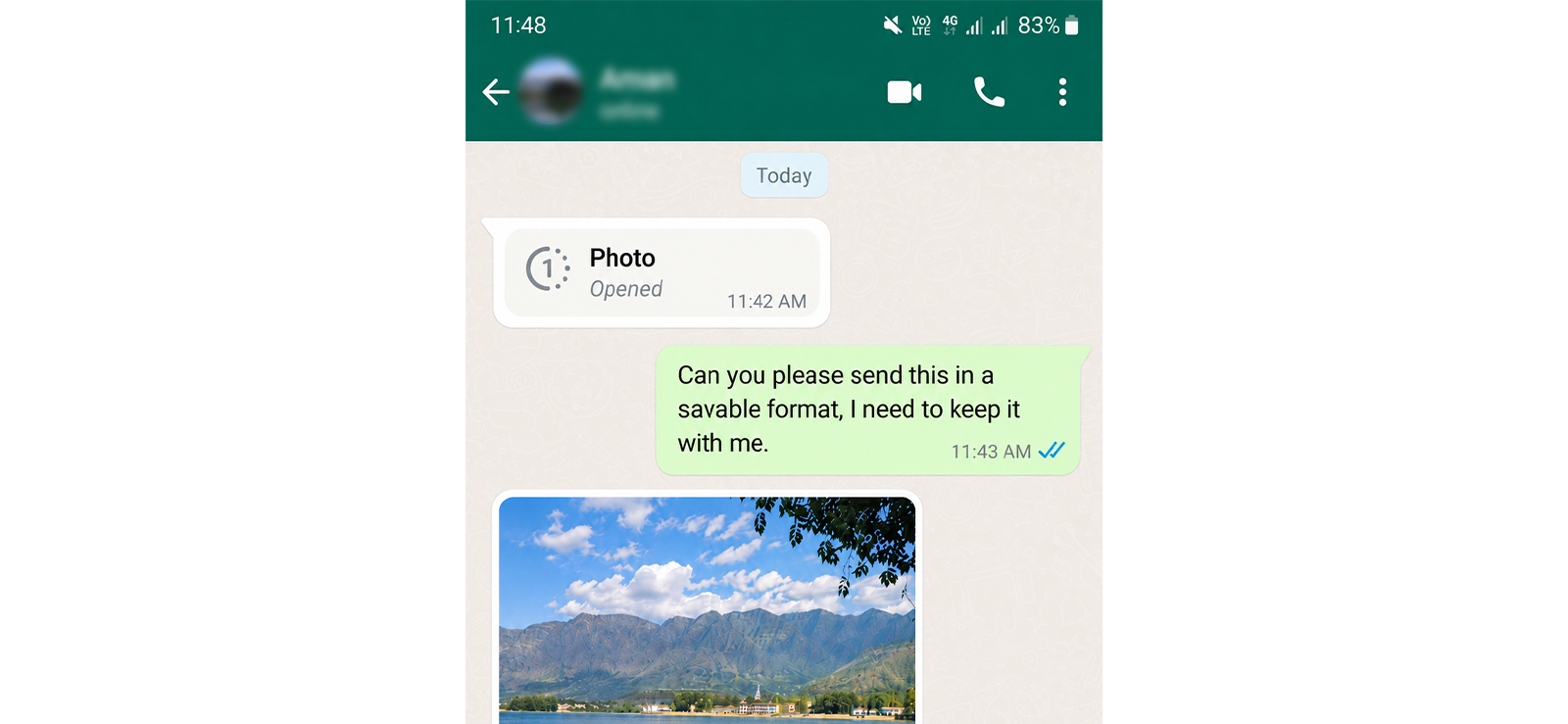
One of the least intrusive ways to capture a View Once media is to ask the sender to share the content again without using a View Once setting. Once the photo or view is sent as regular media, it can usually be opened again and saved to the device.
On WhatsApp, the sender can resend the item as regular media instead of selecting the View Once icon. On Instagram, the sender can use the option that keeps the media in the chat. On Snapchat, the sender may share the content in a form that can be saved in the conversation.
To use this method:
- Identify the sender and determine whether requesting the media again would be safe and appropriate.
- Ask the sender to resend it without selecting View Once, disappearing media, or a short viewing timer.
- Open the normally shared media in WhatsApp, Instagram, or Snapchat and use the available save or screenshot option.
Specific findings
I found this to be the most dependable option when the sender cooperates. Its conditional success rate was 100% across the three platforms, because regular media can be preserved without trying to capture a protected View Once screen.
It worked best on WhatsApp, where the sender could simply resend the file as ordinary media. The method also performed well on Instagram when the photo or video was kept in the chat.
Snapchat, however, was less straightforward because much of the platform is built around temporary content, although I was still able to use a savable chat format to retain shared media files.
But note that the method failed whenever the sender refused to resend the content or could no longer access the original file.
2. Use the Phone’s Screenshot Feature Where Supported
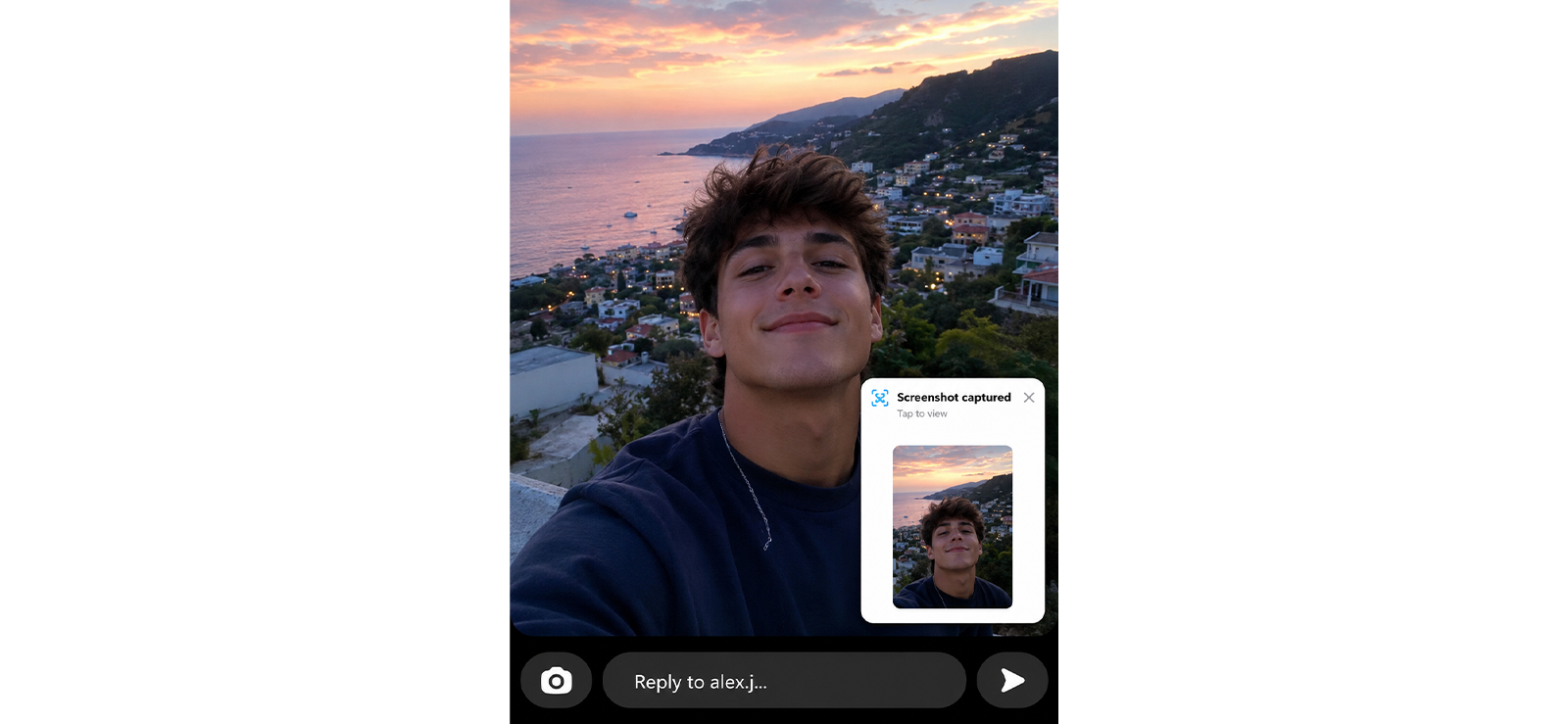
A phone’s built-in screenshot feature is the quickest direct-capture method, but it does not behave the same way on all three platforms.
Instagram permits screenshots of media shared in disappearing chats, with a notification sent to the sender. However, no screenshots are allowed for View Once files.
Snapchat, on the other hand, allows screenshots of Snaps and also shows a screenshot indicator to the sender. WhatsApp takes a stricter approach, though, and blocks screenshots of View Once media entirely.
Overall, this method is helpful for preserving content related to a legitimate safety concern.
To try a direct screenshot:
- Open the disappearing photo or video in Instagram, Snapchat, or WhatsApp.
- Use the phone’s screenshot controls while the content is visible.
- Check the photo gallery to see whether the image was captured, blocked, or concealed.
Specific findings
I found that native screenshots had a platform-level success rate of approximately 67%, or two out of three apps.
The method worked on Instagram and Snapchat, although both platforms disclosed that a screenshot was taken, and Instagram even blocked screen captures for View Once.
Not only that, but the method also failed entirely on WhatsApp View Once media because WhatsApp blocked native screenshots. Nonetheless, I must add that the exact results can differ by device.
3. Use a Parental Monitoring Tool on a Managed Device
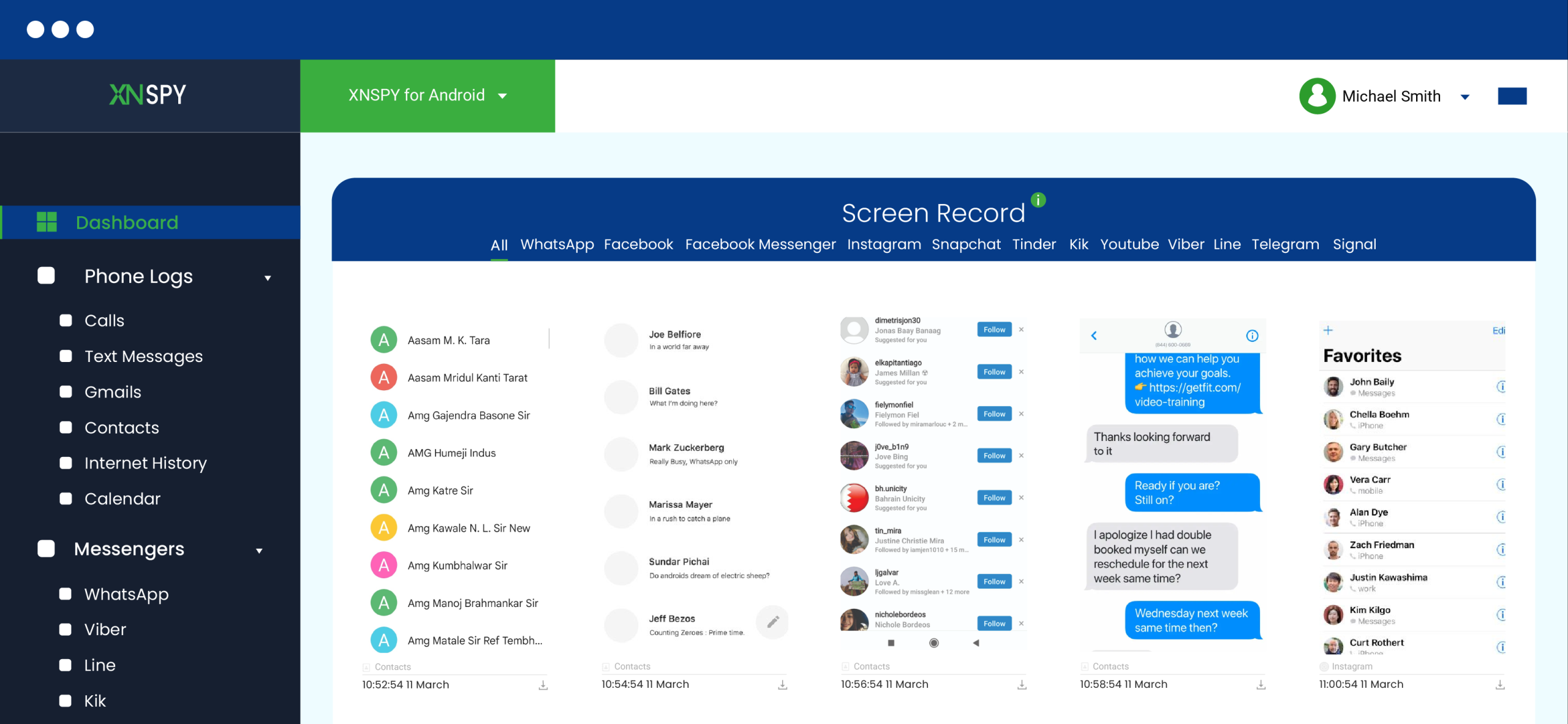
A parental monitoring tool can periodically capture what is happening on a child’s managed phone, including View Once media, and make those captures available through a parent dashboard.
For example, Xnspy has a screen-recording feature that takes screenshots of the target phone at intervals of approximately five seconds. These screenshots include social media platforms like WhatsApp, Snapchat, and Instagram, too.
This method differs from a normal screenshot because the parent does not have to press the screenshot buttons at the exact moment the media appears or face other restrictions.
Instead, if the tool captures the screen while the View Once image or video is open, the resulting image remains accessible in the dashboard even after the original media disappears.
To use a parental monitoring tool responsibly:
- Verify that the tool supports the phone model and purchase a suitable price plan.
- Install and configure the software on the child’s phone according to its official setup instructions.
- Enable its screen-capture feature and confirm that new captures appear in the parent dashboard.
- Review the captured material only for the stated safety purpose, checking the View Once media.
Specific findings
During testing, I found this method delivered an overall success rate of approximately 90% when capturing View Once and disappearing media across supported devices.
The strongest results came from Instagram and Snapchat, where Xnspy’s screen-capture functionality consistently saved disappearing photos and videos while they were being viewed. In most cases, the captured screenshots appeared in the dashboard shortly after the media was opened.
WhatsApp produced slightly more varied results because of the platform’s stricter protections around View Once media.
However, when the screen-capture feature was active and properly configured, the majority of WhatsApp View Once images and videos were still accessible through the monitoring dashboard.
Lastly, note that a small number of captures were missed when the media was opened and closed too quickly between screenshot intervals.
4. Capture the Screen With a Second Device
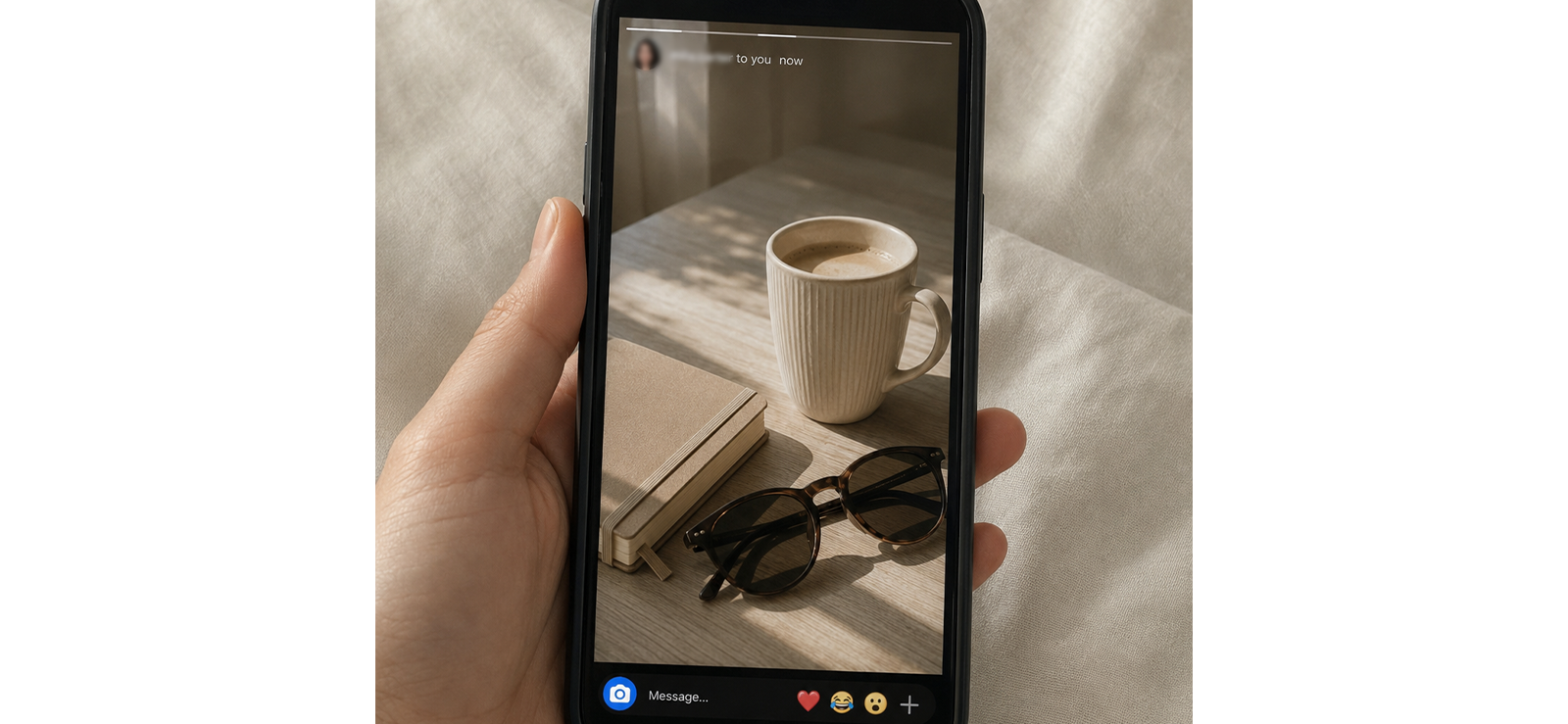
Using a separate phone, tablet, or camera is the most broadly compatible technical method since the second device records what is physically visible on the first phone’s screen. Therefore, the method does not rely on the app’s internal screenshot or screen-recording controls and effectively stores both photos and videos.
To record the media with another device:
- Prepare a second phone, tablet, or camera for photo or video capturing.
- Set the first phone on a stable surface and make sure the screen is clearly visible.
- Open the media file on Instagram, Snapchat, or WhatsApp and capture it.
Specific findings
I found this method to have a technical platform-coverage rate of 100% because Instagram, Snapchat, and WhatsApp cannot normally prevent an external camera from recording a visible screen.
It was also the strongest option for WhatsApp, where native screenshots and screen recordings are blocked. Not only that, but it also worked in principle for Instagram and Snapchat without depending on their built-in capture controls.
However, its main failures were practical rather than platform-related. The image was sometimes blurred, affected by glare, partially blocked by a hand, or recorded at an unreadable angle. It also failed when capturing was attempted after the View Once media had already been opened.
5. Record the Screen and Extract a Screenshot
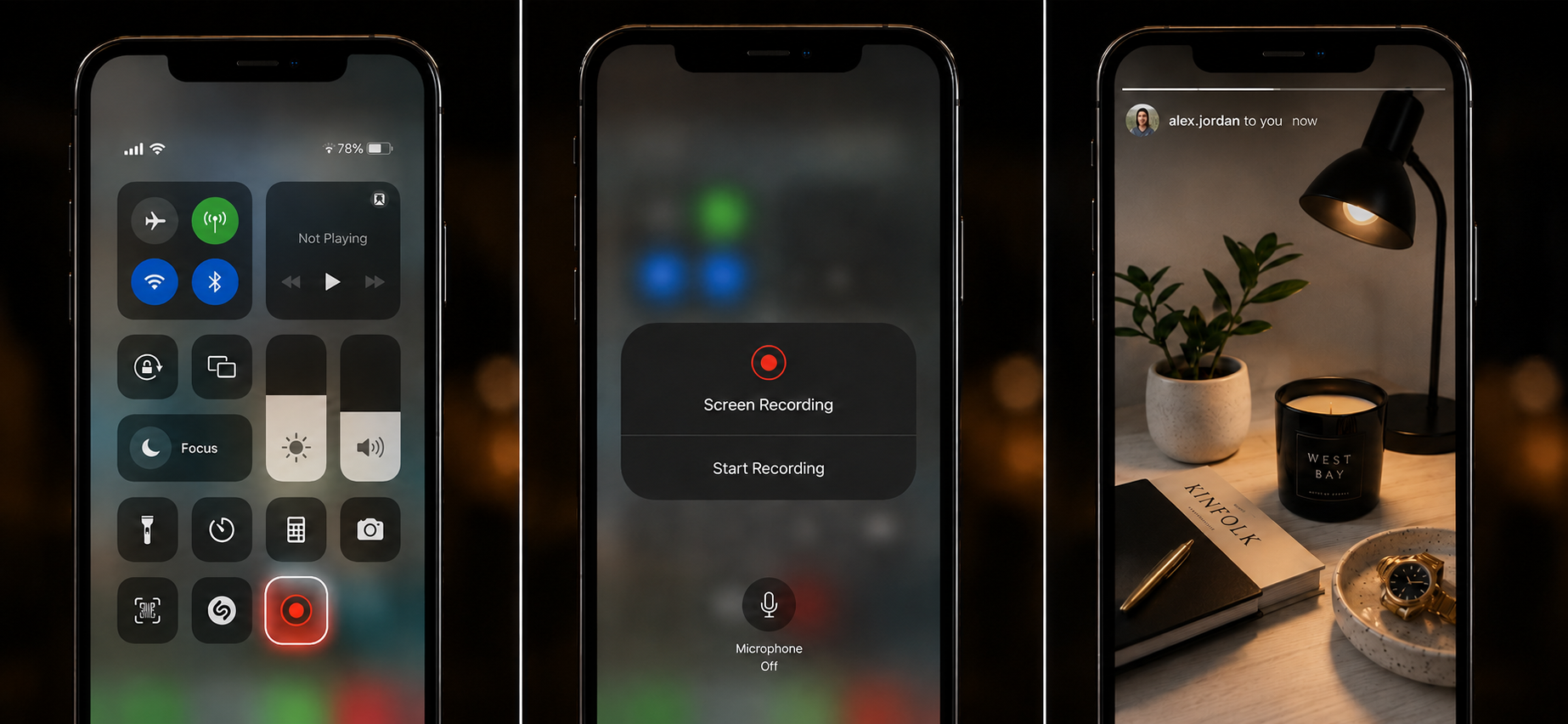
Screen recording can be useful when the content moves quickly or when taking a screenshot at the right moment is difficult. When used, the screen recorder captures a sequence rather than a single instant.
Once the recording is saved, the parent can pause it on the clearest frame and use the phone’s screenshot tool to produce a still image.
To record the screen and extract an image:
- Open the phone’s quick settings or control center and locate the built-in screen-recording feature.
- Start the recorder before opening the disappearing photo or video.
- Return to Instagram’s disappearing chats or Snapchat media while recording remains active.
- Stop the recording and open the saved video in the phone’s gallery.
- Pause on the clearest frame and use the screenshot option to create a still image.
Specific findings
Just like the screenshot method, I found this method to have an estimated platform-coverage rate of 67%.
During testing, it appeared the most viable on Snapchat, while on Instagram, it gave partial results, with screen recording allowed for disappearing chat media but not for View Once files.
Nonetheless, the method failed on WhatsApp View Once media entirely due to native screen recording restrictions. Even when I tried with third-party screen recorders, no results were found.
Wrapping Up
View Once media on WhatsApp, Snapchat, and Instagram offers added privacy, but it is not foolproof.
Therefore, parents may use methods such as requesting a resend, taking a screenshot, using an authorized monitoring tool, recording with another device, or extracting a frame from a screen recording.
Though it is important to remember that the results of these methods can vary by platform. Not only that, but View Once media should also only be captured for legitimate safety concerns like bullying, grooming, blackmail, or threats.
Nonetheless, saving View Once content solely out of curiosity or without a valid reason is strongly discouraged and may violate privacy rules.
FAQs
Can you save a View Once photo on WhatsApp after opening it?
You cannot save or reopen View Once media through WhatsApp after it has been viewed. WhatsApp also blocks native screenshots and screen recordings, which adds another layer of complexity. Nonetheless, parents may instead request that the sender resend the file as regular media or document the surrounding conversation when there is a safety concern.
Does Instagram notify someone when you screenshot a disappearing photo?
Yes, Instagram allows senders to see when a screenshot has been taken of a disappearing chat’s media. However, note that no screenshots can be taken of View Once photos or videos shared in regular chats.
Does Snapchat notify someone when you screenshot or screen-record a Snap?
Snapchat displays an indicator when a screenshot is taken of a Snap or Chat. Screen-recording behavior may vary by device and app version, so it should not be treated as undetectable. The safest assumption is to always consider that the sender may become aware that the content was captured.
Can parents recover disappearing media after it has already vanished?
Generally, disappearing media cannot be recovered through the original app once it is no longer available. While parents can sometimes request a resend, it is not guaranteed to always work. Another way is to use Xnspy, which captures periodic screenshots of phone activity, including View Once media.
Are View Once saver apps safe to use?
View Once saver apps are not safe or reliable. Most of the tools available require extensive permissions, modified app versions, or account credentials, which can expose private data or violate platform rules. Parents should, therefore, favor authorized monitoring tools and built-in reporting features.
5 Comments
Leave a reply:
Your email address will not be published. Required fields are marked*

Angela L. Collier
June 16, 2025 at 2:51 pm👏👏👏
Godrictre
July 4, 2025 at 2:56 pmI did not know this was possible, this was a pleasant surprise lol
Adam Watson
July 4, 2025 at 3:23 pmMy son had been receiving explicit images on whatsapp but we are helpless on how to report it. Can I use xnspy's screenshot to collect the evidence?
Johan
July 9, 2025 at 2:51 pmTook a screenshot on Snapchat instead of recording it :) My life is ruined
Lauren Bissell
July 10, 2025 at 2:20 pmCan you tell me which web extensions can I install? It does not specify