Get the full list of apps installed on school-issued devices to ensure they support learning.
Monitor students’ internet activity to block distractions and inappropriate content, even in private mode.
Monitor screen time closely and make sure they don’t spend time on non-educational apps.
View activities on social apps like WhatsApp, Instagram, Snapchat, and more to limit distractions.
Keep students within school boundaries with real-time location tracking and geofencing alerts.
Use XNSPY remote commands to ensure responsible device use and protect school data.
XNSPY ensures school devices support learning, not distractions.
Schools can use specialized monitoring apps that work quietly in the background to track students' internet activity on school-issued phones. These tools provide insights into browsing history, visited websites, and search queries without notifying students. This helps ensure school devices are used strictly for education.
For instance, XNSPY allows administrators to block social media on schools' Android devices and iOS with its app-blocking features. It also helps restrict all porn and sexting apps on your students' smart devices. The app runs discreetly to provide valuable data on device usage without sending any alerts or notifications to students.
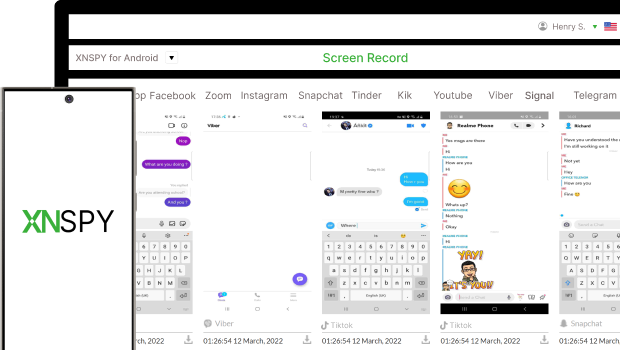
Yes, you can, but for that, you need a student monitoring app that updates in real-time and includes social media monitoring. While most tracking apps do show through in terms of message monitoring, the same cannot be said about real-time updates. So, for instant chat logs, you need to rely on an app like Xnspy. The app records all sent and received messages over 13 social media apps with timestamps and other crucial details. Not only that, but the activity is also made visible on the dashboard as soon as it happens, therefore helping keep track of deleted logs, inappropriate conversations, and any potential threats.
Monitoring apps help protect students from online risks while keeping them focused on learning. Digital devices can be a major distraction, making it easy for students to misuse them. A reliable app can remotely block games on school Android devices and iPhones to ensure they are used strictly for educational purposes.
With real-time updates, you can step in immediately when students try to access distractions. These tools also provide insights into app usage, internet activity, and screen time to help identify non-educational content like social media or gaming apps. Plus, you can use these apps to block unsafe websites for students and create a safer online environment that keeps students on track with their studies.

You can use XNSPY’s hidden app to track students and ensure school phones aren't used without permission. With its features like remote phone locking and app blocking, phone usage can be easily controlled. While the phone locking feature lets you set a password so students can’t unlock the phone without it, the app blocker can help restrict unnecessary apps on school phones. With both features at hand, you can better ensure that school devices are only used for educational purposes instead of wasteful activities.
You can discreetly monitor communication between students and teachers using phone screen monitoring software for schools that tracks emails, messaging apps, and collaboration tools. With features like keyword-based alerts, schools can flag inappropriate conversations or potential misconduct without reading every message. To do this effectively, use the best student safety app available in the market, which includes features like keyloggers and watchlist word alerts.
Yes, schools can track students’ locations during field trips using XNSPY on school-issued devices. It provides the GPS tracking feature with real-time location updates to monitor students’ whereabouts. It can also create safe zones, sending instant alerts if a student enters or exits a designated area. This helps prevent students from wandering off and allows for quick intervention if needed.
You can use advanced monitoring apps like XNSPY to block social media on school Android devices and iPhones during school hours, while also limiting access to explicit material. Features like keyloggers, watchlist word alerts, social media screenshots, app blocking, and insights into browser history and incognito mode are all useful for this purpose. But monitoring and control alone are not enough because you must also focus on teaching digital responsibility and internet safety to children.
The best way to protect students from online predators is by monitoring their activity on school-issued devices. Using a robust app, you can track children’s online interactions, identify suspicious messages, and block access to unsafe apps that allow connections with strangers. An additional recommendation to prevent such instances is employing keyword detection tools, which can flag inappropriate conversations or grooming attempts.
Introducing monitoring tools in schools requires transparency to avoid privacy concerns. It is important to communicate clearly with students, parents, and staff about the purpose of the monitoring and the scope of the surveillance. Be upfront about data collection, privacy policies, and how the information will be used to ensure legal and ethical compliance. The goal should always be to prioritize student safety without being intrusive. Choose the right parental control app for schools based on specific needs, and provide digital literacy training to help students understand responsible device use.
Use This Discount Code During Checkout