How to Protect Older Adults from Scams?
 By Mike Everett
The complete monitoring experience for your phone
Get XNSPY and start tracking calls, texts, multimedia, locations and more on any phone!
Get Started Now Live DemoIf you have a parent who’s part of the ‘baby-boomer’ generation, chances are they’re not as well-versed in technology as you. Whether this is a good or bad thing depends on your perspective.
The good news is that they probably aren’t addicted to their phones and social media like Millennials and Generation Z are. The bad news, however, is that they might be at a bigger risk of online scams and fraud.
The world around us is becoming more digital and automated than ever before. Cybercriminals and scammers are finding sophisticated ways to target anyone. Even those who are literate in technology sometimes become victims.
So if you have parents who aren’t tech-savvy, this blog will help you identify scams and fraud to look out for.
Everything This Article Talks About in 60 Seconds
- Older adults are frequently targeted by scammers due to limited technical knowledge, health concerns, social isolation, and financial vulnerability.
- Common scams include medical insurance fraud, fake lotteries, investment schemes, government impersonation, tech support fraud, grandparent scams, and phishing emails.
- Families can help prevent fraud by encouraging seniors not to share personal information and by guiding them to verify suspicious requests.
- Regularly reviewing bank activity and setting up shared financial monitoring can help detect unauthorized transactions early.
- Seniors should report suspicious calls or messages immediately to prevent scams from escalating.
- Teaching safe device habits, such as avoiding unknown links, managing app permissions, and installing apps only from official stores, reduces risk.
- Strong passwords, device updates, and antivirus protection improve overall security.
- Monitoring tools like XNSPY can help families track calls, messages, emails, and browsing activity to detect potential scam attempts early.
Why the Elders Are an Easy Target of Scams and Frauds
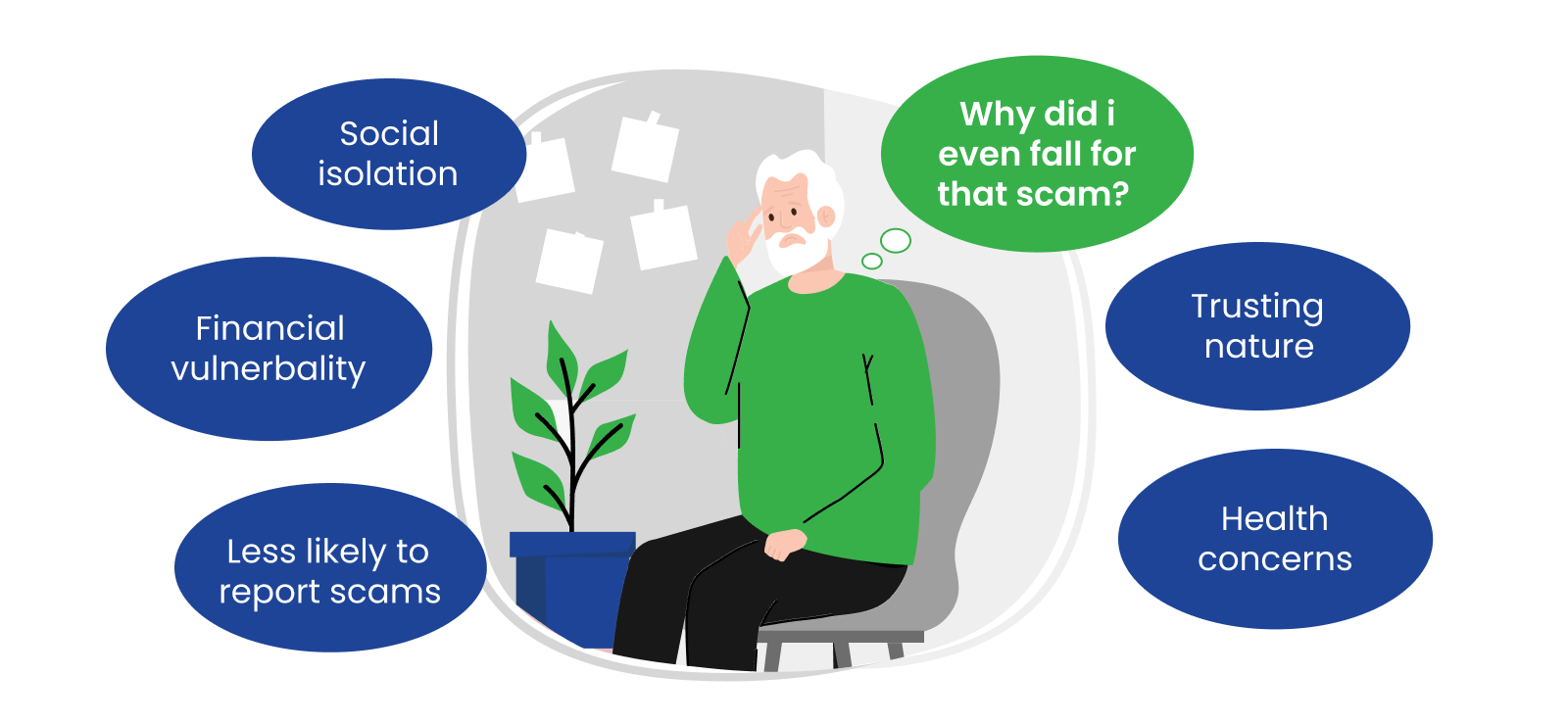
Elderly fraud is an increasing crime. Scams targeting seniors over 60 caused $3.4 billion in losses. Fraudsters tend to target seniors as they think they have sufficient money in the bank. However, even people with less income and savings are vulnerable to the risks.
Financial scams can be hard on older adults, as most are left with no way to recover their losses. This includes money they may save for retirement, use for daily grocery purchases and utility payments, and even money they look to pass down to their family. The financial losses may also cause anxiety, depression, loss of appetite, and insomnia in your parents.
In our research, we noticed some common themes with crimes targeting the elderly and have laid out why they might be the perfect victims:
Trusting Nature
People of older generations tend to trust people more, a trait that the scammers exploit. They often hesitate to question authority from a person who seems friendly. This is why your parents might be susceptible to phone scams, where a fraudster may claim to be a person from a reputable bank or other institution.
Health Concerns
Memory loss and other forms of cognitive decline leave seniors with moments of forgetfulness and confusion. Scammers can easily use their physical weakness to manipulate them and make them make quick financial decisions without thinking.
Financial Vulnerability
Older populations are easy targets, as most have money in the form of retirement funds, savings, and other assets. According to the Federal Reserve, the median retirement account savings for individuals between ages 55 and 64 is roughly $185,000.
Scammers target this considerable amount of money. Many older people fall victim to scams that promise to improve their financial situation or provide a miracle cure for their medical condition.
Social Isolation
Senior citizens live alone and are likely more at risk of depression and social isolation than you might be. Fraudsters may use fake relationships and emotional appeals to get intimate with them.
Less Likely to Report Scams
Many elderly individuals are less likely to report scams due to embarrassment, fear of losing their independence, or lack of knowledge about how to report a scam. In households with nuclear or joint families, family members can avoid this problem by monitoring phone activities more closely. However, without such oversight, scammers may repeatedly target the same individual or exploit others in similar vulnerable situations.
The Common Scams that Elders Face
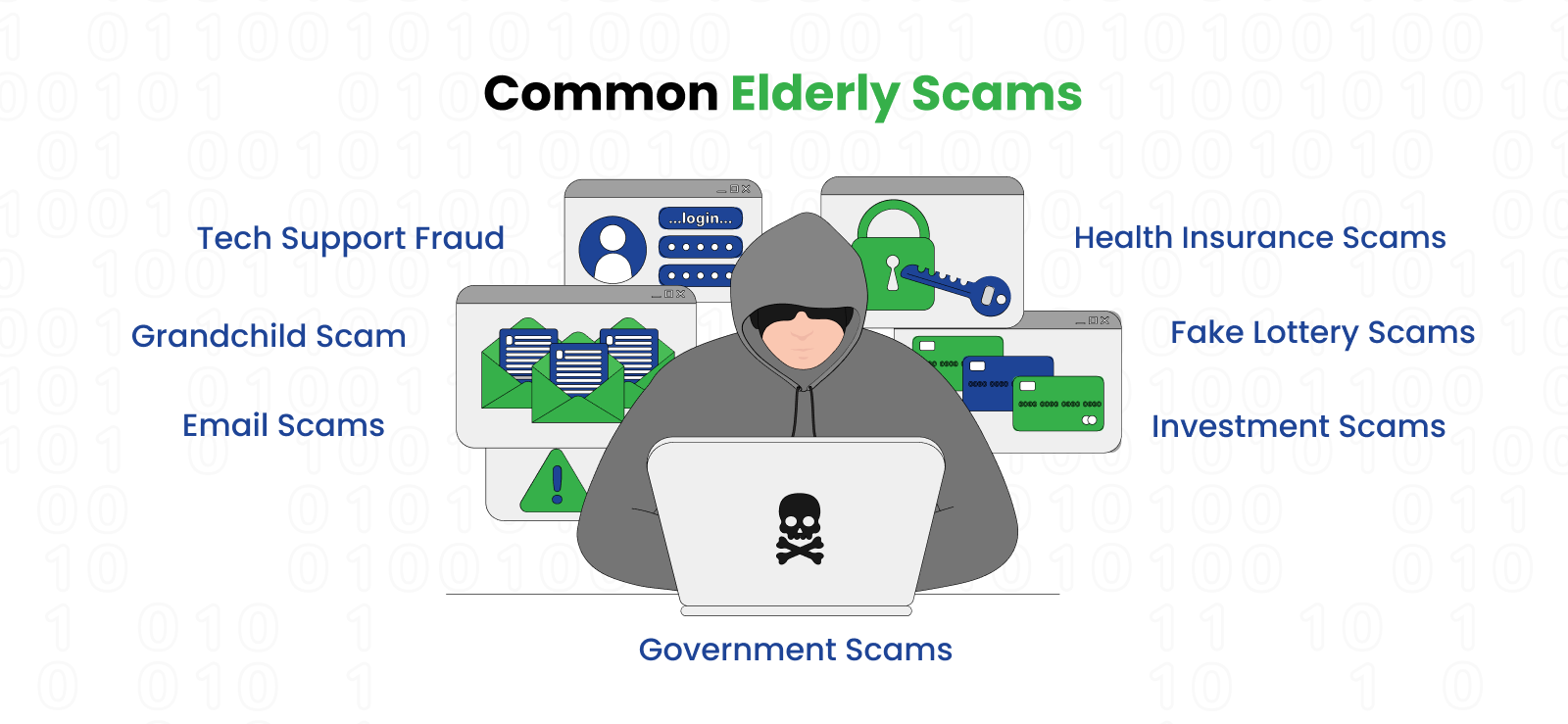
Fraudsters and scammers use technology to exploit and run their schemes. The first step to avoid fraud is recognizing the methods that may target the elderly.
Here is a list of common scams:
Medical and Health Insurance Scams
Scammers pose as healthcare providers or Medicare representatives. They usually call to collect their Social Security numbers and insurance details and use them for fraudulent billing and identity theft. Sharing a bank account and insurance might even put you, their caretaker, at risk.
Fake Lottery and Sweepstakes Scams
Scammers may call and tell your folks they have won a lottery, prize, or sweepstakes. However, to claim their prize, they must pay taxes, fees, and shipping costs. In this activity, the fraudsters obtain personal details and credit card information to fulfill the claim. We advise reporting all such numbers to the relevant authorities, such as the FCC.
Investment Frauds
Scammers offer fake investment opportunities and phony schemes that promise high returns. They even convince them to move their retirement funds and savings into risky and non-existent investments.
Government Impersonation
Fraudsters will pretend to represent any government agency, such as Medicare, the IRS, or the Social Security Administration (SSA). They will contact the elderly, claiming money or unpaid taxes.
Tech Support Fraud
Tech support scammers often lure senior citizens with deceptive messages, calls, and pop-up warnings that their computer has a virus. They offer to fix the issue but ask for personal information, payments, and remote access to the computer. Once they gain access, scammers steal and exploit the information for money.
Grandparent Scam
Scammers will take a personal approach and pose as grandchildren or family members. They will call out in distress and say they need money to get out of their situation. The scammers first single out the elderly individual and research family names and information to earn the elderly person’s trust.
Email Scams
Fraudsters send emails and messages that appear to be from legitimate sources, such as banks, the IRS, or known companies. Older adults are asked to verify their personal information. Many do not verify the source of information and provide their details, which are then used for identity theft.

Prevent Scams with XNSPY’s Smart Monitoring
Stay ahead of scammers by monitoring your loved ones’ devices
Tips that Can Help Prevent Fraud on Elderly People
Most senior citizens become victims of fraud through some form of social engineering. This can happen because of limited technical knowledge, a lack of awareness about digital crimes, medical conditions, or simply making snap decisions.
For this reason, children and caregivers must actively guide their parents and help them adopt safer habits when using phones. With the right precautions and support from loved ones, many fraud attempts can be prevented before they cause financial or emotional damage.
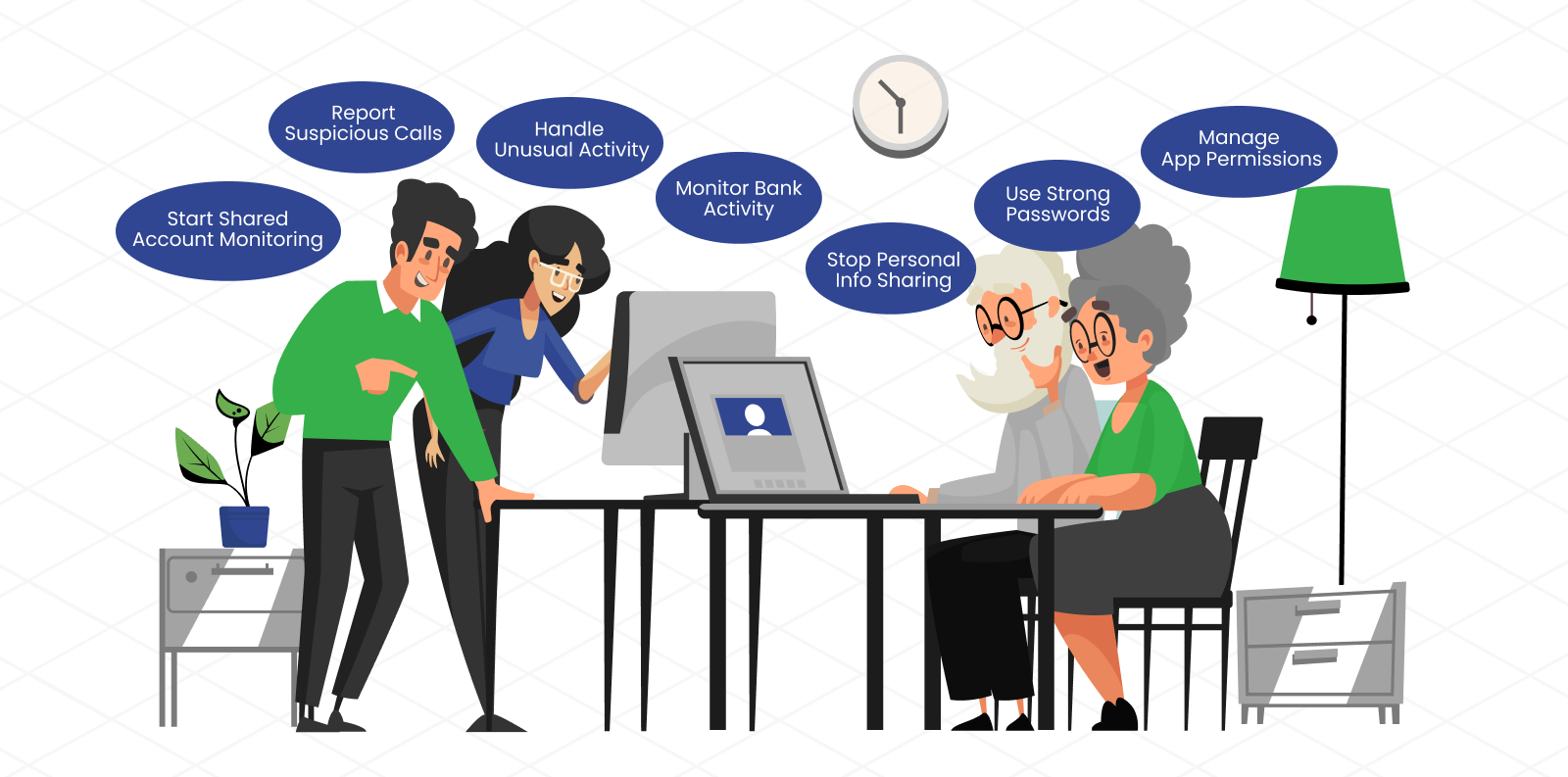
Below are 7 practical tips that can help protect elderly parents from fraud.
1. Encourage Them Not to Share Personal Information
Start by teaching your elderly parents that they should avoid sharing both their personal and financial data with strangers. Since scammers tend to collect information like bank account numbers, passwords, etc., this awareness can prevent them from falling prey to a scam.
Further explain that legitimate companies do not request information via calls or emails. Therefore, if such a request is made, they should hang up and check the matter through official channels first.
2. Help Them Monitor Their Bank Activity
In all honesty, fraudulent charges often go unnoticed simply because the account holder does not review their activity frequently. So, you should encourage your parents to regularly check their bank statements and account transactions.
But to do so regularly, they will need to set up online banking. If they are comfortable, you can then teach them how to review their recent transactions and detect suspicious activity early on.
3. Ask Them to Report Suspicious Calls or Messages
Many seniors are often unsure whether they should talk about a suspicious call or message. Some may feel embarrassed discussing it, while others may not realize that it is an urgent matter.
To avoid this, encourage them in advance to inform you immediately if they receive any unusual requests for money or personal information. This way, if a scam call or message ever occurs, reporting it quickly can help prevent the situation from escalating.
4. Set Up Shared Account Monitoring
Another effective safety measure is arranging shared financial oversight for the elderly. This can include creating a joint bank account, enabling view-only banking access, setting up transaction alerts, or more.
Overall, having a trusted family member monitor financial activity adds an extra layer of protection and helps detect suspicious transactions quickly.
5. Teach Them How to Handle Unusual Activity
Older adults may not always recognize warning signs like suspicious pop-ups, fake alerts, unfamiliar downloads, or fraudulent links. This lack of awareness can very easily lead to scams or malware infections.
To stop such a thing from happening, you should teach them to close suspicious windows, avoid clicking unknown links, not engage with random pop-ups, and disconnect their device from the internet if something unusual appears.
6. Help Them Manage App and Download Permissions
Sometimes seniors unknowingly install apps or grant permissions that may compromise their phone’s security. You can help them identify these suspicious permissions or app downloads by reviewing installed apps occasionally.
Moreover, you should teach them that apps can only be downloaded from official stores. Any other app that is suggested through pop-ups or links must be avoided at all costs.
7. Promote Strong Password and Device Security
Passwords should ideally contain a mix of letters, numbers, and symbols. But seniors tend not to follow these guidelines due to the fear of forgetting their passwords.
You must change this practice and encourage them to use strong and unique passwords for each of their online accounts.
Another helpful practice to prevent unauthorized access attempts is to keep the device updated with a reliable antivirus software running on it.
How XNSPY Can Help Safeguard Elderly Against Fraud
According to the Social Security Administration, older adults suffering from Alzheimer’s and dementia are at a higher risk of financial abuse and scams. However, this does not undermine the fact that other adults are also at risk and active protection is needed to monitor and control these frauds.
Even if you guide them on the tips, there is no guarantee that fraud will not happen. Moreover, with a professional and personal life of your own, constantly keeping track of your parents’ online activity is quite challenging. To prevent scams, you need a monitoring app, such as XNSPY, to send you real-time updates and provide monitoring 24/7.
The app is already established in the monitoring industry and has positive reviews from several customers and critics. XNSPY can be a valuable tool for safeguarding elderly individuals against fraud by offering monitoring and alert features.
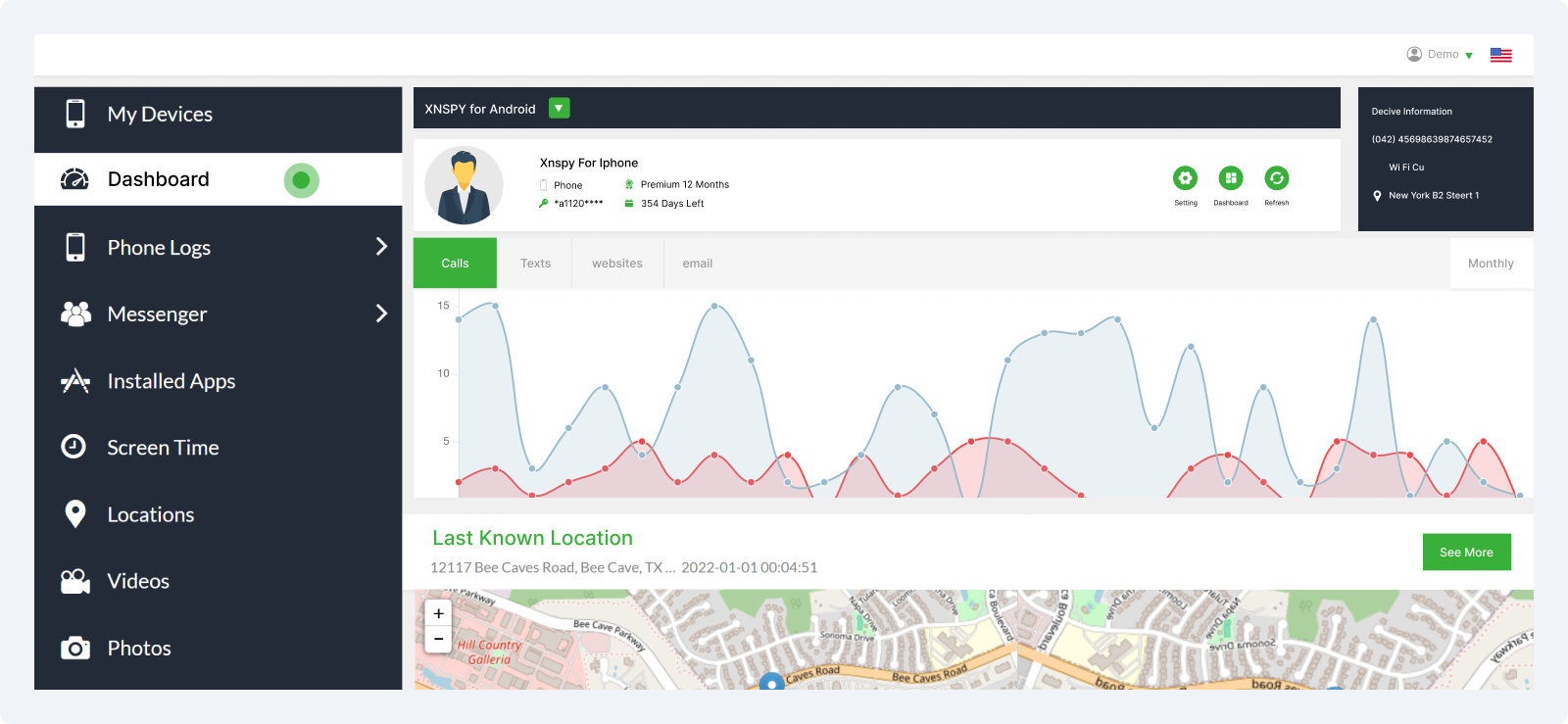
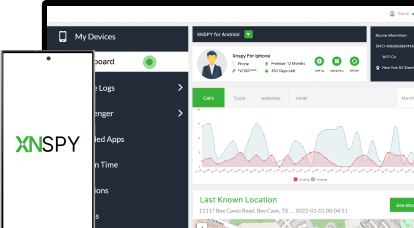
You only need to access the elderly phone once to install the app. After installation, the app will automatically gather all phone and app data and upload it to its servers. You can log in to the app’s dashboard remotely from anywhere to view the data.
Here’s how XNSPY can help protect seniors from scams and fraud:
Monitoring Unusual Phone Calls
XNSPY logs all incoming, outgoing, and missed calls, along with the contact name and number. If unknown callers repeatedly call, it can be a red flag for potential scam attempts. The app’s call recording feature can further show if the scammer coerces the elderly to share personal or financial information.
Social Media and Instant Messaging (IM) Monitoring
Fraudsters tend to target adults through social media apps like Facebook and WhatsApp, knowing the adults are not that savvy. XNSPY can monitor up to 12 popular IM apps and provide all the chat details. It can help prevent adults from falling victim to romance scams, impersonation fraud, or phishing attempts.
Tracking Internet Activity
XNSPY tracks all the internet activity of the monitored device. This helps to identify the websites visited by the elderly person and detect whether they are visiting fraudulent or scam websites. If they are engaging with phishing sites or fake charities, you can step in to prevent fraud.
Email Monitoring
Email scams are one of the most infamous ways scammers might target older adults. XNSPY’s email monitoring feature can help detect phishing emails and block fraudulent requests for personal information. The app provides not only the contact’s name but also any attachments or links shared in the email.
Remote Access and Control
There are many instances where someone may unknowingly click on a suspicious link and download an app. You can use XNSPY to get a list of all the Installed Apps and block any suspicious ones you recognize. If the device is compromised due to fraud, you can remotely wipe it and prevent scammers from using the information.
Alerts for Financial Fraud
With busy routines, tracking all the data on the elderly device can be difficult. XNSPY allows you to set specific words, contacts, and locations as alerts. If any messages containing those words or email contacts appear on the phone, you will be notified.
Conclusion
Scams targeting the elderly are becoming increasingly common. The losses seem to increase significantly each year, which calls for proactive preventive measures. Educating seniors about scams, using technology to protect their information, and keeping a watchful eye on their financial and online activities can create a secure environment for them.
XNSPY offers an effective solution by providing comprehensive monitoring tools to safeguard the elderly from fraud. Its ability to track phone calls, text messages, social media interactions, GPS locations, and online activities helps to detect suspicious behavior early and intervene before any scam occurs.
FAQs
How to convince an elderly person they are being scammed?
To convince an elderly person that they are being scammed, patience and clear communication are key. Begin by calmly pointing out why the call or message seems suspicious, highlighting specific red flags. While doing so, avoid accusatory language, as this can make them feel embarrassed. Once you’ve clearly explained your concerns, offer to help them verify the information by contacting the relevant authority.
What to do when an elderly person has been scammed?
If an elderly person has been scammed, act quickly to minimize damage. First, help them contact their bank to block accounts and stop unauthorized transactions. Next, report the scam to local authorities, such as the police, and to federal agencies like the FTC. Further document all communications and transactions related to the scam for evidence. Finally, provide emotional support and guidance to prevent future incidents.
What steps should I take if my parents’ account is compromised?
If your parents’ account is compromised, act immediately to secure their information. Start by changing all account passwords and enabling two-factor authentication for added security. Notify the service provider, whether it’s a bank or other services, so they can monitor and freeze suspicious activity. Then, check linked accounts for signs of compromise as well.
Are there tools to monitor a senior’s phone for suspicious activity?
Yes, there are tools that can help monitor a senior’s phone for suspicious activity, and one commonly used option is XNSPY. With the app, you can remotely review call logs, read text messages, monitor social media chats, and see emails to detect suspicious conversations or unknown contacts targeting the elderly. The app takes it a step further and tracks browsing history to help identify phishing attempts, too. Not only that, but XNSPY also provides keyword and contact alerts, which notify you if certain risky words, emails, or numbers appear in phone activity..
How can I secure my elderly parent’s social media accounts?
To secure your elderly parent’s social media accounts, start with a strong password that combines letters, numbers, and special characters. Next, enable two-factor authentication so any login requires a verification code in addition to the password. Then, adjust privacy settings to ensure only trusted friends or family can send messages or interact with them. As a last measure, consider setting the account to private and reviewing their friend/follower list regularly to inquire about unknown connections.
Use XNSPY to Fight Against Scams
Keep your family safe from scams with XNSPY’s reliable features.
5 Comments
Leave a reply:
Your email address will not be published. Required fields are marked*

Lucy S.
February 11, 2025 at 2:51 pmThis is concerning
Patricia F. Watkins
February 17, 2025 at 10:04 am👏
Ellis
March 5, 2025 at 11:20 amIt's not only the elderly but also the kids!
Joyce W. Eichler
April 7, 2025 at 2:39 pmThe world is full of evil people. It is upto us to protect our parents.
Mamie B. Lazar
April 14, 2025 at 8:25 amMy kind nonna ended up losing all her lifes savings like this