Cocospy Review: What You Need to Know Before You Buy (2026)
 By Mike Everett
The complete monitoring experience for your phone
Get XNSPY and start tracking calls, texts, multimedia, locations and more on any phone!
Get Started Now Live DemoIf you are a parent who has been worried sick about your kid’s online safety, you might have gone over every possible solution. Now, we both can agree that in today’s era, the only sustainable solution to ensure a kid’s safety is child monitoring.
The prime issue, though, is not to monitor but how to monitor. The “how” might have already taken you to Cocospy and made you wonder about its legitimacy.
In this review, we’ll walk you through exactly what worked in our testing, what didn’t, and where it falls short, so you can make a decision based on our team’s real experience rather than generic online claims.
At a Glance
- Cocospy offers basic monitoring such as phone logs, location history, browser activity, and limited social app tracking.
- During testing, Cocospy captured calls, messages, and browsing logs reliably but lacked search tools and log analysis, requiring manual review.
- On Android, social media monitoring relied on notifications and keylogging, which sometimes made conversation context unclear when multiple chats occurred.
- Location tracking provided GPS history with timestamps and map references, but updates depended on sync intervals rather than live tracking.
- XNSPY delivered broader monitoring coverage, including call recordings, screen recordings, watchlist alerts, and remote commands.
- XNSPY also offered searchable logs and organized conversation threads, making activity data easier to interpret.
- Overall, Cocospy suits basic monitoring, while XNSPY is better for comprehensive device oversight.
Inside Our Testing Lab: How We Tested Cocospy for This Review?
Most reviews of Cocospy tend to summarize features based on product pages or short demos. For this review, we wanted to understand how the platform behaves during actual day-to-day use. To do that, our team of 5 reviewers with experience in parental monitoring tools and mobile testing conducted a structured hands-on evaluation of Cocospy over several testing sessions.
Instead of simply checking whether features existed, we focused on how they performed in real conditions. To keep the review structured and transparent, our evaluation was divided into several key testing categories, with each category weighted according to its importance in real parental monitoring situations.
Monitoring Coverage & Log Accuracy – 30%
The first part of our testing focused on how effectively Cocospy captured phone activity. To evaluate this, we generated dozens of calls, messages, and browser visits across different sessions while simultaneously checking how the logs appeared on the dashboard. Particular attention was given to whether the logs included useful identifiers such as names, timestamps, and conversation context.
Feature Functionality in Practical Use – 25%
Beyond simply verifying whether a feature existed, we tested how usable it was in practice. Features such as phone logs, social messaging monitoring, location tracking, keylogging, and multimedia access were opened and reviewed repeatedly across multiple sessions to check whether the data remained organized and understandable during extended usage.
Dashboard Usability & Navigation – 20%
Because parental monitoring tools often generate large volumes of data, we also evaluated how easy the Cocospy dashboard was to navigate. Our reviewers spent time switching between log categories, opening conversations, and reviewing historical data to determine whether parents could realistically interpret the information without extensive manual sorting.
Cross-Platform Experience – 15%
Since Cocospy supports both Android and iOS devices, we tested the platform on each operating system to see how monitoring behavior differed. Particular attention was given to social app monitoring and messaging logs, as these features often behave differently across platforms.
Practical Value for Parents – 10%
Finally, we evaluated the overall usefulness of the app from a parent’s perspective. This involved assessing whether the information provided through Cocospy would realistically help parents understand their child’s phone activity and whether the available insights justified relying on the platform for everyday monitoring.
What is Cocospy?
Cocospy is a monitoring app that provides access to a target device’s calls, messages, and location updates. Its features help parents keep tabs on their kids’ phone activity.
As a result, parents can discreetly and remotely surveil their kids. Doing so ensures that the kids are not getting themselves in trouble and are mentally and physically safe.
How Does Cocospy Work?
In our testing, we found that Cocospy works differently depending on whether the target device is Android or iOS.
When we used it on Android devices, Cocospy ran as a background service on the target phone. After installation, it collected activity logs, such as calls, messages, and location data, and uploaded them to the Cocospy dashboard whenever the device connected to the internet.
During our test setup, the installation process took around 10 minutes, after which the phone activity began appearing in the dashboard shortly after the device was online.
However, when we tried using the same app for an iOS device, we noticed Cocospy relying on iCloud backup monitoring instead of direct installation on the phone. In this setup, the platform connects to the device’s iCloud account and pulls activity data from available backups.
Because of this, new data only appears when the device successfully creates an iCloud backup.
In our testing, updates did not appear if the device:
- Had iCloud backup disabled
- Was not connected to Wi-Fi
- Was not powered on and charging
- Had backup permissions turned off
- Had two-factor authentication blocking access
In short, our testing revealed that Android monitoring works through direct background syncing, while iOS monitoring depends entirely on iCloud backup availability.
Cocospy Compatibility, Installation, and Ease of Use
Cocospy Compatibility
In our testing, we noticed that Cocospy works on both Android and iOS devices. On Android, it supports devices running Android 4.0 and above, while on iOS, it relies on iCloud backup monitoring.
Overall, we were able to use the app on smartphones, tablets, iPhones, and iPads without requiring additional software. However, because Cocospy does not offer a compatibility checker on its website, we could not verify whether the app will work on any specific device model.
Cocospy Installation
To evaluate Cocospy, we started by creating an account on the official website and purchasing the Premium plans for both Android and iOS. Immediately after completing the payment, we received a confirmation email that included the download link for the Android installation file along with a step-by-step setup guide.
To replicate a typical parental setup, we then accessed the test Android device and downloaded the Cocospy APK provided in the email. The setup process mainly involved installing the app, granting the required permissions for activity tracking, and enabling the option that hides the app from the device’s app drawer.
For the iOS setup, we followed the instructions provided in the same onboarding email, which involved linking the target device via iCloud credentials for data syncing rather than installing a physical app. Once configured, the monitoring dashboard began pulling available synced data automatically.
From our experience, the overall setup took a few minutes, but it does require toggling several permission prompts on the phone. For users who are not very familiar with iOS settings or APK installations, this part of the process may feel slightly technical the first time.
Cocospy Ease of Use
For our team of 5 experts, out of which 2 were UX experts, Cocospy’s ease of use was mainly about its web-based dashboard, which we accessed through a standard browser. Once inside, we noticed that all monitoring features were listed in a vertical menu on the left side, while the right panel updates with the selected data view.
From a usability standpoint, the interface can feel slightly cluttered when multiple data streams are active at once. There is also a noticeable lack of advanced filtering, which makes sifting large datasets less efficient.
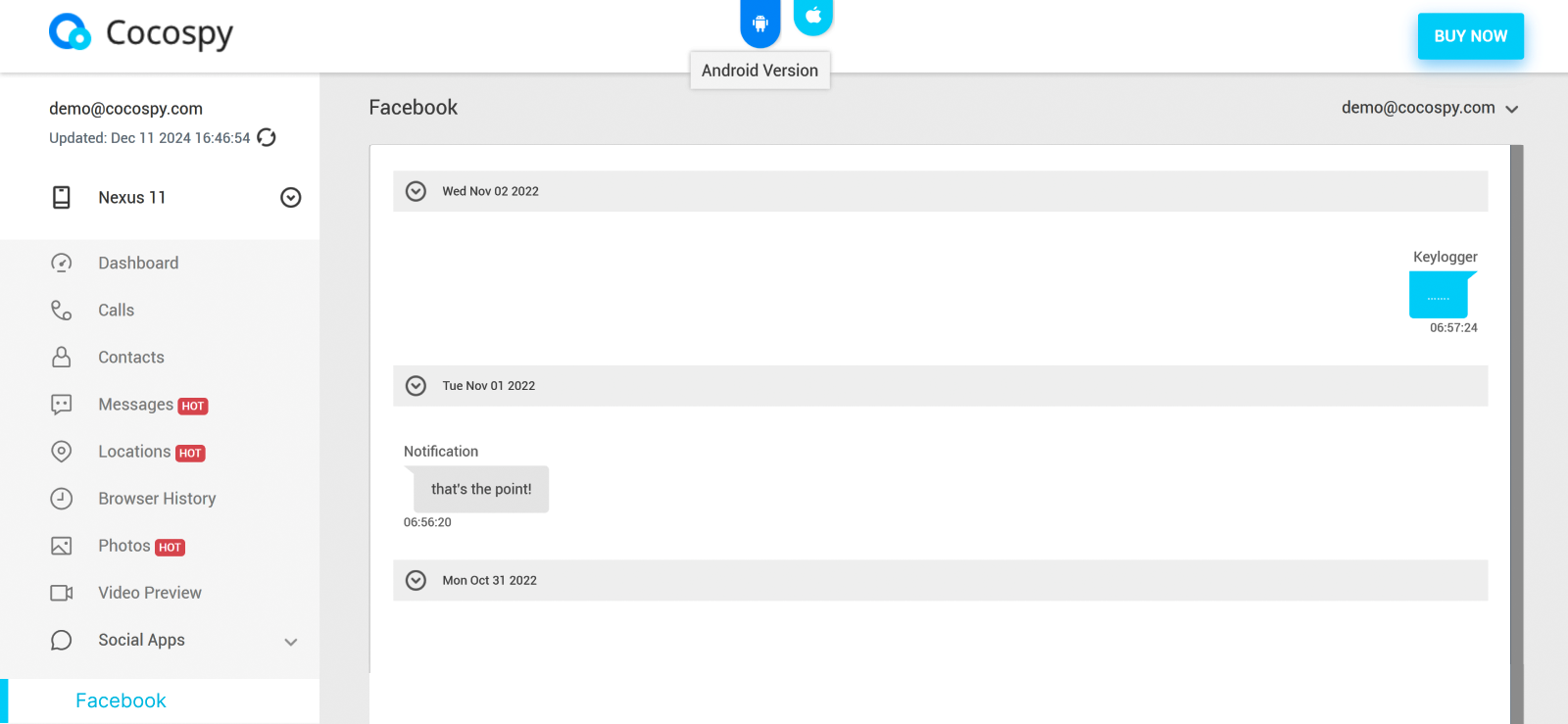
However, some structure was present in specific sections like “Social Apps” and the “Keylogger,” where subcategories helped break down conversations and recorded inputs into more manageable views.
How Much Does Cocospy Cost?
Cocospy free download is not available. You have to first choose one of their price plans to receive its APK file via email. All of Cocospy’s price plans are listed below. Note that there are different prices for both Android and iOS.
- Android Basic Plan: $39.99/month, $59.99/quarter, $99.99/year;
- Android Premium Plan: $49.99/month, $69.99/quarter, $119.99/year;
- Android Family Plan: $69.99/month, $99.99/quarter, $199.99/year;
- iOS Premium Plan: $49.99/month, $79.99/quarter, $129.99/year;
- iOS Family Plan: $99.99/month, $199.99/quarter, $399.99/year;
- iOS Business Plan: $399.99/month, $699.99/quarter, $999.99/year.
Cocospy Key Features
Cocospy app advertises these features on its website and demo. We have included details of the features and their functioning to help you make informed decisions.
1. Phone Logs
During our time with this app, phone logs were among the most frequently tested areas, especially because they form the core of most monitoring workflows. During our testing, we worked with datasets ranging from 200 to over 400 contacts and more than 1,000 combined call and message logs, which helped us evaluate both structure and usability under realistic load conditions.
Contacts
When we first opened the contacts section, every entry was displayed with basic identifiers like name, phone number, and profile image, where available. In the expanded view, additional details such as email addresses, stored physical addresses, and interaction frequency appeared consistently across most entries.
However, as we increased the dataset to around 300+ contacts, sifting through them became noticeably slower due to the lack of alphabetical sorting. What stood out during testing was that finding a specific contact took roughly 2 to 4 times longer compared to standard smartphone contact apps, mainly because there is no search function, and scrolling is the only way to go through the list.

Calls
Call logs performed more reliably in terms of structure and consistency. Across roughly 500+ call entries logged during testing, each record consistently included the caller’s identity, call type, duration, and timestamp without missing fields.
What became obvious during deeper analysis, however, was the absence of any built-in summarization. Even after reviewing several hundred calls, there were no automatic insights such as top contacted numbers or longest call durations. This meant that if we wanted those insights, we had to manually calculate them from raw logs, which significantly increased analysis time when working with larger datasets.
Messages
The SMS section handled conversation display fairly well, especially when contacts were already saved on the device. During testing, message threads loaded correctly in nearly all cases, and timestamps were consistently attached to each message. However, it took every new message roughly 10-20 mins to appear in the dashboard.
Moreover, one important detail that was missing from the chats was the contact’s number. If we had wanted to see the contact number, we would have had to switch back to the contact list, which was a little inconvenient.
Browser History
Browser history tracking was accurate throughout our testing window, which included a controlled browsing session lasting approximately 48 hours with dozens of unique URLs visited. All visited pages were logged correctly with URL, page title, visit count, and last visited timestamp.
The main limitation became obvious during practical use. Since URLs are not clickable, each verification required manual copying into a browser. In practice, this added roughly 15–25 seconds per URL, and when reviewing larger browsing histories, that delay became noticeably repetitive.
Calendar
Calendar data was mirrored accurately from the device throughout our testing period. Events consistently appeared with correct titles, timestamps, and location fields where available.
2. Applications
The applications section was tested across devices with 20 to 30 installed apps, which gave us a realistic sense of how it behaves under typical smartphone conditions.
What we consistently saw was a simple list of app names and icons, with no additional behavioral data attached. Even when we looked for usage patterns or frequency indicators, none were available.
This means that despite scanning nearly 30 app entries across devices, the feature functioned purely as an inventory list that offers visibility into what is installed but no insight into how those apps are actually used.

Cocospy Leaves Much to Be Desired
XNSPY outperforms Cocospy with more features at a better price.
3. Social Apps Message Monitoring
This was one of the most heavily tested modules due to its complexity and platform differences. Cocospy supports around 15 Android apps and 2 iOS apps (WhatsApp and Line), which we evaluated under both single-chat and multi-chat conditions.
On Android, Cocospy collects social media messages using a combination of notification capture and keylogging. To understand how this behaves in real use, we ran several controlled messaging tests using three Android devices and five messaging apps supported by the platform.
In one test session, we created five simultaneous conversations across WhatsApp, Instagram, Telegram, Facebook Messenger, and Snapchat, sending more than 90 messages over a 25-minute period from different accounts to simulate an active messaging environment.
All incoming and outgoing messages were logged in the Cocospy dashboard, but the structure of those logs created some interpretation challenges. Because the system relies on notifications and keystroke capture rather than direct app integration, the sender’s name or number was not consistently attached to each message entry.
On iOS, the behavior was noticeably more structured. To evaluate this properly, we tested message monitoring on two iPhones across WhatsApp and Line, which are the two apps supported by Cocospy on iOS.
During one of our test sessions, when we opened either app from the monitoring panel, the dashboard first displayed a list of conversations showing the contact’s name or number along with the latest message, all arranged in chronological order. From there, selecting a conversation opened the full message thread, where every message was displayed with its corresponding timestamp.
Because the conversations were separated into individual threads rather than a single combined log, it was much easier to follow the context of each chat.
4. Location and SIM Card Tracking
Location tracking was tested over a week in 8-hour simulated movement cycles with multiple location checkpoints, allowing us to observe both update speed and accuracy.
The system consistently recorded latitude, longitude, timestamps, and map-based location views. Over the full testing period, all movement points were eventually logged without missing entries.
However, the timing of updates varied significantly. In multiple test runs, we observed delays ranging from 6 hours to as much as 24 hours, meaning location data was more reflective of historical movement rather than real-time tracking.
5. Keylogger
The keylogger feature was one of the most data-heavy components we tested. Over a controlled 48-hour period across 6 different apps, it captured every keystroke, including text that was later deleted or edited before sending.
The system also categorized logs by application (such as Chrome, YouTube, and Microsoft tools), which helped reduce confusion slightly.
However, even within just two days of testing, the volume of logged data became extremely large, requiring manual filtering to extract meaningful insights. Without advanced grouping or interpretation tools, the raw output quickly became overwhelming.
6. Multimedia Files
The multimedia section was tested on devices containing between 1,000 and 3,000 stored images and videos, which provided a realistic stress scenario for media handling.
All files were displayed correctly with thumbnails, timestamps, and filenames, and downloads worked consistently across test devices.
However, during bulk review, one limitation became clear: there is no built-in media viewer. Every file required downloading before viewing, which significantly slowed down inspection workflows when working with large media libraries.
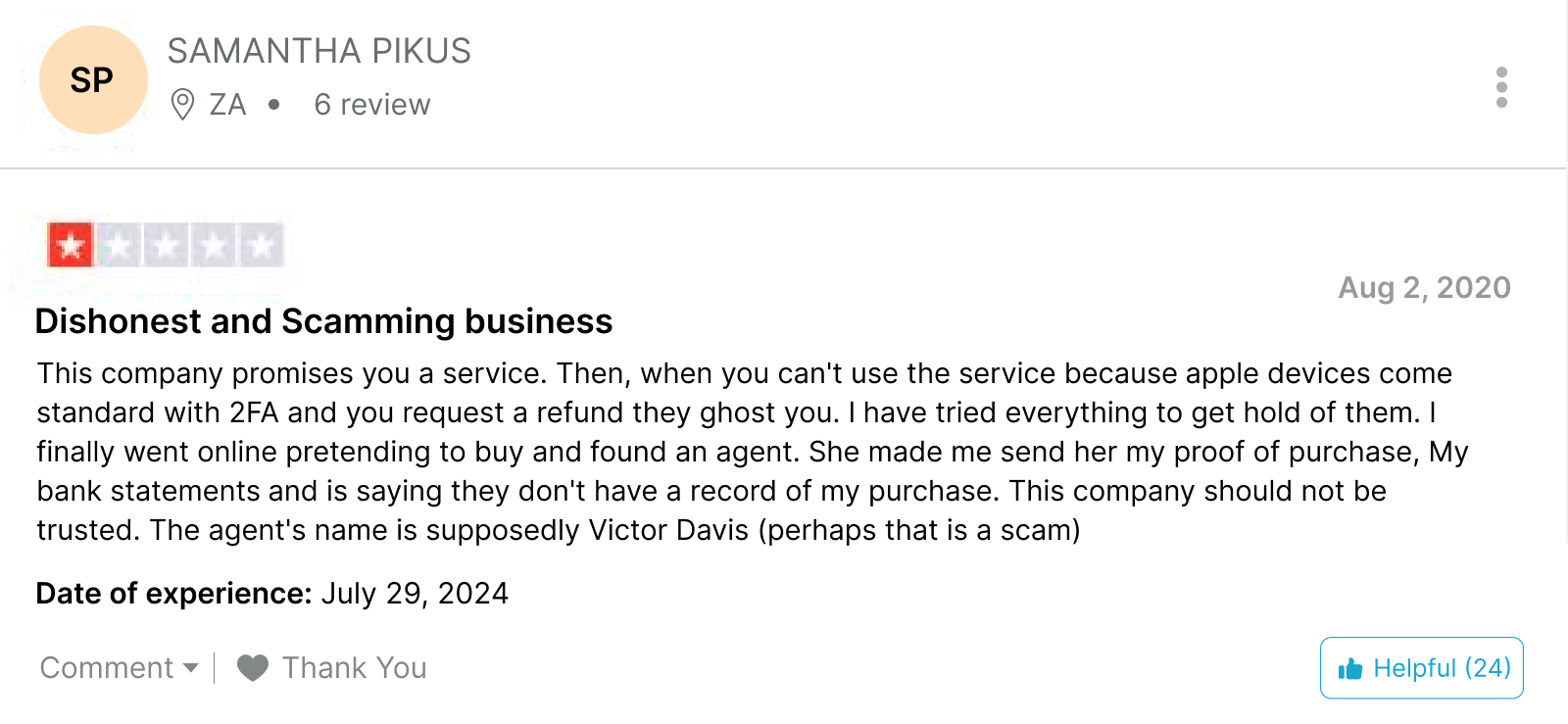
Cocospy Customer Reviews

Cocospy: You Pay a Premium for What?
Get XNSPY’s premium monitoring for less.
Cocospy Pros and Cons
After a long discussion on Cocospy’s features, we have summarized our overall understanding of the app’s functioning in the form of a pros and cons list.
Cocospy Pros
- IM chat monitoring for over 15 platforms;
- Compatible with all versions of iOS plus 4. x and above versions of Android;
- Provides price plans for both parents and employers.
Cocospy Cons
- Cocospy free trial is not available;
- Refunds only within 3 days of the billing terms;
- Only email support is offered that responds within 24 hours;
- Geofencing alerts are advertised but not provided;
- Log updates are taken even more than 3 days at times;
- Keylogger and browser logs stop updating completely sometimes;
- Easily detectable by the phone security and even free antivirus;
- No features facilitating monitoring outside of the phone logs and IM chats;
- iOS features are very limited and have a lot of conditions to be fulfilled;
- 2FA needs to be turned off at least 2 weeks before downloading Cocospy in iOS;
- Cocospy APK is visible and not hidden as advertised;
- No installation support, and setting up is difficult for non-technical individuals;
- Too many regular glitches and inconsistencies in app performance;
- Installation process longer than advertised i.e., 5 minutes;
- False advertisement of only one-time access required instead access is constantly needed to make any changes to the app on the target device;
- Most features do not function, or if they do, they do so inconsistently;
- Logs are missed;
- Suspicious battery drainage if the update time for Android is anywhere below 6 hours;
- iOS updates only every 24 hours, and even then, it has around 6 requirements that depend heavily on the phone user.
Reconsidering Your Options: Could XNSPY Be What You’re Looking For?
So, we are back to point one. Is Cocospy legit? It most definitely is. Parents who want to primarily focus on text monitoring and phone logs can opt for this app. With the discussion above, you are now well-versed in making decisions that suit your needs best.
However, if your needs are not met and you want a more comprehensive monitoring that allows access to all phone activity, you have to look for alternatives. One such alternative can be XNSPY.
Let’s see what the app is about and what it offers in comparison to Cocospy.
What is XNSPY?
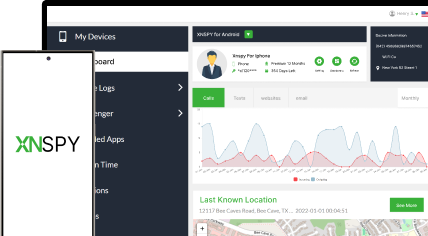
In practical use, Xnspy is designed to keep parents updated on core areas of a child’s phone activity, including phone logs, IM chats, call recordings, location tracking, and stored media files. When we explored these categories during testing, they were all accessible from a single centralized dashboard, which helped keep the structure consistent across devices.
One notable part of the experience is the inclusion of remote command controls. In our testing environment, these commands were available alongside monitoring features, meaning the platform was not just passively displaying data but also allowing active device-level actions.
From a usability standpoint, this combination made it clear that the system is designed around both visibility and control, rather than observation alone.
How Does XNSPY Work?
When we installed and tested XNSPY across Android and iOS devices, the operational flow was consistent with a background-based monitoring system.
Once active, the application runs silently in the background and continuously logs device activity. During our testing window, we observed that logs began appearing in the dashboard shortly after interactions occurred on the device, without requiring manual refresh in most cases.
All collected data was then pushed to a centralized web dashboard, which we accessed from multiple browsers during testing.
XNSPY Compatibility, Installation, and Ease of Use
XNSPY Compatibility
During testing, XNSPY worked across both Android and iOS devices without requiring device-specific configuration beyond initial setup. We evaluated it on two smartphone models, including a mainstream Android phone (Samsung Galaxy) and an iPhone, and in each case, the system supported installation without compatibility issues.
Before installation, we also reviewed the compatibility checker tool. In practice, this acted as a quick validation step to confirm whether a device would support monitoring features before proceeding with setup, which helped reduce uncertainty during onboarding.
XNSPY Installation
The installation flow was one of the more structured parts of the platform during our evaluation.
Instead of requiring account setup first, the process began immediately after purchase. Once a subscription was completed, we received an email containing login credentials, installation instructions, and a direct download link.
In our hands-on setup tests, we followed the provided instructions on the target device. The installation process itself was relatively quick, as it took roughly 3 minutes to install the application and around 2 additional minutes to complete permission setup.
What stood out during this phase was that the guidance was step-based and easy to follow, which reduced setup friction compared to more manual installation flows we’ve seen in similar tools.
After installation, access to logs was done entirely through a web browser by logging into the XNSPY dashboard, which eliminated the need for repeated device interaction.
XNSPY Ease of Use
Once inside the dashboard, the layout was consistent across devices and sessions.
During testing, we observed a clear two-panel structure: the feature categories were placed on the left side, while the corresponding logs appeared on the right side when selected. This layout remained stable even when switching between different monitoring categories, such as calls, messages, or location data.
Moreover, when selecting a feature, logs are typically loaded within a few seconds, even when dealing with larger datasets.
Across multiple test sessions, we did not encounter missing sections or broken feature states. The interface remained responsive on both desktop and mobile browsers, which made it accessible for monitoring on the go.
How Much Does XNSPY Cost?
XNSPY simplifies its cost plans by offering surveillance of both Android and iOS at the same price, unlike the Cocospy pricing plans.
- Basic Edition: $29.99/month, $41.99/quarter, $59.99/year;
- Premium Edition: $35.99/month, $59.99/quarter, $89.99/year.
XNSPY Key Features
XNSPY offers almost the same amount of features for both Android and iOS. All of its advertised features are discussed below in comparison to Cocospy.
1. Phone Logs
We started testing with phone logs because this is typically the most frequently used section in parental monitoring workflows. Across devices used in our evaluation, we worked with datasets ranging from 250+ contacts and over 1,500 combined call and message records, which gave us a realistic sense of how each platform handles scale.
Contacts
When we first opened the contacts section in XNSPY, we immediately noticed a more structured layout compared to Cocospy. Each entry included name, number, and additional saved fields like home or office numbers where available.
During testing with a dataset of around 300 contacts, the navigation remained smooth because of built-in filtering. The search function allowed us to locate specific entries in seconds rather than scrolling through the full list manually. In practical use, this reduced lookup time by what we estimated to be 70–80% compared to Cocospy, where no search function exists.
We also tested the watchlist feature by marking several contacts and triggering simulated interactions. Alerts were consistently reflected in the dashboard within the same session window, which added a layer of active monitoring rather than passive viewing.
Calls
Call logs in XNSPY were noticeably more detailed during testing. Across roughly 600 logged call entries, we observed that each record consistently included name, number, call type, duration, timestamp, and location metadata tied to the call event.
One of the more practical differences we noticed was the presence of built-in call analytics. After accumulating just a few hundred entries, the dashboard automatically surfaced patterns such as frequently contacted numbers and call duration trends, which would otherwise require manual calculation in Cocospy.
We also tested the search and filter system using time-based queries, and it responded quickly even when scanning through several hundred logs, which helped reduce review time significantly.
Messages
Message logs were more structured and easier to sift through compared to Cocospy during testing. When reviewing multiple conversation threads across different contacts, we found that XNSPY consistently preserved a clear separation between chats.
Across approximately 900 message entries tested over multiple sessions, message organization remained stable, with each thread clearly linked to its respective contact. This made it easier to follow conversations without having to cross-reference contacts manually.
We also tested deletion and filtering options, which allowed us to narrow down conversations by time or contact. This significantly improved usability during bulk log reviews.
Browser History
Browser history tracking in XNSPY performed reliably during our testing period, which included a controlled browsing simulation of 48 hours across multiple devices and browsers.
All visited pages were captured with URL, title, visit frequency, and timestamps. Unlike Cocospy, we were able to interact more directly with the logs through built-in filtering and structured views, which made reviewing browsing behavior significantly faster.
In practice, filtering by time or site reduced review effort by nearly half when compared to manually scanning raw URL lists.
Calendar
Calendar data was consistently mirrored from device activity during testing, including event titles, times, locations, and notes.
Even when we loaded multiple days of events (approximately 30–50 entries per device), the structure remained readable and organized. Filtering options also made it easier to isolate specific time periods without manually scrolling through all entries.
Final Verdict: It is a tie because all these logs are offered by both XNSPY and Cocospy regardless of XNSPY providing filters and other options too.
2. Email and IM Chat Monitoring
We tested email monitoring and social app tracking across supported platforms, including multiple messaging apps, over a mixed-usage simulation.
XNSPY successfully captured email metadata, including sender, subject line, message body, and timestamps. In testing scenarios involving dozens of emails exchanged over a 24-hour period, all entries were reflected in the dashboard with consistent structure and no missing logs.
For IM apps, we tested approximately 13 supported social platforms under mixed chat activity conditions. Unlike Cocospy, messages were not fragmented into unrelated streams. Instead, conversations remained tied to individual threads, even during simultaneous messaging activity.
Final Verdict: XNSPY is the winner because it gets the logs from the apps themselves and has conversation threads available.
3. Screen Time Tracking
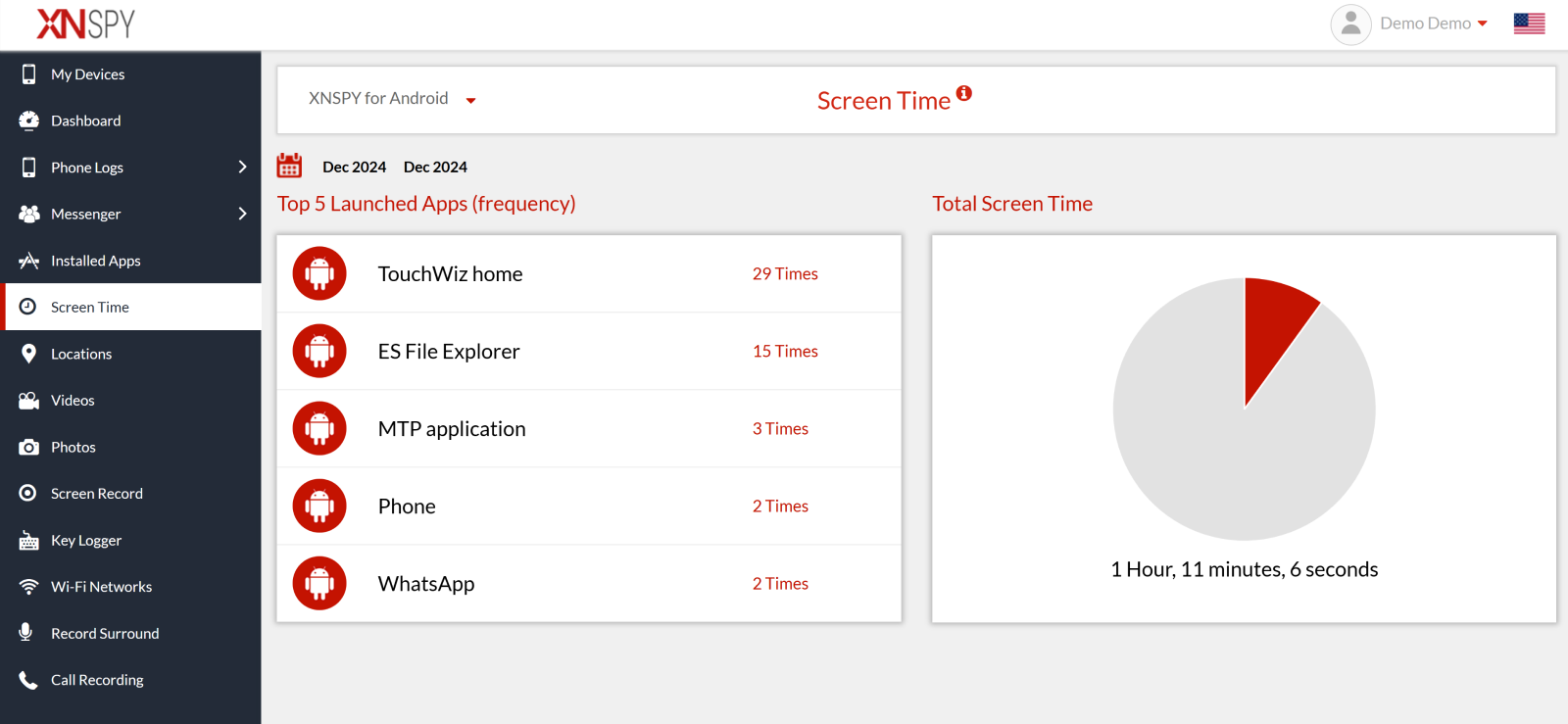
Screen time tracking in XNSPY immediately stood out because it provided structured usage breakdowns rather than raw activity logs.
During testing over a 24-hour usage window, we observed clear reporting of top-used apps, total screen time, and app-wise usage duration. Even when we increased usage complexity across multiple apps, the dashboard continued to generate readable summaries without requiring manual interpretation.
This was a key difference compared to Cocospy, which did not surface comparable usage analytics during our evaluation.
Final Verdict: XNSPY has a clear win because Cocospy does not offer screen time.
4. Screen Recorder and Content Monitoring
One of the more advanced features we tested was the screen recording system.
Throughout our test monitoring cycle, XNSPY generated screenshots at regular intervals. During a whole-day test session across social and browsing apps, we reviewed hundreds of captured frames organized by app and timestamp.
The key advantage we observed was categorization. Screenshots were grouped by application, which made it significantly easier to reconstruct user activity compared to raw log-based systems.
We also tested filtering by app and time range, which reduced review time when scanning large screenshot batches.
Final Verdict: Cocospy does not allow content monitoring, so XNSPY wins.
5. Call Recordings
Call recording worked consistently during testing across both regular calls and supported third-party applications.
Across approximately 50+ simulated call events, recordings were captured along with related information such as caller identity, timestamp, and duration. Recordings were accessible directly from the dashboard without additional processing delays.
This added a layer of verification that was missing in Cocospy, where only call logs were available.
Final Verdict: No recordings provided through Cocospy, which gives XNSPY another win.
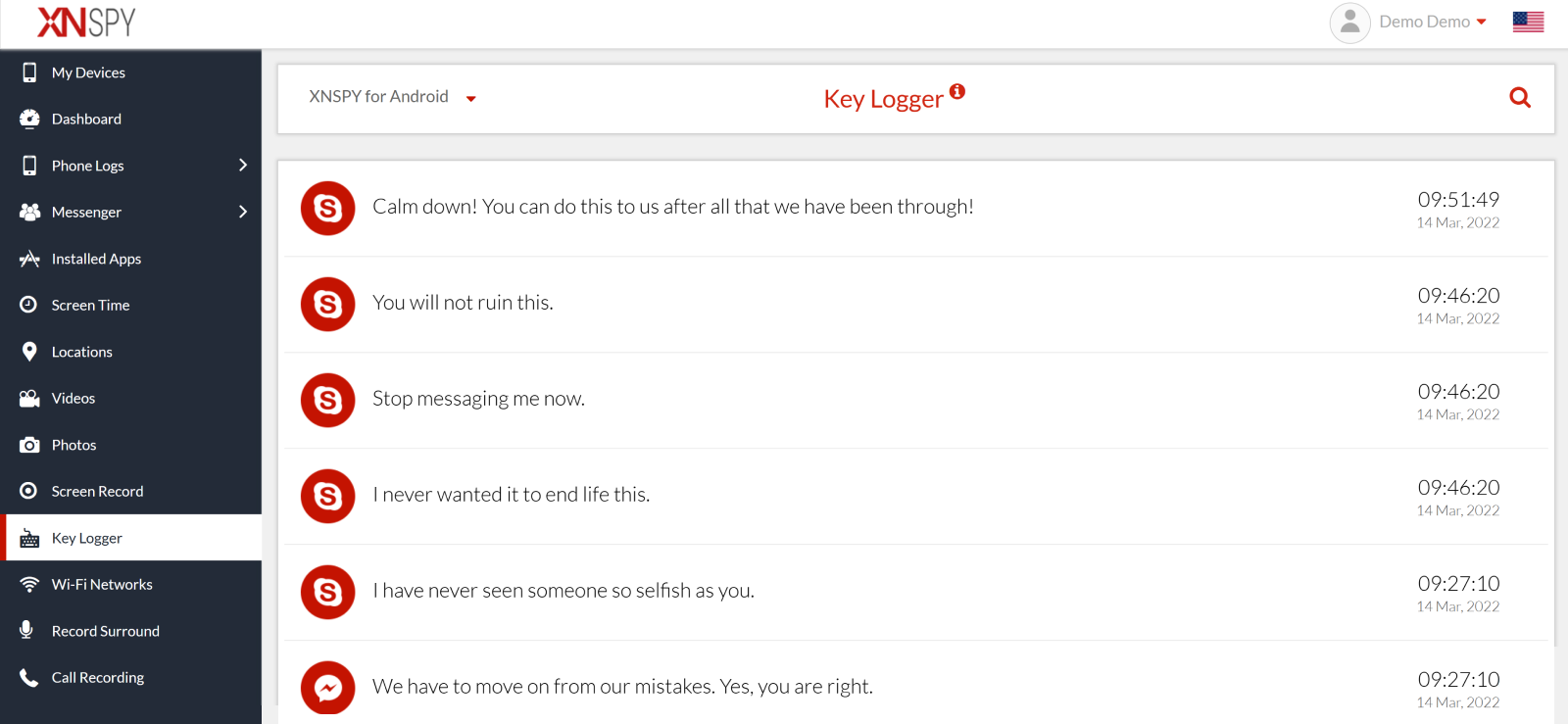
6. Keylogger
We also tested the keylogger across both Android and iOS environments using multiple apps and input scenarios.
During a week-long session of input test across 6 apps, XNSPY captured keystrokes consistently, including deleted and edited inputs. Even when text was removed before sending, it still appeared in logs.
What stood out during testing was, yet again, filtering. Instead of one continuous stream, logs could be segmented by app and time range, which made it easier to isolate relevant activity.
Final Verdict: XNSPY wins because the keylogger for both devices is available.
7. Location and SIM Tracking
Location tracking was tested over a 24-hour movement simulation with multiple checkpoints and transitions between locations.
XNSPY consistently updated live location data with map visualization and timestamps. In our testing, updates were reflected in near real-time intervals, which made it suitable for active tracking rather than just historical review.
SIM tracking also triggered correctly during simulated SIM changes, with alerts appearing in the dashboard without noticeable delay.
Final Verdict: XNSPY takes the win because of real-time and effective location tracking.
XNSPY Customer Reviews
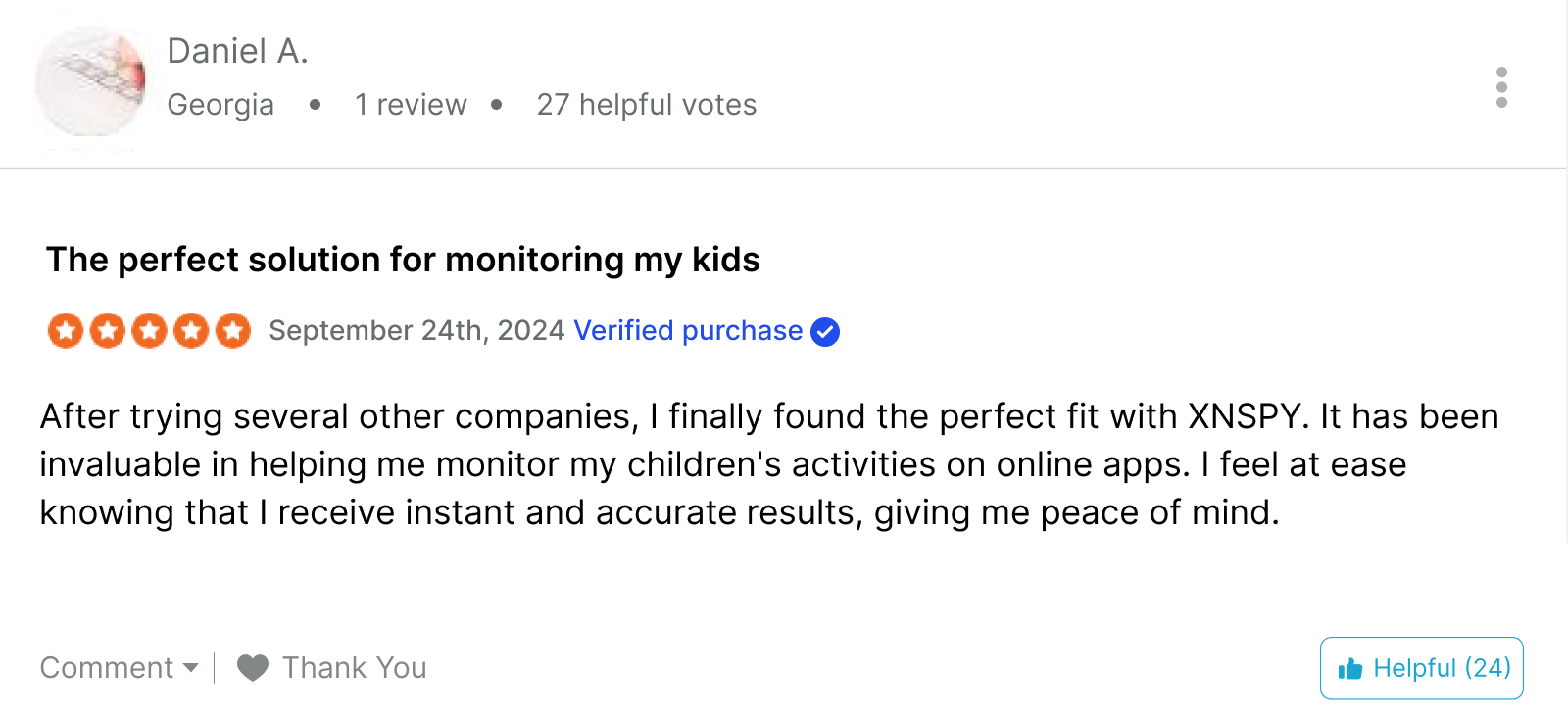
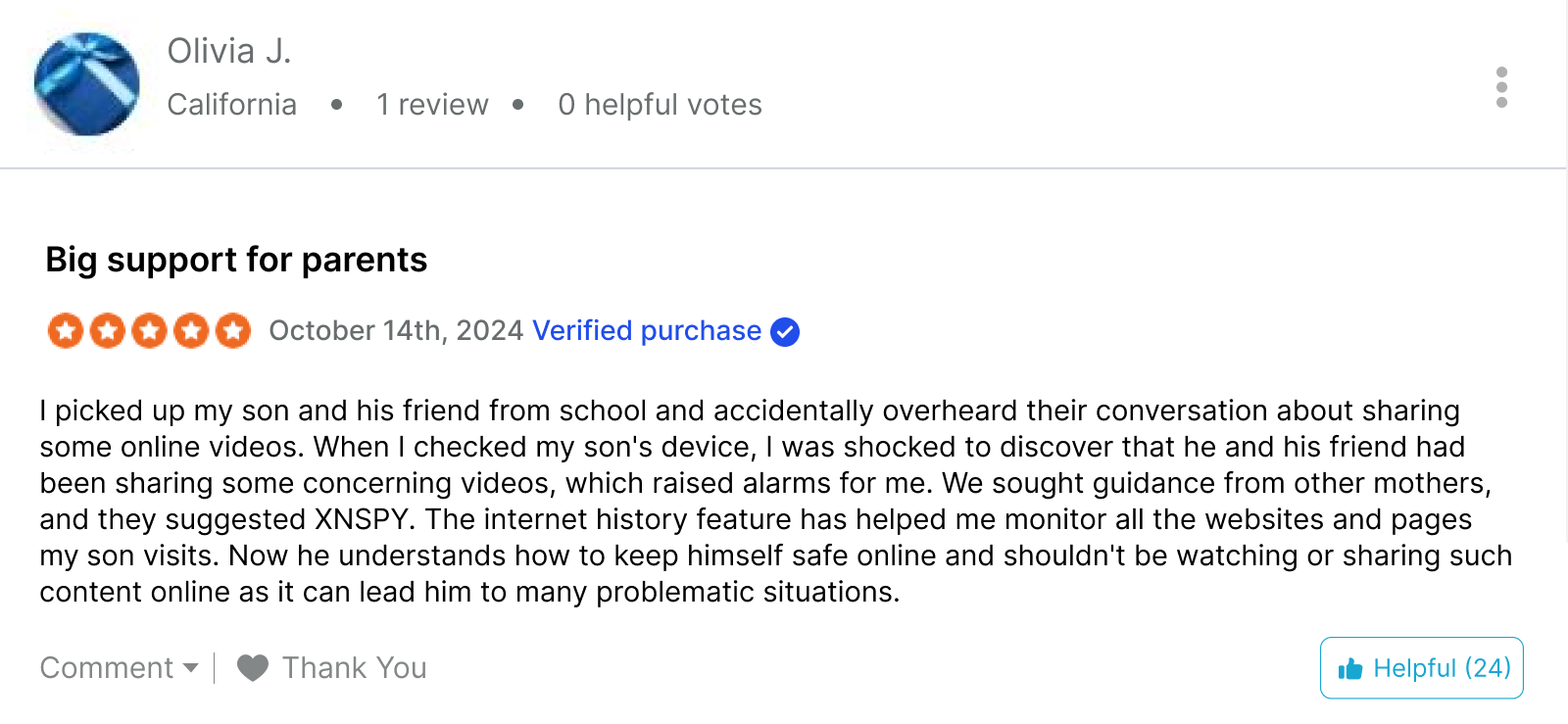
XNSPY Pros and Cons
After reviewing all of XNSPY’s features and their functioning, this pros and cons list can provide you a much-needed insight into its working.
XNSPY Pros
- Social media monitoring for 13+ apps;
- Remote commands can be executed;
- Call records for both third-party and phone apps;
- Updates are in real-time, and logs do not miss any data;
- Email support, 24/7 live customer support, and FAQs available ;
- Live support responds within a minute;
- Alerts are timely and consistent;
- Keylogger keeps tabs on all keystrokes with regularity and is available for both Android and iOS;
- 100% stealth mode in all devices, regardless of the version, not visible in the app drawer or APK files;
- Content monitoring through a screen recorder that tabs the overall phone activity;
- Almost the same number of features for iOS and Android with equal functionality and pricing;
- Tech support is available to guide you through the installation process;
- Proven consistency in quality and performance;
- All features function properly and regularly without any glitches or lags;
- All data on the dashboard is end-to-end encrypted with zero chances of data breach or leakage.
XNSPY Cons
- No free trial;
- No live camera option available;
- One-time access required to install the app.
Cocospy vs. XNSPY: A Quick Comparison
| Offerings | Cocospy | XNSPY |
| Social media monitoring | ⭐⭐⭐ No options to monitor the content | ⭐⭐⭐⭐⭐ Screen recorder and other commands keep tabs on the content |
| Messenger and IM chats | ⭐⭐⭐⭐ Only the app logo and name are listed | ⭐⭐⭐⭐ Conversation threads retrieved from 13+ social media apps directly |
| Installed Apps | ⭐⭐⭐⭐⭐ Screen time tracked for phone and individual apps, along with actuarial records | ⭐⭐⭐⭐⭐ List of apps installed, version, installation time, block/unblock remotely |
| Screen Time Tracking | ⭐⭐⭐ Cannot track screen time | ⭐⭐⭐⭐⭐ Only web history is present |
| Watchlist Alerts | ⭐⭐⭐ No watchlists and alerts | ⭐⭐⭐⭐⭐ Immediate alerts for watchlist words, contacts, and locations |
| Keylogger | ⭐⭐⭐⭐ The Android keylogger that does not log all keystrokes and sometimes stops working | ⭐⭐⭐⭐⭐ Inbuilt Android and iOS keylogger that does not miss keystrokes or stop working |
| Location Tracking and Geofencing | ⭐⭐⭐⭐ Location updates depend on Android settings and iCloud backup. Can take 6-24 hours before the logs appear | ⭐⭐⭐⭐⭐ Real-time GPS and SIM tracking, location history, and geofencing ranging from 100 meters to 1000 meters |
| Browser Monitoring | ⭐⭐⭐⭐ Stealth mode does not work for Android 10 or above, the APK file visible, detected by free anti-virus | ⭐⭐⭐⭐⭐ Internet history, bookmarks, and history analysis |
| Remote Commands | ⭐⭐⭐ No remote control | ⭐⭐⭐⭐⭐ Remote commands to exercise control |
| Stealth Mode | ⭐⭐⭐⭐ Runs on both iOS and Android, but with limited iOS features | ⭐⭐⭐⭐⭐ Stealth mode applicable for all Android and iOS devices, not visible in files or the app drawer, and not detected |
| Compatibility | ⭐⭐⭐⭐⭐ Same price plans for Android and iOS, with pricing as low as $4.99/month | ⭐⭐⭐⭐⭐ Smooth working on iOS and Android with the same range of features and real-time updates |
| Installation and User Interface | ⭐⭐⭐⭐ Difficult installation, unclear guide, interface is cluttered and difficult to navigate | ⭐⭐⭐⭐⭐ Easy installation process for non-technical people; guide is concise and clear; interface is interactive, responsive, and data is well-organized |
| Pricing | ⭐⭐⭐⭐ Different price plans for Android and iOS. Prices starting at $8.33/month | ⭐⭐⭐⭐ Customer support only via email with a 24-hour response time |
| Customer Support | ⭐⭐⭐⭐ Customer support only via email address with a 24-hour response time | ⭐⭐⭐⭐⭐ 24/7 customer support with responses within a minute |
Final Verdict
After spending time testing both platforms side by side, our team found that Cocospy is suitable for parents who only want occasional visibility into basic phone activity rather than constant monitoring.
During our evaluation, Cocospy consistently provided access to key logs such as IM chats, location history, and general phone activity. For parents who simply want to check in periodically, whether it is reviewing messages from time to time or confirming a device’s location, these features can cover the essentials without overwhelming the user with too many controls or data points.
However, the experience changes when the need shifts toward continuous monitoring and deeper insights into a child’s device activity. In those cases, Cocospy’s limitations become more noticeable, particularly when compared with the broader functionality offered by XNSPY.
Throughout our testing process, XNSPY consistently provided more detailed logs, stronger filtering options, and additional remote controls that allowed parents to go beyond passive monitoring.
Because of this difference in scope, the decision ultimately comes down to how much visibility a parent actually needs. If the goal is occasional check-ins on messages, calls, or location, Cocospy may be sufficient. But if parents want more comprehensive monitoring of device activity along with real-time insights and remote control features, XNSPY becomes the more practical option.
XNSPY: The Affordable Mobile Monitoring You Need
Try the cost-effective alternative with better features.
5 Comments
Leave a reply:
Your email address will not be published. Required fields are marked*

Jeff Hardy
January 22, 2025 at 1:52 pm😇
Tom
February 21, 2025 at 10:34 amI had high hopes for the app. Alas.
Alon Adam
March 25, 2025 at 11:52 amWhy cannot I find any cocospy reviews on capterra
Angela L. Collier
March 27, 2025 at 7:42 amHmm
Rodgers Aaron
April 9, 2025 at 2:03 pmis there a free ccospy version