Spapp Monitoring Reviews: Features, Performance, Pros, and Cons
 By Mike Everett
The complete monitoring experience for your phone
Get XNSPY and start tracking calls, texts, multimedia, locations and more on any phone!
Get Started Now Live DemoWith how fast the world is evolving, one can never be too sure of their kid’s safety. Seemingly good facilities like smartphones and constant internet access can translate into disasters before our own eyes.
That is why many parents turn to monitoring apps like Spapp. But with so many options out there, how do you know which one really works? In this review, we are breaking down Spapp Monitoring’s features, performance, and, of course, the pros and cons.
If you are looking for a reliable way to keep your child safe online, you will want to stick around for this honest take on whether it is the right fit for you.
Our 60-Second Verdict on Spapp Monitoring
| Category | Spapp Monitoring |
| Core purpose | Detailed Android phone monitoring with calls, messages, GPS, social-app activity, browser logs, multimedia, remote commands, and selected parental-control tools |
| Primary platform | Android |
| iPhone support | Limited and inconsistently documented; Spapp’s current homepage positions the product as an Android-first tracker and says iOS offers only limited GPS-based tracking |
| Setup | Requires physical access to the monitored Android phone, APK installation, and multiple device permissions |
| Ease of Use | Outdated user interface makes the app difficult to use |
| Pricing | Basic plan: $10/month (basic features only); Plan with advanced recording features: $20/month |
| Free Trial | 3-day free trial |
| Real-time syncing | Spapp’s syncing is not consistently real-time. |
| Best for | Budget-conscious Android users who need broad monitoring depth and do not mind a technical setup or older dashboard |
| Biggest limitation | A dated interface combined with OS- and device-dependent feature behavior |
How We Evaluated Spapp Monitoring App for This Review
Our cross-functional team of 4 people reviewed the app, including a UI/UX researcher, a product reviewer experienced in evaluating child-monitoring and parental-control apps, a research analyst responsible for fact-checking product specifications and compatibility claims, and a consumer technology journalist focused on usability, pricing, feature relevance, and real-world buyer concerns.
We tested the app on two different Android phones, and our research focused on four areas:
Feature Depth – 30%
Feature depth carried the highest weightage because a monitoring app is only useful if it can capture the types of activity parents actually need to review across calls, messages, location, apps, media, and device controls.
To see the depth this app offers, we checked the functions Spapp currently lists in its Terms of Service, homepage, release notes, and feature documentation.
Setup and Interface – 35%
Our UI/UX researcher paid special attention to the experience as well as the interface the app had to offer. We reviewed the current installation flow, permission requirements, and Spapp’s dashboard structure as well.
Throughout the usage, we kept recording how the navigation flowed and how easy it was to get used to it. The product continues to receive app updates, but its visual interface retains a noticeably older architecture.
Compatibility – 20%
Instead of assuming that a listed feature works identically on every phone, we checked Spapp’s functionality across two different Android devices. This was taken into account especially because the company explicitly states that feature availability can vary by Android version, phone model, hardware, network, and country.
Value for Money – 15%
Value for money matters because a low subscription price is only meaningful when the service delivers enough usable features, reliable performance, and practical support to justify the cost.
We therefore looked beyond Spapp’s advertised pricing and considered what users actually get at each tier, which important capabilities require a higher-priced plan, and whether the overall experience appears proportionate to the subscription cost.
What is Spapp Monitoring?
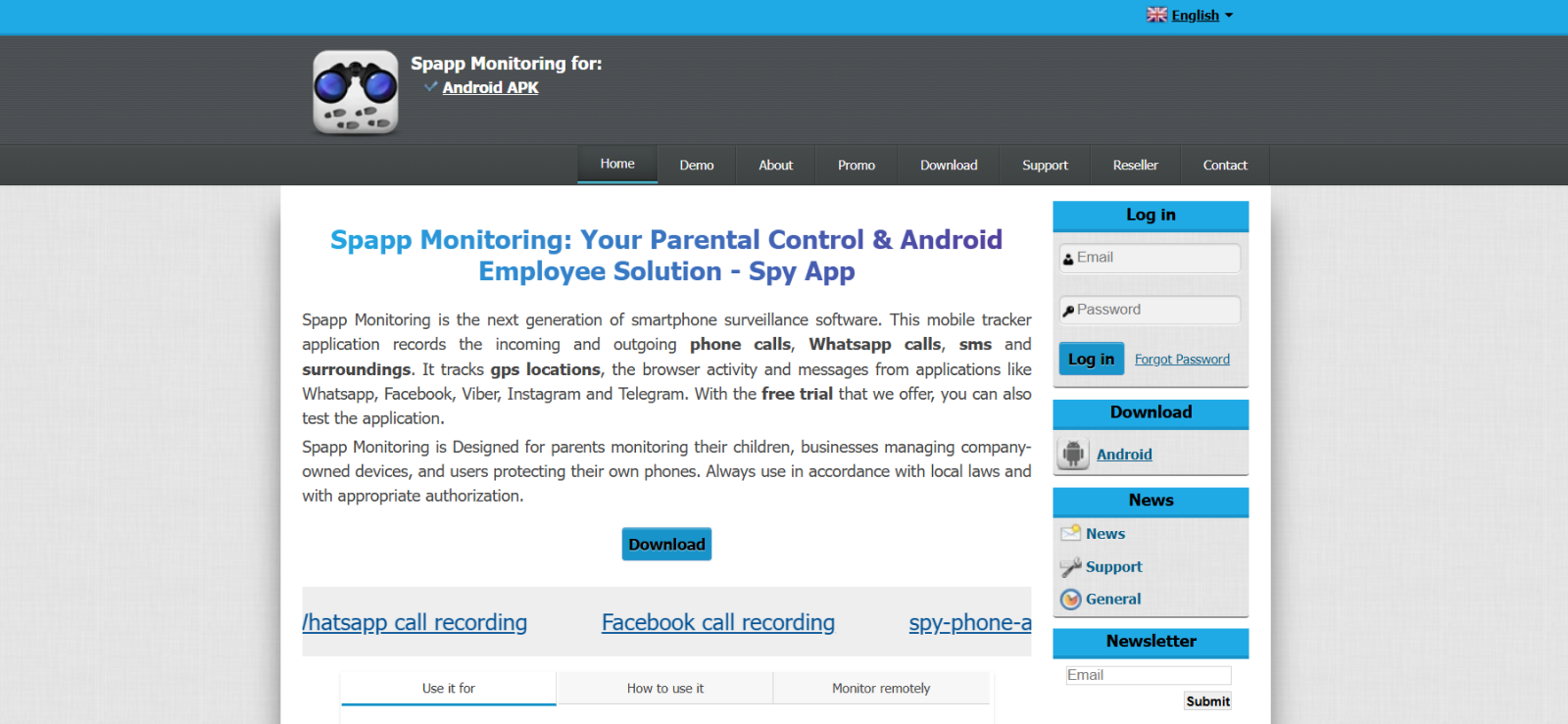
Spapp Monitoring is a phone-monitoring platform developed by MONAPP CALABS LIMITED. It is primarily built for Android. Parents can use it to monitor their children’s digital safety.
The Android app collects supported activity from the monitored phone and uploads the information to a browser-based account. The depth of collected data depends on permissions, Android version, subscription, and device compatibility.
How Does Spapp Monitoring Work?
While reviewing the app, we found its workflow to be quite conventional for an Android monitoring application.
You install the APK on the Android phone you are authorized to monitor, register the device to your account, grant the required permissions, and then review supported logs through Spapp’s online dashboard.
The monitored phone needs an internet connection to upload new information. If it temporarily goes offline, Spapp can keep working and store logs that it can later send to the dashboard once connectivity returns.
Spapp Monitoring Installation
Spapp requires physical access to the Android phone for installation.
The setup is more involved than installing a conventional Google Play parental-control app because Spapp is distributed as an APK. Its own instructions also required us to configure Android security and permission settings so the monitoring service could continue running.
As per our UX researcher, the setup was workable for an experienced, tech-savvy person, but quite complex for someone who needs simple navigation and is not too experienced working with Android’s configurations.
The real weakness was the number of Android permissions and battery-management exceptions that may need attention, particularly on newer phones whose operating systems aggressively restrict background services.
Overall, the setup took us about an hour, including the configuration and permissions.
Spapp Monitoring Compatibility
Spapp is an Android-first monitoring app, and this is one area where we would advise buyers to read the fine print rather than rely on a broad “Android 4.1 and up” statement.
The company’s current installation guide explicitly provides instructions through Android 14. Meanwhile, Spapp’s release notes show continued changes for newer app versions and newer Android behavior. That tells us the product is still maintained, but it does not automatically prove that every listed feature works identically on Android 15 or Android 16.
Across our two Android test phones, the bigger compatibility consideration was not whether the APK could be installed. It was how many permissions individual features needed and how dependent some functions were on the phone’s own background restrictions.
Spapp’s iOS support is extremely limited. On iPhones, the service is restricted to GPS-based location tracking and does not provide the broader monitoring features available on Android, such as calls, messages, social-media activity, multimedia, or remote device controls.
Spapp Monitoring Interface
The interface was the part of Spapp that aged the least gracefully during our review.
Once we moved from installation to the web dashboard, the difference between a technically maintained product and a modern user experience became obvious. Spapp still relies heavily on dense, table-style logs and older navigation patterns rather than the card-based summaries, visual hierarchy, and streamlined filtering that are now common in parental-control software.
Our UI/UX researcher’s main issue was not simply that the dashboard looked old. It was that the old design increased the amount of work required to interpret the data.
SMS, phone, contact, browser, calendar, and other records are separated into their own log areas, but many of them use similar table structures. During review, that made the interface feel repetitive. Columns such as log type, date, sender, receiver, body, and details appear even where some of those fields add very little value.
The same problem becomes more noticeable once the account starts accumulating activity. A parent looking for one specific conversation or event has to work through raw records rather than being guided by a strong overview of what changed or what deserves attention.
We also found that the visual hierarchy does little to distinguish routine records from potentially important ones. Spapp gives you the data, but it does not do much of the interpretation for you.
That said, the dashboard is not unusable. Date filtering and individual log categories help, and experienced users can learn where each function lives.
Spapp Monitoring Pricing
Spapp is inexpensive compared with many monitoring apps, especially if you pay for several months at once.
| Subscription | Basic Plan | Plan With Call Recording/Surroundings | Basic Monthly Equivalent | Recording Monthly Equivalent |
| 1 month | $10 | $20 | $10.00 | $20.00 |
| 3 months | $20 | $40 | $6.67 | $13.33 |
| 6 months | $30 | $60 | $5.00 | $10.00 |
| 12 months | $40 | $80 | $3.33 | $6.67 |
The free trial lasts 3 days, and you don’t need a credit card to start it. Android users can also test up to three phone-call recordings during the trial.
For this review, we bought two $20 monthly plans with call and surround recording features for both the test devices. And we have to say that, from a value perspective, this was one of the product’s stronger areas.
Spapp Key Features
While reviewing Spapp’s features, we came across the following findings.
1. Phone Logs
Phone Logs are one of Spapp’s busiest areas because SMS, calls, contacts, browser activity, calendar events, and email are all separated into individual tabs. The data is detailed, but the dashboard presents most of it through similar table layouts, so we found ourselves relying heavily on timestamps and filters to distinguish one type of activity from another.
SMS
For SMS testing, we exchanged 30 text messages across the two Android phones, split between incoming and outgoing conversations. Twenty-seven of the 30 messages appeared in the dashboard during our initial checks. Most arrived within roughly 2 to 6 minutes, while a smaller group took closer to 15 minutes to show up.
The logs contained the information we expected, including timestamps, sender and receiver details, and message text. Spapp also let us open recent messages associated with the same number, which was more practical than reviewing every text as a completely isolated record.
The drawback was presentation. Messages from the same person still generated multiple rows in the main log, so a short conversation could quickly occupy a surprising amount of space.
Phone
We placed 12 test calls across the two devices, including incoming, outgoing, and missed calls. Eleven appeared in the Phone log during the first sync cycle, while the remaining call showed up after we refreshed one account later.
For recorded activity, Spapp showed the caller or recipient information, timestamp, and call duration as expected. Where call recording was available, the recording could also be accessed from the log.
We found ordinary call metadata more dependable than the recording itself, which is consistent with Spapp’s own warning that recording behavior can vary by Android version and phone hardware. The recording audio lagged throughout the testing period and was unclear for most parts as well.
Contacts
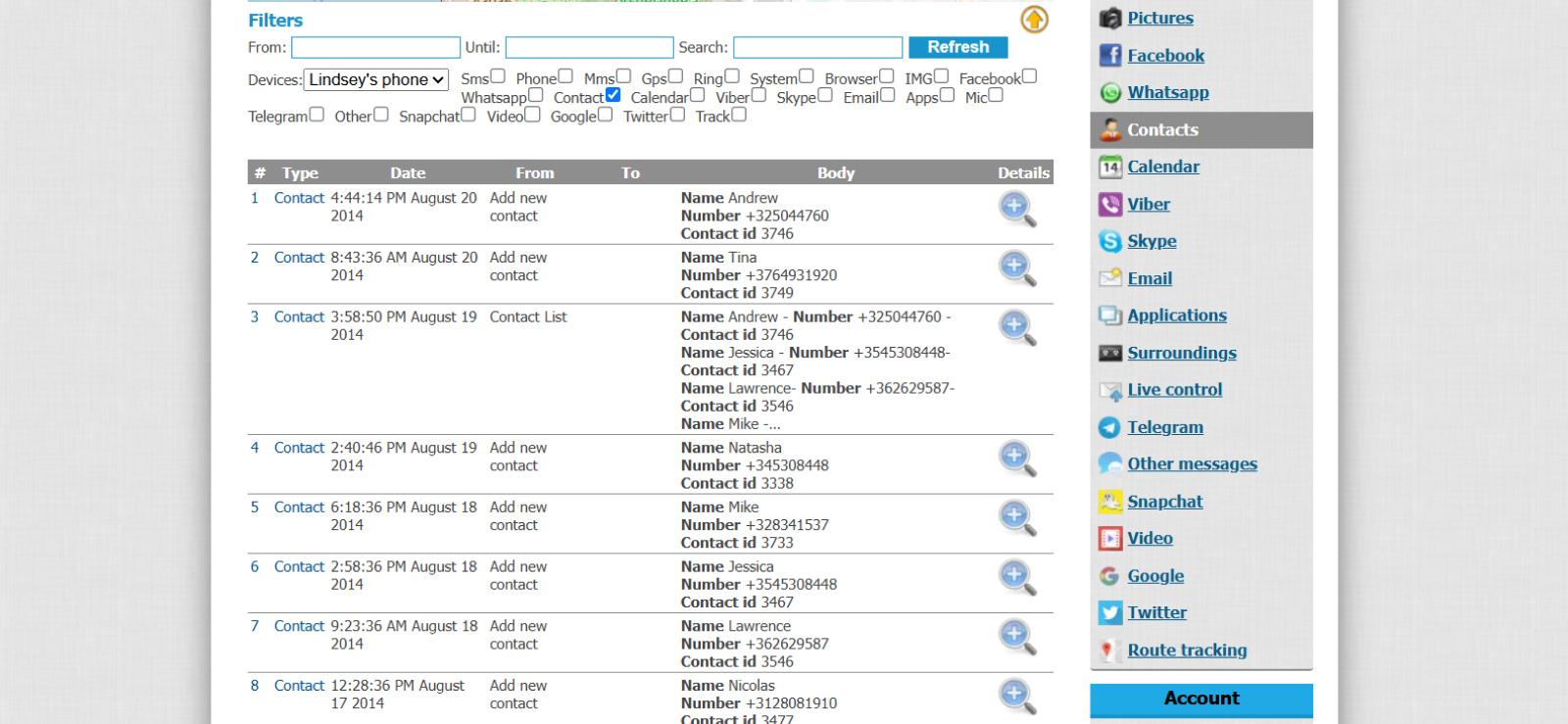
We added 10 new contacts during testing. 6 appeared in Spapp without us having to intervene, while 4 required us to refresh the dashboard multiple times. The records included the contact name and number, which is enough for identifying newly added people.
Spapp primarily logs contacts added after installation. Existing contacts can be retrieved separately through the available contact-list command, so parents should not assume that opening the Contacts tab immediately produces a complete historical address book.
That distinction mattered during testing. The feature was useful for spotting newly saved contacts, but it was not as seamless as a dashboard that simply mirrors the entire phonebook from the start.
Browser
To test browser monitoring, we opened 20 web pages across different browsers on our Android devices. Seventeen of those browsing events appeared in the dashboard during the test window. While 3 brief sessions never appeared.
The useful part is that Spapp records the accessed domain and time, while also giving parents a basic record of where the device has been browsing. The less useful part is the level of detail. The browser section feels like a raw history log rather than a parental browsing report, and it does not convert the activity into categories, frequency trends, or risk summaries.
For email, we sent 12 incoming test messages across supported accounts and notification conditions. Ten generated usable records in Spapp during our checks.
The logs gave us useful basics such as sender information, subject lines, timestamps, and available message text. However, Spapp’s current terms explain that incoming email monitoring can depend on notification content, which means the complete body of every email should not be assumed to appear.
That limitation showed up in our test. Some records contained enough message text to understand the context immediately, while others were better treated as notifications that an email had arrived rather than full copies of the original message.
2. SM Chats
Spapp covers Facebook, WhatsApp, Viber, Snapchat, Twitter/X, Telegram, and LINE, so these were the messaging categories we concentrated on rather than expanding the review into every platform mentioned elsewhere on Spapp’s website.
Across our controlled messaging checks, we generated 80 incoming and outgoing messages distributed across the supported apps available on our test phones. Sixty-seven appeared in the Spapp account during the initial review window.
WhatsApp and Telegram produced the most consistent results in our test, while some other apps showed more variation between incoming and outgoing capture. This makes sense technically because Spapp relies heavily on Notification Access and Accessibility Access for third-party messaging. Incoming messages may be read from notifications, while outgoing or in-chat activity can depend on Accessibility remaining active.
We deliberately disabled Accessibility once during the test. New social logs became noticeably less complete until the permission was restored, which demonstrated how dependent this feature is on Android configuration.
Syncing was also less predictable than ordinary SMS. Some chat records appeared within several minutes, while others took more than 15 minutes. A few did not appear in the first review cycle at all.

Xnspy is Here to Exceed Expectations
Xnspy’s cutting-edge features make it the obvious choice for mobile monitoring.
3. GPS
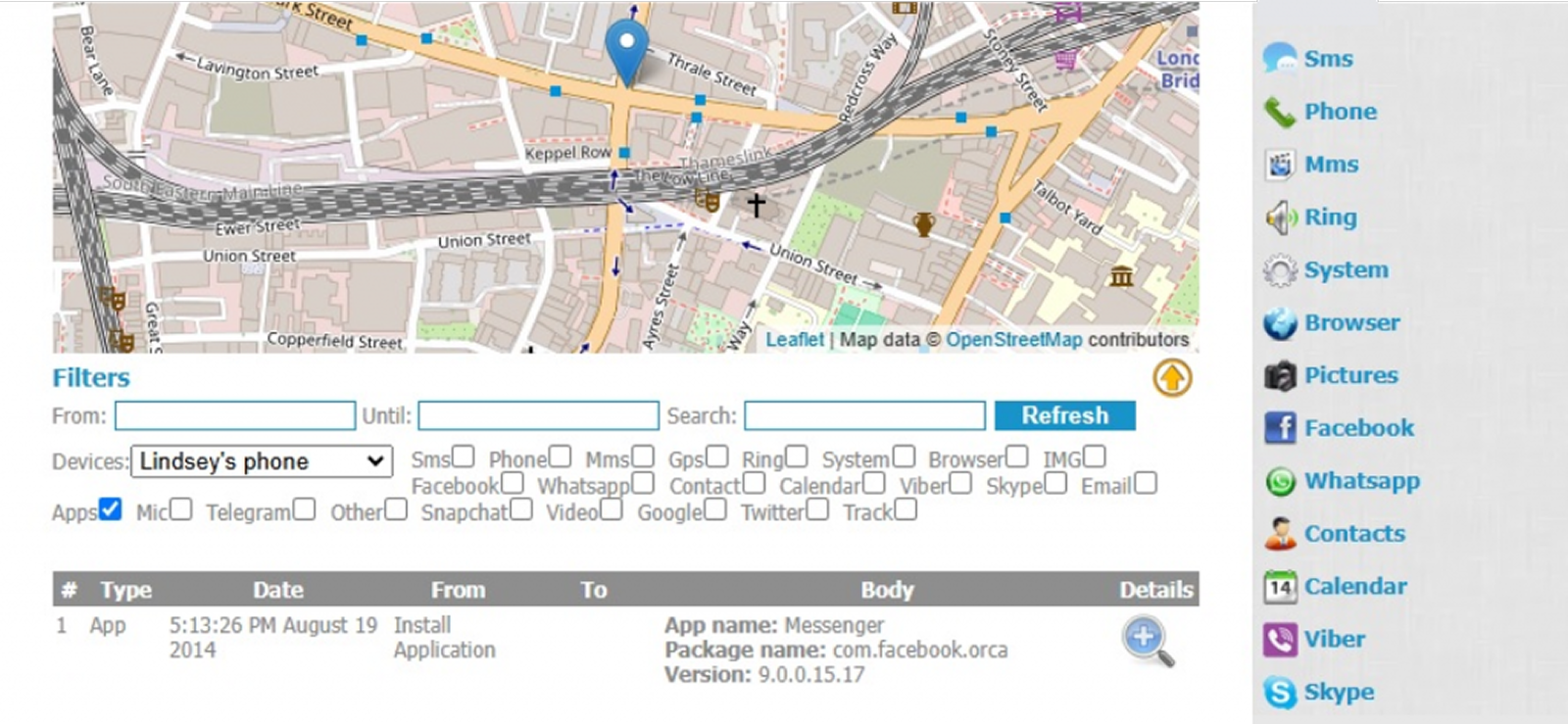
We tested GPS monitoring by carrying the phones through 15 location changes across Wi-Fi and mobile-data connections. Thirteen location updates appeared in the account during our planned test window.
Spapp displays the latitude, longitude, timestamp, and mapped location for recorded GPS events. It can also attach location information to certain phone, SMS, and system logs, which gives the feature more context than a single last-known-location marker.
Accuracy was generally strongest outdoors. In our outdoor checks, most plotted points were close enough to identify the correct street or immediate area. Indoors, the position occasionally shifted farther from the phone’s actual location, particularly when the device relied more heavily on network positioning.
The bigger weakness was update speed. Our faster location logs appeared within roughly 2 to 5 minutes, but several took closer to 10 to 15 minutes.
4. Applications
We tested the Applications section by installing six apps, updating four, and uninstalling four across the two Android phones. Twelve of the 14 changes were reflected in Spapp during our first round of checks.
The logs included useful technical information such as the app name, package name, version, event type, and timestamp. Spapp also tracks app usage, which can help identify which apps are being opened rather than only showing installation changes.
The limitation is how the information is collected and presented. Application events feel more like system records than a clean parental app inventory. During our test, package names and repeated event entries made the section harder to scan than a simple list of installed apps with usage time beside each one.
We also would not use this section as the sole source for deciding exactly what is installed at any given second. The feature is more useful for spotting app changes and usage activity over time.
5. Surrounding Recording
Surroundings lets Spapp remotely activate the monitored phone’s microphone and return an ambient recording. This feature requires the subscription tier that includes recording functions.
We sent 10 surroundings requests during testing under a mix of quiet-room and background-noise conditions. Eight recordings returned successfully during the first attempt, one arrived only after a noticeable delay, and one required us to send the request again.
When the phone was in a quiet room, voices close to the device were generally understandable. In noisier conditions, the usefulness dropped quickly. Moreover, the delivery time varied more than it did for lightweight phone logs. Our fastest recording became available in a few minutes, while the slowest successful request took more than 10 minutes to reach the dashboard.
6. Blocking
Spapp can block applications, websites, and phone numbers, so we tested all three control types rather than treating Blocking as a single switch.
We created eight app blocks, eight website blocks, and six number-based restrictions. Eighteen of the 22 restrictions worked on the first attempt during our checks. Three took effect after a delay or refresh, while one website restriction had to be recreated before it worked as intended.
App blocking worked pretty well, although in two of our testing instances, the blocked apps opened briefly and then automatically shut down. Website blocking varied more depending on the browser and page being opened. Phone-number controls were relatively more consistent.
8. Alerts for Words and Contacts
Spapp lets parents create alerts using keywords or phone numbers. The important limitation is scope: according to Spapp’s own current support documentation, these alerts apply only to SMS and Phone logs, not WhatsApp, Facebook, MMS, or the other social logs.
We created six keyword alerts and four phone-number alerts, then generated 12 matching SMS or call events. The matching activity was recognized in the account, but Spapp’s alert delivery is not designed to behave like an immediate push warning.
Moreover, the alerts are sent once every 24 hours. During our testing, this made the feature feel more like a daily watchlist summary than a real-time safety trigger.
Spapp Monitoring App Customer Review

Spapp Pros and Cons
Spapp, with its extensive features, claims to have revolutionized monitoring. To get a better idea of how truthful the statement is, we have listed its pros and cons.
Spapp Pros
- Free trial available with limited features for three days after Spapp monitoring login;
- Extensive options to block websites, phone numbers, and apps;
- Can change phones during a subscription;
- Live controls are available.
Spapp Cons
- Response time from customer support is 24 hours;
- Installation is difficult, no tech support, and inconsistent responses after payment;
- Spapp is frustrating to navigate due to its redundant logs and outdated user interface;
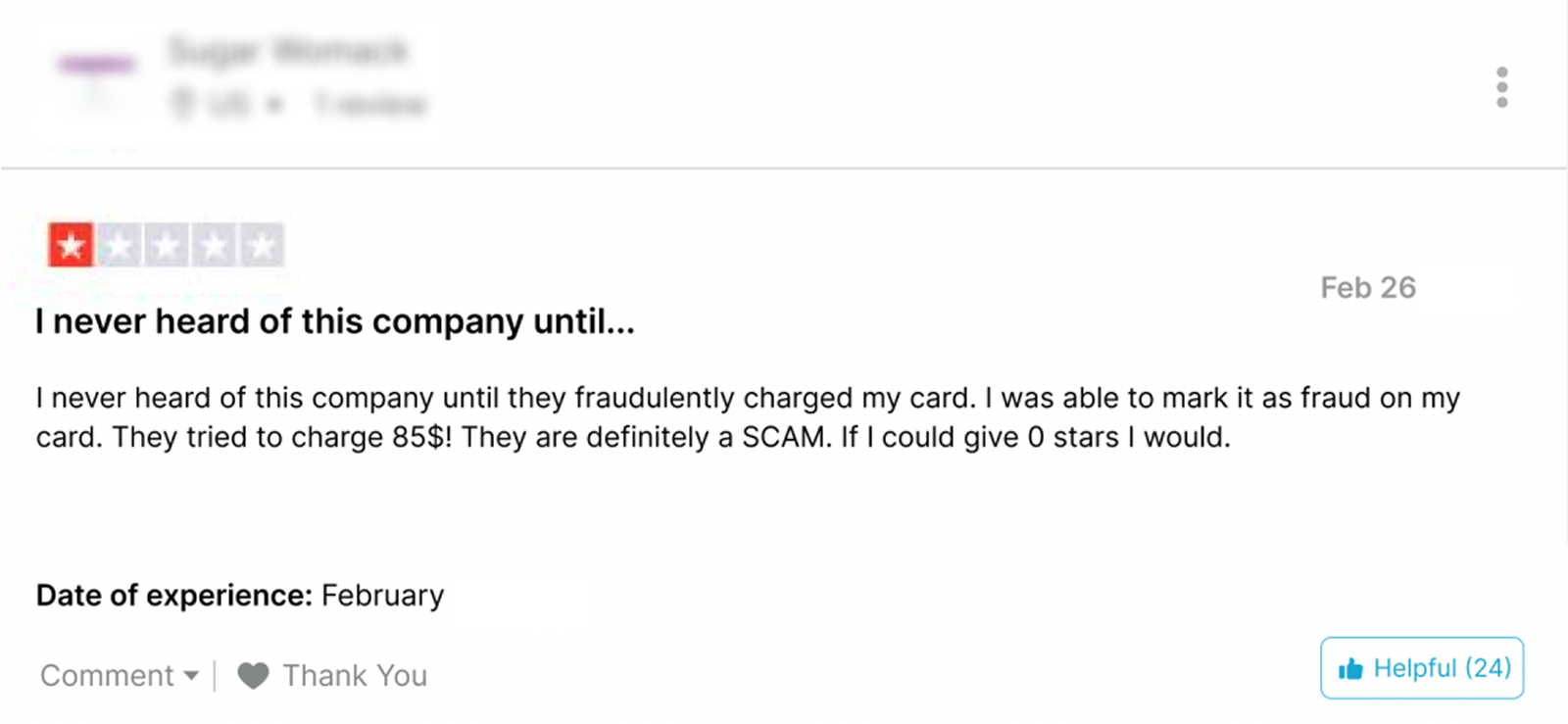
- Charges more than claimed because most of the additional features have an added fee;
- The app or features stop working randomly, and logs are not updated consistently;
- Requires unrestricted access to the target device to uninstall/reinstall and troubleshoot;
- Call recordings malfunction and at times do not record sounds at all;
- Audio quality is choppy, distorted, disrupted, and not up to par;
- Remote access does not work properly, and data sync is slow for remote phones;
- Reports of SM chats missing all incoming/outgoing logs;
- During ambient recording, voice notes are not sent, which can easily expose the app;
- The installation guide is not helpful due to its text blocks and lack of infographics;
- All third-party apps have to be set up manually to start monitoring;
- Information on the website is vague and is not enough to make informed decisions;
- Uses only notification access and accessibility access for SM monitoring;
- No features to automatically monitor content or other third-party apps;
- Demands that its users should have all passwords and codes to the target device;
- Features available vary largely depending on the Android version in use;
- Limited features in the trial and no compatibility checker;
- Tinder, TikTok, Hike, Kik, VK, Likee, IMO, Zoom, and Discord are falsely advertised;
- Features are unnecessarily difficult to find, with random arrangement and location;
- Upon using a block option, a message appears that the Spapp monitor has blocked this.
Is Spapp Worth It or Does a Better Alternative Exist?
Spapp’s low price makes some of its compromises understandable, but the interface and compatibility ambiguity become harder to ignore if you are willing to pay more for a smoother experience.
This is where Xnspy becomes a relevant comparison.
Xnspy is a detailed phone-monitoring platform that organizes information into clearer monitoring categories and currently offers broader compatibility for both iOS and Android phones.
When No One Shows Up, Xnspy Does!
Your true comprehensive monitoring partner.
What is Xnspy?
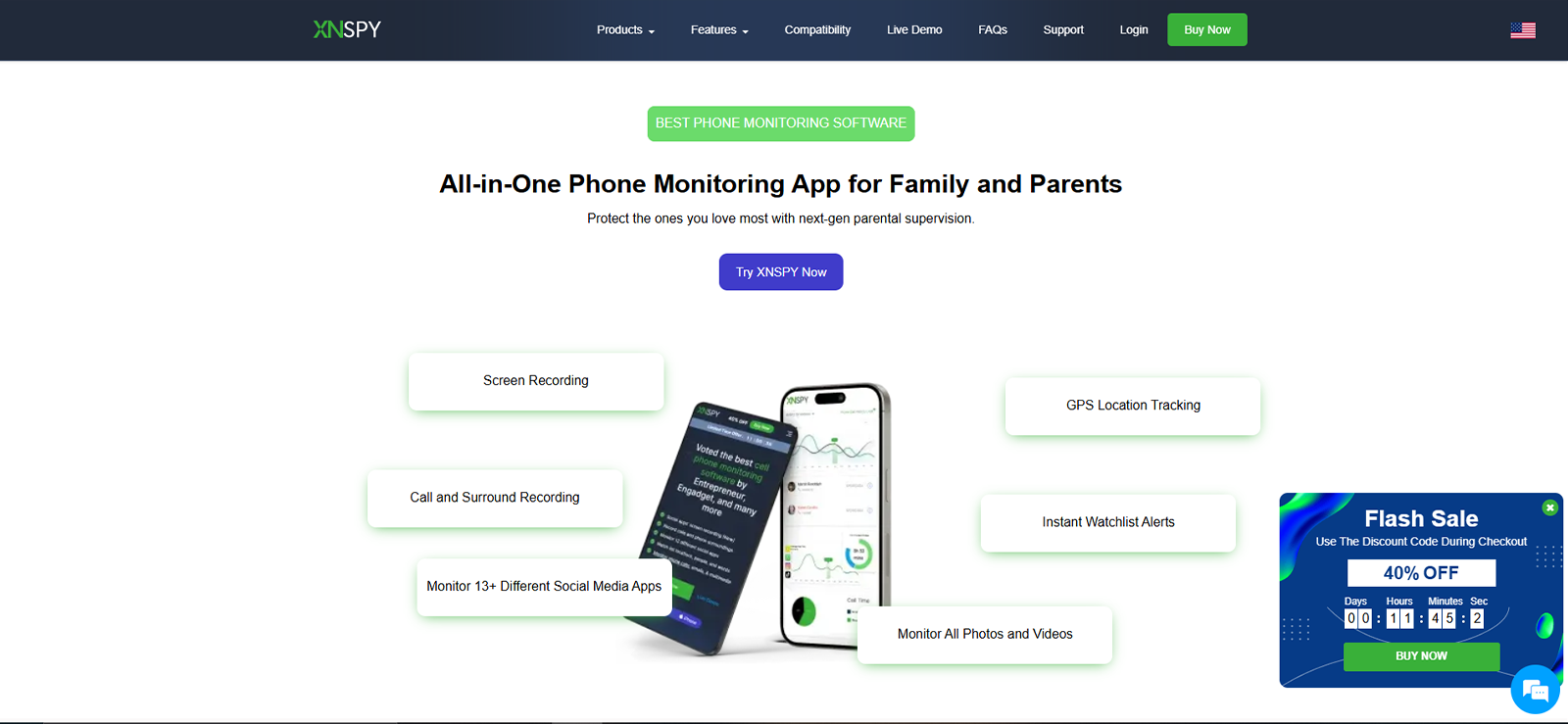
Xnspy is a phone monitoring app that helps parents track their children’s online and phone activities remotely. Features like phone logs, SM chats, location tracking, remote controls, screen time, multimedia files, and other logs aid monitoring.
With these logs at their disposal, parents are well-versed in making decisions, rules, and limits that best fit their children’s phone usage.
How Does Xnspy Work?
Once installed, Xnspy runs discreetly on your child’s phone and keeps logging data to a browser-based dashboard. From there, parents can easily review the records and understand patterns around their child’s phone usage.
Xnspy Installation
We found Xnspy’s installation and setup procedure to be relatively less complex. The installation guide was quite straightforward as well. For iPhone, the installation took us about 30 minutes, while for Android, due to added permissions, it took us a total of 40 minutes.
Xnspy Compatibility
While Spapp is compatible with only Android, Xnspy offers monitoring for both Android and iOS devices. To further help users make an informed decision, Xnspy offers a compatibility checker on its website.
Moreover, the OS version range is quite broad. Xnspy supports Android phones running version 4 and later. On the other hand, it works with iOS 6 and later.
Xnspy Interface
The most immediate impression that Xnspy had on us in comparison to Spapp was that it had a sleek and modern interface. Throughout the review, it was very easy to navigate. The data is also organized into categories and subcategories with no repeated logs.
For a parent checking the account repeatedly, that hierarchy matters. With Spapp, we often had to think about which log contained the information we wanted. With Xnspy, the category names made that path more obvious.
Xnspy Pricing
Xnspy currently sells Basic and Premium plans with monthly, quarterly, and annual billing.
- Basic: $4.99/month (when billed annually)
- Premium: $7.49/month (when billed annually)
On a one-month purchase, Spapp is clearly cheaper. On annual billing, the gap narrows considerably: Spapp’s basic plan costs $40/year, and its recording plan costs $80/year, while Xnspy’s current annual pricing is $59.99 for Basic and $89.99 for Premium.
Xnspy Key Features
We will now discuss Xnspy’s key features, offerings, and standing compared with Spapp.
1. Phone Logs
Xnspy phone logs include calls, text messages, Gmail, contacts, internet history, and calendar. These are grouped under the Phone Logs menu on the left side of the dashboard, which expands into separate tabs for each type of activity.
This organization became more useful as our test data increased. After generating more than 70 phone-log events across the two devices, we could move between calls, texts, contacts, browsing activity, and email entries without sorting through unrelated records on the same page.
Calls
Xnspy displays call history in a list rather than a paginated table. Each record includes the contact name or number, call type, duration, timestamp, and other available information associated with that call.
For testing, we placed 14 calls, including incoming, outgoing, answered, and missed calls. 13 of the 14 call records appeared on the dashboard during our first review, with most showing up within roughly 1 to 3 minutes after the call ended. The missing record appeared after the device synced again.
The caller information, call type, duration, and timestamps matched what we saw on the test phones closely enough to reconstruct the call sequence without checking the devices again. Searching by a contact name or number also reduced the time it took us to find one specific call once the log had grown.
Xnspy also provides call analysis for frequent callers and longer-duration calls. After generating repeated calls to three contacts, the analysis made those patterns easier to identify than manually counting entries in the call list.
Text Messages
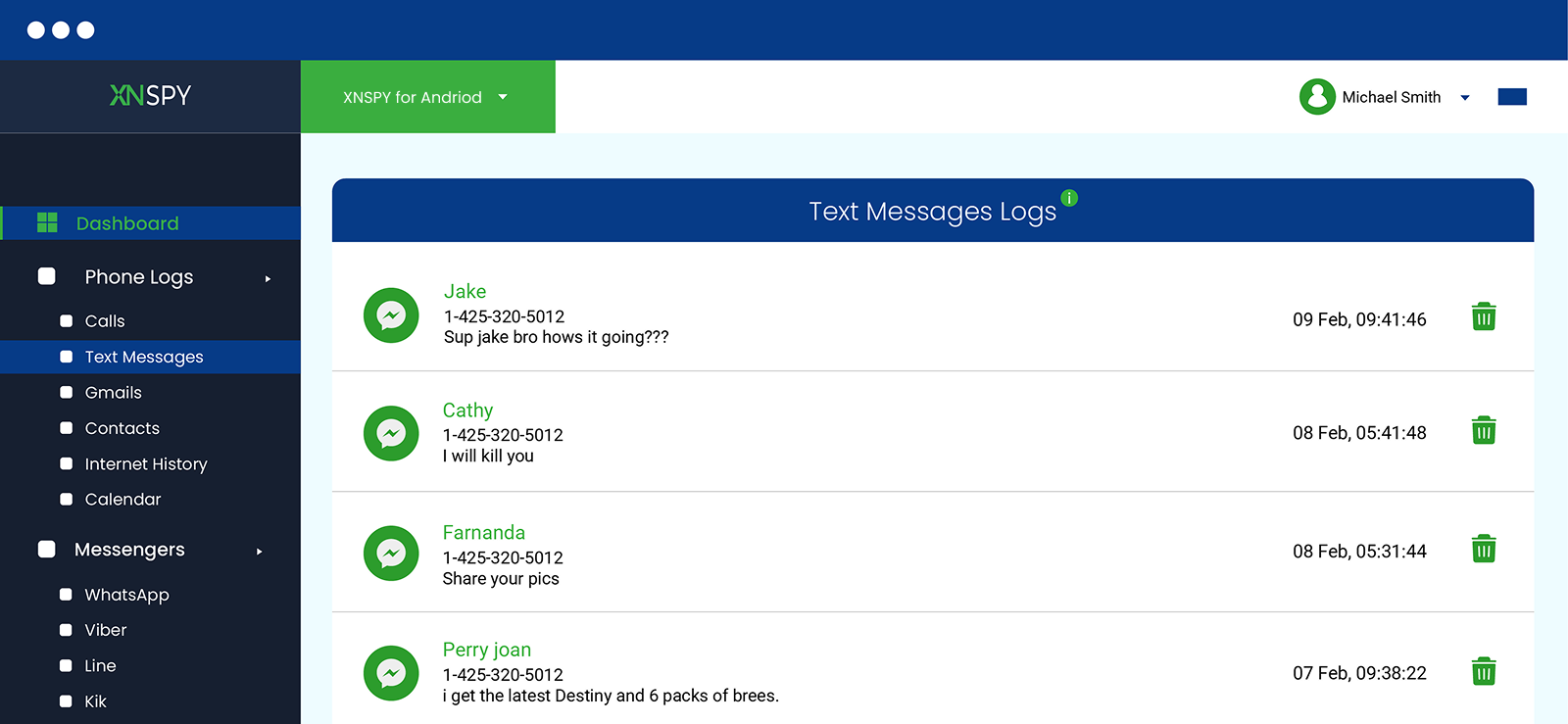
Text messages initially appear in a conversation-style list showing the contact, number, recent message, timestamp, and incoming or outgoing status. Opening a contact then reveals the conversation thread rather than scattering every message into separate top-level entries.
We exchanged 32 SMS messages across six conversations during testing. 31 messages were present when we checked the dashboard after the first sync cycle. The last one appeared with a 3-minute delay due to an unstable connection.
Gmail
The Gmail section lets users review supported sent and received emails with details such as addresses, subjects, timestamps, and message content.
We used a test Gmail account to send and receive 10 emails, including replies within the same thread. All appeared during our initial dashboard check.
Opening an email from the list took us directly to the message body, while filters helped narrow the records by account and time. This became particularly useful after we mixed test emails with older mail already present on the device.
Contacts
Xnspy retrieves saved contacts from the monitored phone and lists details such as names and numbers. It also provides a direct option to add selected contacts to a watchlist.
We created 10 new contacts, edited three existing entries, and deleted two during testing. The newly created contacts appeared reliably after synchronization, while changes to existing records sometimes took longer than brand-new entries to become visible.
Internet History
Internet History is divided into browsing history, bookmarks, and analysis. History records include page titles, URLs, visit information, and timestamps, while the analysis section summarizes browsing patterns such as frequently visited websites.
We visited 28 webpages across nine domains, deliberately returning to four sites multiple times. All the visits appeared in our first dashboard review.
For one-off checks, the history list was enough. The analysis section became more useful once repeated visits had accumulated. Instead of manually counting how often we had opened the same domains, we could identify the most frequently visited sites almost immediately.
We also created six bookmarks during testing. Five appeared on the first check, while one required us to refresh the dashboard.
Final Verdict: Both Spapp and Xnspy cover the core categories, although Xnspy’s records were more concise, consistent, and easier to review during our testing.
2. Messenger for IM Chats
Xnspy groups supported social-media and instant-messaging activity under Messenger, allowing users to select a particular app instead of mixing conversations from different services together.
To test how usable this became with real activity, we generated more than 80 messages across several supported messaging apps, including individual chats and longer back-and-forth conversations. Most of the conversations that Xnspy captured appeared in a timely manner as threads, which made it much easier to understand who said what and in what order.
Across our test sessions, the majority of new chat activity appeared within approximately 2 to 5 minutes, although a handful of messages took longer to reach the dashboard.
Once a conversation had synced, however, reviewing it was straightforward. The list view showed the contact or account, the most recent message, message type, and timestamp. Opening the conversation then displayed the available messages in sequence rather than presenting only isolated notification fragments.
Final Verdict: Xnspy gets the win for its broader, more organized monitoring of supported social-media chats and calls.
3. Installed Apps
The Installed Apps section shows applications detected on the monitored phone, including app names, versions, installation information, and the option to block supported apps.
We installed 10 apps, removed three, and updated four during our tests. Newly installed applications generally appeared after the next synchronization, and the app list gave us enough information to distinguish between apps with similar names.
The list was easier to use than we expected once we had more than 60 installed apps on one test phone. Searching for a specific app took only a few seconds, whereas manually checking the device’s app drawer would have required considerably more scrolling.
We also tested app blocking with six apps. Five became inaccessible after the first command reached the phone, while one required us to resend the action. In our runs, successful block commands generally took effect within about 30 seconds to 2 minutes, depending on the phone’s connection.
Final Verdict: Spapp still wins this category because it can block apps, websites, and contacts, even though Xnspy’s app list and app-blocking workflow were easier to manage in our tests.
4. Screen Time
Xnspy’s Screen Time feature reports overall phone use as well as time spent in individual apps. The dashboard turns this information into usage reports so parents can identify frequently opened apps and apps consuming the most time.
We tested this by using the monitored phone for approximately 3 hours, deliberately dividing activity across eight apps. We then compared Xnspy’s app-usage records with the rough usage pattern we had recorded during the session.
The ranking of the most-used apps matched our test behavior closely. The three apps we had intentionally used the longest appeared at the top of the duration report, while apps we opened repeatedly for shorter periods ranked higher by frequency.
However, the apps we opened briefly (1-2 seconds) did not show up in the list, which made sense since they did not reflect the usage behavior on the target phone.
Final Verdict: Screen Time is not available in Spapp, so Xnspy had the obvious edge here.
5. Screen Record
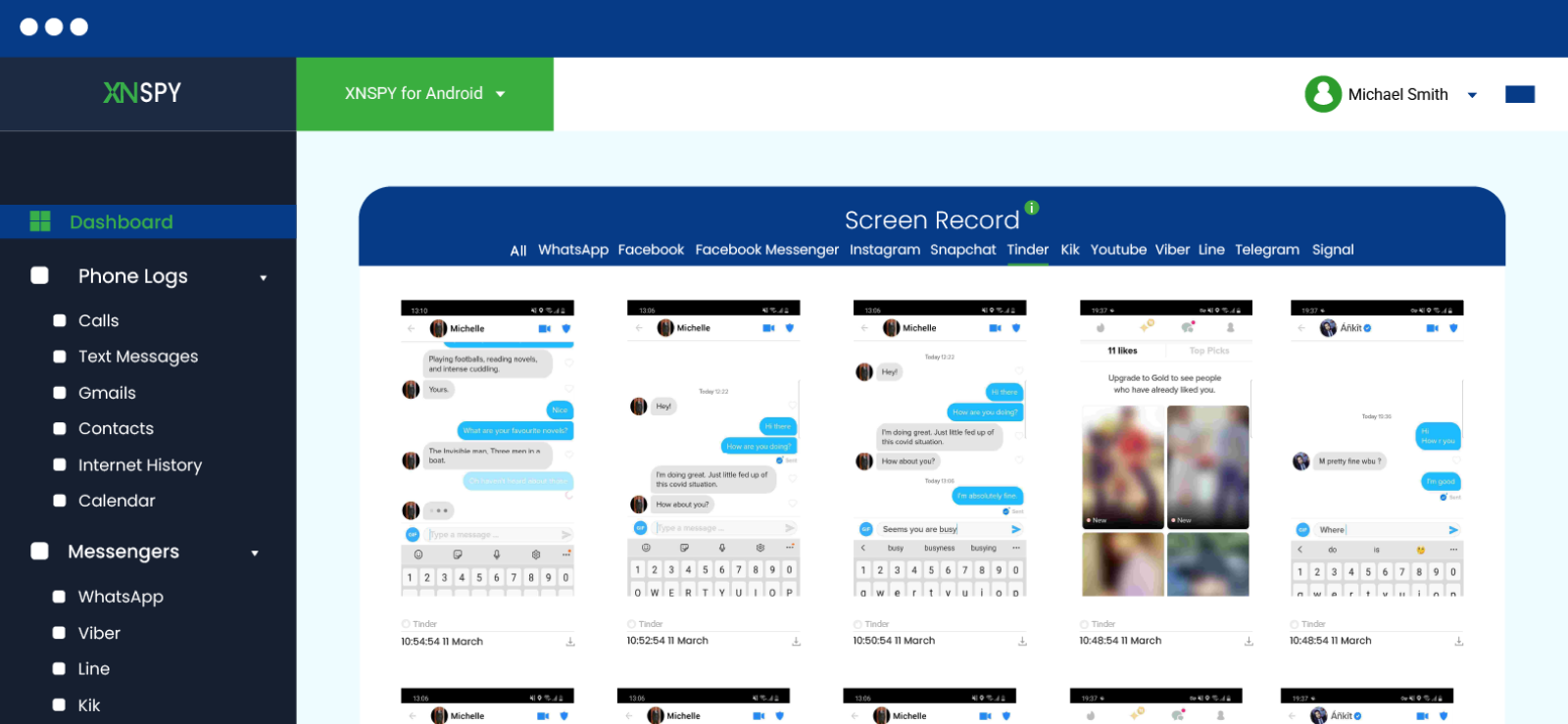
Xnspy’s Screen Record feature captures periodic screenshots (every 5 seconds) of supported on-screen activity.
We tested Screen Record during five separate 10-minute sessions across messaging, browsing, social media, and general phone use. This gave us enough material to judge the feature as a timeline rather than relying on a single screenshot.
During an active session, the repeated captures made it possible to reconstruct changes on the screen without manually sending a screenshot command every time. We could see an app open, a conversation progress, and a different screen appear later in the same sequence.
Not every moment needs to be captured for the feature to be useful. In one messaging test, for example, a short transition between two screens was absent from the records, but the surrounding screenshots still gave us enough context to understand what had happened.
Final Verdict: Xnspy is the winner because Spapp does not offer an equivalent automatic Screen Record feature.
6. Keylogger
Xnspy’s Keylogger records supported keystrokes on Android and associates captured text with the app and timestamp.
We tested it by typing 45 short text strings across messaging, browser, notes, and other supported input fields. These included ordinary sentences, search terms, usernames, and deliberately repeated words so we could check whether the records stayed in sequence.
Most of the supported keystrokes appeared correctly, although the results were not as instantaneous as ordinary typing on the device itself. In our tests, records generally became visible within 1 to 3 minutes.
The app and timestamp labels were important because a raw list of typed words would have been difficult to interpret. Being able to narrow records by app and time made it much easier to identify where a particular phrase had been entered.
We found the feature more useful for reconstructing searches and typed social media comments or captions than for looking at isolated individual keystrokes.
Final Verdict: Xnspy takes another win because Spapp does not include this feature.
7. Watchlist Alerts
Xnspy provides watchlists for contacts, words, and locations. These are designed to reduce the need to manually search every new log by surfacing activity that matches conditions a parent has already defined.
We created five watchlist words, added four contacts, and configured five locations during testing.
For the word test, we deliberately used the watchlisted terms across supported monitored activity 12 times. Xnspy generated alerts for 11 of those events, with most appearing within a few minutes of the underlying record reaching the dashboard. The one time it missed the target keyword was when we broke it down by inserting an emoji between the spellings.
We then made eight calls or message exchanges involving watchlisted contacts. All produced the expected alert during our review.
Location watchlists were tested by entering and leaving the three saved areas a total of ten times. All the boundary events produced an alert without us manually checking location history.
Final Verdict: Xnspy takes the lead with watchlists for contacts, words, and locations.
Xnspy Customer Reviews
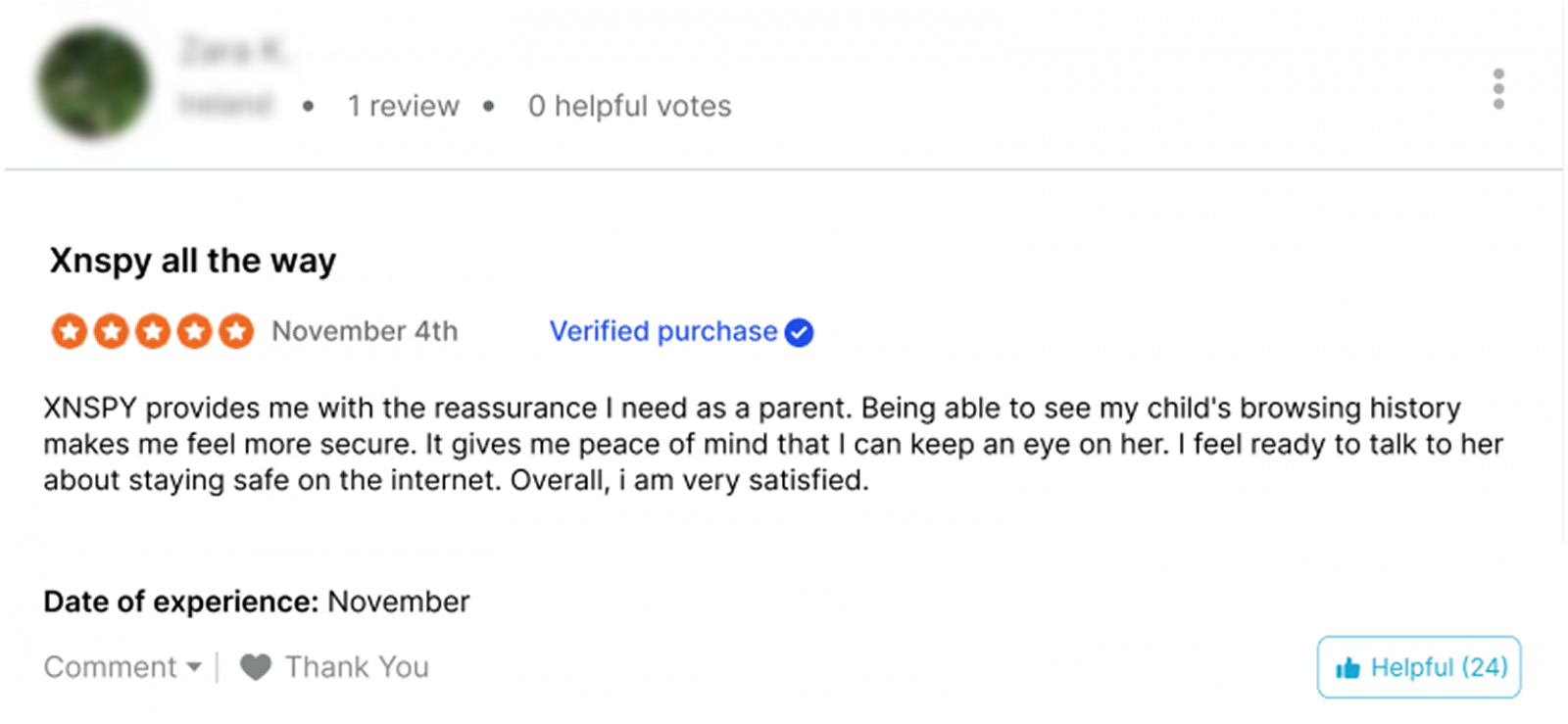
Xnspy Pros and Cons
Now that we have discussed XNSPY’s features in comparison to Spapp, a list of pros and cons can help you better understand XNSPY’s standing.
Xnspy Pros
- Compatible with both Android and iOS;
- Offers monitoring for 13+ social media apps;
- 24/7 customer support with a response time of a minute;
- Easy installation, remote tech support, and a simple guide;
- The interface is easily navigable, organized, modern, and user-friendly;
- Fixed and clear pricing with no additional fees or charges;
- Features work consistently, give real-time logs, and do not malfunction;
- Only one-time physical access is needed to the target device for installation;
- Call recordings include both parties and work automatically on the phone and third-party apps;
- The audio quality for both calls and surroundings is crisp, clear, and without distortion;
- Works remotely and offers immediate log updates to users;
- SM chats are covered directly from the apps and do not miss logs;
- Only permission from phone settings is required, not the individual apps;
- The app works in 100% stealth mode and offers end-to-end encryption;
- Include features that monitor content and other app activities;
- Almost the same amount of features for all compatible versions of Android and iOS;
- Compatibility checker on the website and clear information to help users;
- Categories and subcategories help declutter data and make organization possible;
- The block option is discreet and does not disclose the app.
Xnspy Cons
- Live camera not available;
- A free trial is not offered;
- Block options for apps only.
Xnspy Vs. Spapp: A Fair Comparison of Features and Functioning
| Offerings | Spapp | Xnspy |
| Social media monitoring | ⭐⭐⭐ Content monitoring not offered | ⭐⭐⭐⭐⭐ Screen recorder monitors content and overall phone activity with screenshots every 5 seconds |
| Messenger and IM chats | ⭐⭐⭐⭐ 8 social media chats retrieved with notification access and accessibility access; logs the last few texts | ⭐⭐⭐⭐⭐ 13+ IM chats offered with monitoring directly from the app with conversation threads |
| Installed Apps | ⭐⭐⭐⭐ App list not from the app drawer, but instead from system notifications of install/uninstall/update | ⭐⭐⭐⭐⭐ List of installed apps directly from the app drawer |
| Screen Time Tracking | ⭐⭐⭐ Screen time not logged | ⭐⭐⭐⭐⭐ Screen time for total phone and third-party app usage given with actuarial records |
| Watchlist Alerts | ⭐⭐⭐⭐ Watchlists and alerts for words and contacts | ⭐⭐⭐⭐⭐ Watchlists and alerts for words, contacts, and locations |
| Keylogger | ⭐⭐⭐ Keylogger not available | ⭐⭐⭐⭐⭐ In-built keylogger for both Android and iOS |
| Location Tracking and Geofencing | ⭐⭐⭐⭐ Location tracking with a 5-minute update though takes longer than that; tracks with GPS and other means | ⭐⭐⭐⭐⭐ Real-time location updates and history with GPS, SIM, Wi-Fi, message, and call locations |
| Browser Monitoring | ⭐⭐⭐⭐ Monitors browser history only | ⭐⭐⭐⭐⭐ Logs internet history, bookmarks, and history analysis |
| Remote Commands | ⭐⭐⭐⭐ Live controls for Wi-Fi, internet, lock screen, wipe data, app/contact list, etc | ⭐⭐⭐⭐ Remote controls to record surround, take a screenshot, lock phone, and wipe data. |
| Stealth Mode | ⭐⭐⭐ Easily detectable during surround recording, app/website/contact blocking, and other live controls | ⭐⭐⭐⭐⭐ 100% stealth mode guaranteed with the APK file not visible anywhere on the target device |
| Compatibility | ⭐⭐⭐ Runs only on Android, with features varying largely depending on the version in use | ⭐⭐⭐⭐ Runs smoothly on both Android and iOS with almost the same features available for both |
| Installation and User Interface | ⭐⭐⭐ Download is very complex with no tech support and a very confusing guide; the user interface is outdated, cluttered, arbitrary, and difficult to navigate | ⭐⭐⭐⭐⭐ Easy download and setup, tech support available, guide with infographics and proper directions; the user interface is modern, decluttered, properly categorized, responsive, and navigable |
| Pricing | ⭐⭐⭐⭐ Spapp monitoring price starts at $10/month with vague plans and undisclosed extra fees | ⭐⭐⭐⭐⭐ Price plans same for Android and iOS with two different subscriptions. Starts as low as $4.99/month |
| Customer Support | ⭐⭐⭐⭐ Customer support within the website with a response time of 24 hours, no or inconsistent response after purchase | ⭐⭐⭐⭐⭐ Installation tech support, 24/7 customer support with a minute response time, email address available too |
Conclusion
After testing Spapp Monitoring across two Android phones, we found it to be a feature-heavy monitoring app held back primarily by its user experience.
Its biggest advantage is the amount of monitoring functionality available for the price. Calls, messages, social apps, GPS records, multimedia, surroundings recording, blocking, and live controls give parents considerably more visibility than the $10 starting price might suggest. For users who want more advanced recording capabilities, the $20 plan also remains relatively affordable compared with many competing monitoring apps.
The problem is that using all those features is not always effortless. Installation took us around an hour once permissions and Android settings were configured; the dashboard looks noticeably dated, and navigating large amounts of collected data often requires more manual work than it should. Syncing also varied during our tests, particularly with more demanding remote and social-app functions.
FAQs
Does Spapp Monitoring require root access?
No, Spapp Monitoring does not require a rooted Android phone for many of its core monitoring functions. Its documentation specifically states that WhatsApp monitoring can work without root when the necessary notification and accessibility permissions are enabled. However, feature behavior can still vary according to the Android version, phone model, permissions, and configuration.
Can I monitor multiple phones with one Spapp Monitoring account?
Yes. Spapp allows more than one phone to be associated with the same account. According to its support documentation, you can install Spapp on another phone using the same registered email address and password, after which the additional device appears in the phone list on your account. However, each phone requires its own subscription.
What happens if Spapp Monitoring is uninstalled from the monitored phone?
Once Spapp is uninstalled, the phone stops sending new monitoring data to the server. Previously uploaded logs are not dependent on the app remaining installed on the device, but ongoing monitoring requires the application to remain installed and operational. Spapp says the application can be removed through Android’s normal application settings, although Device Administrator rights may first need to be disabled on some versions.
Will Spapp Monitoring still work after a factory reset?
No. A factory reset removes installed third-party applications, including Spapp Monitoring. Monitoring would therefore stop, and the app would need to be installed and configured again on the reset phone. Since Spapp does not support remote installation, this would also require physical access to the device.
Does Spapp Monitoring affect battery life?
It can have some impact because Spapp needs to continue operating in the background to collect and upload monitoring data. More importantly, aggressive Android battery-management systems can actually stop Spapp from working correctly. Spapp’s own troubleshooting documentation therefore instructs users to exempt the app from battery optimization or built-in task-killing features on affected phones. Features involving frequent GPS updates, recordings, or live controls are also likely to place greater demands on the device than basic log collection.
Complete Phone Activity – Just a Click Away
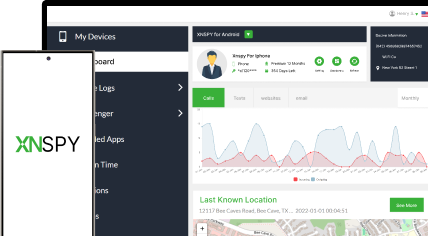
With Xnspy, access real-time updates, detailed phone logs, and 20+ powerful features.
4 Comments
Leave a reply:
Your email address will not be published. Required fields are marked*

Lein Edwards
January 20, 2025 at 12:08 pmworst service ever, shame on you spapp
Timothy
January 28, 2025 at 6:42 amPurchased already, how to get a refund?
George
February 3, 2025 at 2:24 pmright
Melissa
February 20, 2025 at 12:32 pmKindly review monimaster