27+ Most Dangerous Apps for Kids (2026): Dangers, Risk Levels, and Safer Options
 By Jenny Nicole
The complete monitoring experience for your phone
Get XNSPY and start tracking calls, texts, multimedia, locations and more on any phone!
Get Started Now Live DemoAs a mother of two teen girls and a psychologist specializing in adolescent digital behavior, I have seen firsthand how a simple tap on an app icon can expose kids to unexpected risks.
Today’s teens spend hours online, and half of them are almost constantly online. Over time, such heavy usage can expose them to bullying, sexual content, manipulation, and more. But it is not all doom and gloom, to be honest.
Simply understanding which apps pose higher risks and why they do so can help parents better protect their kids. In this guide, I will be listing the top risky apps by category and suggesting safer alternatives.
A Quick Breakdown of Everything in This Article
- Not every app is dangerous by design, but certain features increase risks significantly when used without guidance or supervision.
- Apps with disappearing messages, anonymous chats, live streaming, and weak moderation pose the highest risks to kids online.
- High-risk apps for teens include Snapchat, Discord, Kik, Hoop, Tinder, OmeTV, Whisper, Drug Grand Mafia, and Calculator.
- Common dangers include cyberbullying, grooming, sextortion, exposure to explicit content, addictive behavior, and emotional manipulation.
- Safer alternatives like Messenger Kids, Kinzoo, Grom Social, Zigazoo, and LEGO games offer stronger parental controls and moderated environments.
- Open communication, gradual digital independence, and parental involvement remain the most effective ways to keep kids safe online.
Why Parents Should Know About the Apps Dangerous for Kids?
Many apps teens use today include features like private messaging, anonymity, disappearing activity, and algorithm-driven content. While these are not harmful on their own, without awareness, they can expose kids to inappropriate content and interactions.
From what I have seen, when parents cover visibility gaps and know which apps their kids use, they are better able to guide conversations and step in early if something feels off.
How I Evaluated App Risks
To decide whether an app is dangerous or not and the kind of risks it poses, I considered the following factors:
- Risk Factors: Age limit, anonymity, encryption, content moderation, popularity among predators, and built-in reporting. Apps that lack moderation and allow unknown contacts score higher risk.
- Evidence and Usage: I drew on studies and reputable news to see where kids actually run into trouble.
- Teen Psychology: I considered why teens use an app. Is it for watching influencers, secret conversations, flirting, creative expression, or for other reasons? The more an app taps into teen insecurities, the more potential harm.
Using these criteria, I labeled risk levels next to each app.
30 Most Dangerous Apps for Kids You Should Know
A general misconception among parents is that there are only dangerous social media apps. That is not the case, as can be seen below. I have divided apps into 10 commonly used categories by kids.
Each category comes with its own set of dangerous apps that parents should be mindful of.
Most Dangerous Social Media Apps for Kids
Social media platforms connect teens to peers and culture, but they often combine private chats with unfiltered content.
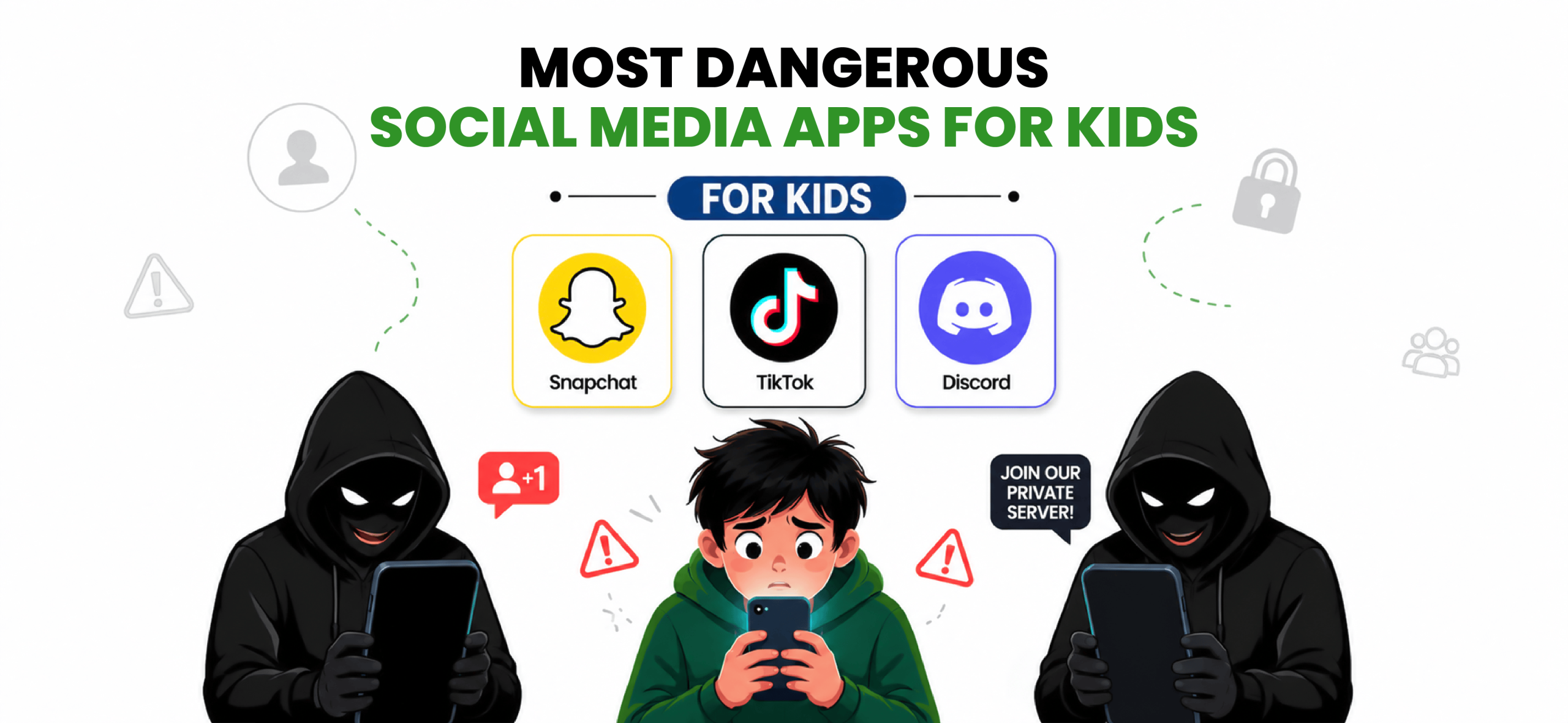
1. Snapchat (High Risk – Self-Destructing Messaging)
Snapchat features like disappearing photos and location-sharing can lure kids into risky sharing and meeting strangers. Teens might feel invincible because “messages vanish,” but predators know they can screenshot or record, which is why 40% of known grooming cases on messaging apps occur via Snapchat.

Do You Know?
You can take a screenshot of your kid’s Snapchat on their phone to see what they have been up to.

2. TikTok (Moderate to High Risk – Addictive Short Videos)
TikTok’s algorithm can take impressionable teens down a rabbit hole of harmful content and even surface self-harm or sexually themed videos.
Overall, I would rate TikTok high risk for exposing tweens to adult content, and moderate risk for older teens who are more media-savvy and have guidance.
3. Discord (High Risk – Unmoderated Chat Servers)
Though Discord is meant for gaming communities, teens are mostly attracted to it for group chats. As far as the age limit is concerned, any teen above 13 can not only join Discord but also become part of servers with explicit channels. Now, because most of their chats can be anonymous and unmoderated, I label Discord high risk.
Most Dangerous Instant Message Apps
Private chat apps let kids talk one-on-one to others. While it is great for friends, the same cannot be said when it comes to predators and peer pressure.
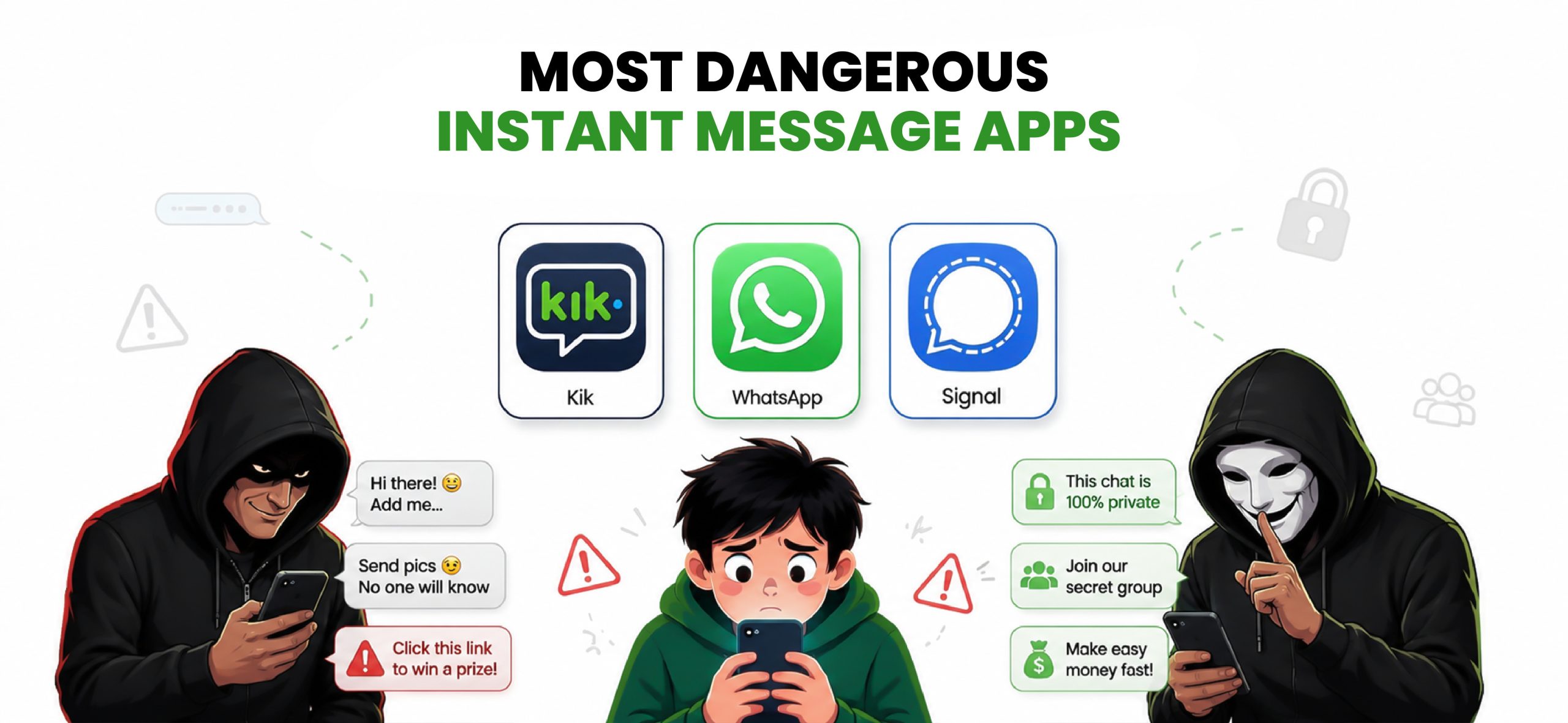
4. Kik (High Risk – Anonymity and Stranger Chats)
Kik does not require a phone number or a real name to use it. Therefore, kids as young as 13, and even younger, remain active on Kik because it feels anonymous. However, sex offenders have used the app for casual sexting over the years. Because of these reasons, I give it a high risk rating.
5. WhatsApp (Moderate Risk – Encrypted Group Chats)
WhatsApp has end-to-end encryption, which is great for privacy but makes parental oversight tough. The absence of parental controls in the app means cyberbullying or grooming chats go unseen. However, it is far less anonymous than Kik since it needs a phone number.
Overall, I would associate moderate risk with it because it is safer when chat is limited to known contacts, but worrisome if kids join public groups.
6. Signal (Moderate Risk – Disappearing Messages)
Similar to WhatsApp, Signal offers strong end-to-end encryption and privacy features. While this is great for security, it also means that if a teen deletes a conversation with a predator, there is virtually no trace left behind.
An even bigger concern lies in Signal’s “view once” media feature. Because photos and videos disappear after being seen, teens may feel a false sense of safety when sharing intimate content. In reality, this can increase the risk of exploitation. Therefore, I would rate it as a moderate risk since
Most Dangerous Dating Apps
Apps that look like teen Tinder can be harmful because teens are not always emotionally ready for dating.
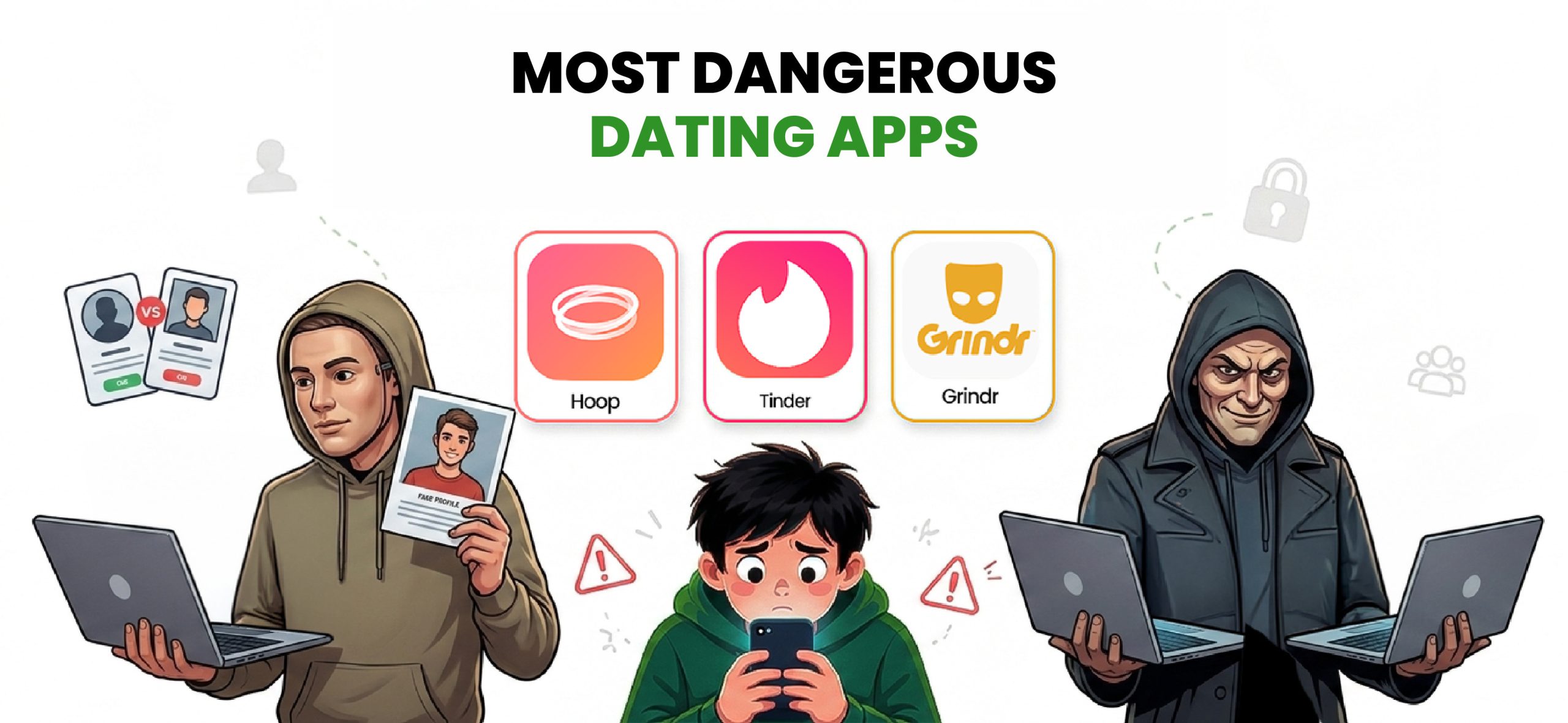
7. Hoop (High Risk – Teen Dating)
Hoop markets itself as a “teen dating social app” and lets 13- or 12-year-olds sign up without real age checks. Its whole goal is matching teens with strangers. Many profiles even openly discuss sexual orientation and invite chat.
I label Hoop High risk since it is practically built for kids to meet predators.
8. Tinder (High Risk – Dating)
Tinder is officially 18+, but minors slip in by entering fake birthdays. As is the case for any adult on the app, kids, too, can chat and even meet strangers.
All in all, since Tinder profiles encourage showing photos and hooking up, it is a high-risk app for any under-18 user.
9. Grindr (High Risk – LGBTQ+ Dating)
Grindr is an 18+ app for LGBTQ+ adult, but minors too can lie about their age and join. Not only does it openly show nearby users, but it also has a considerable number of catfishes and paraphiliacs, making it quite high-risk.
Now, while for closeted teens, it can seem tempting to “find community,” it should be best avoided until age 18.
Most Dangerous Live Streaming Apps
Live-streaming apps allow kids to broadcast themselves or watch others in real-time. They can be fun but also ripe for trouble.
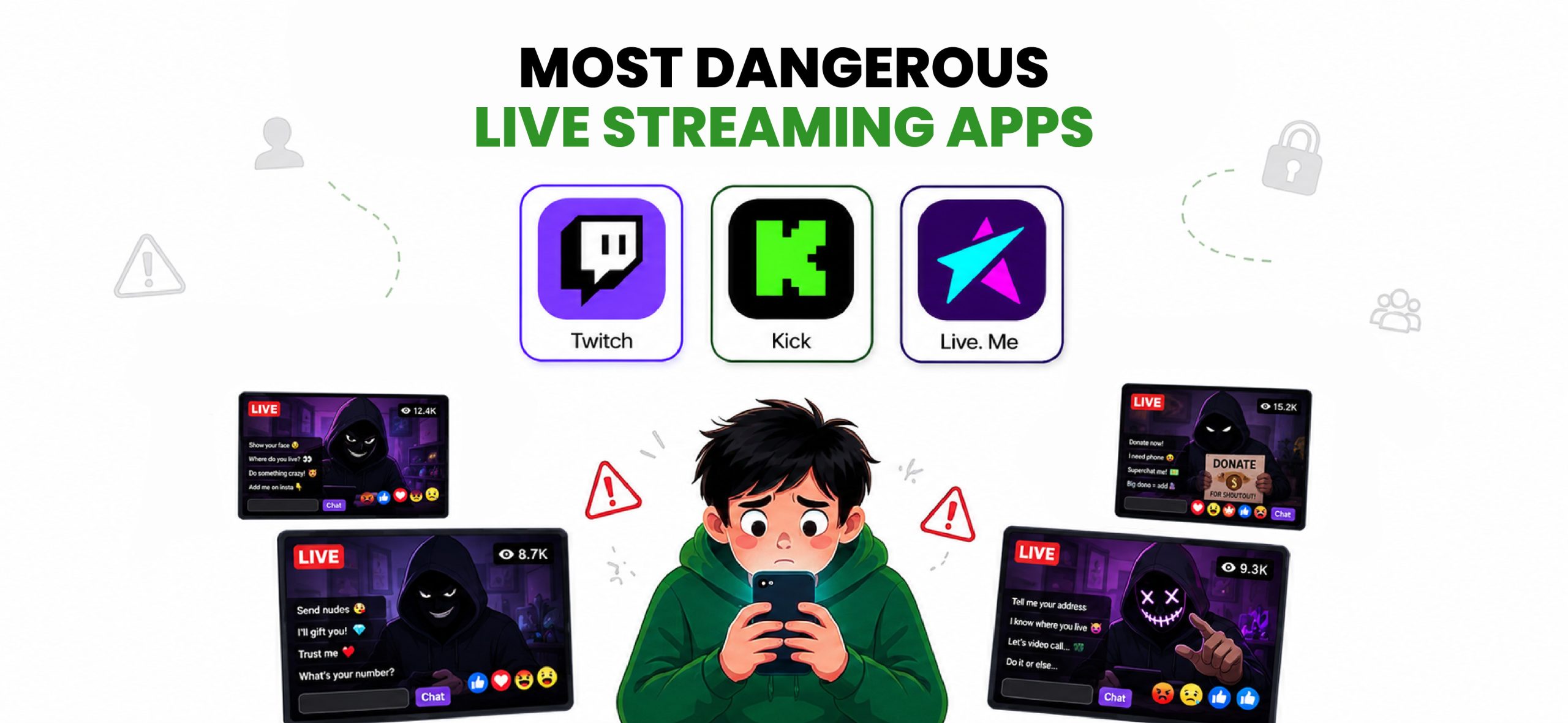
10. Live. Me (High Risk – Attention Culture)
Live. Me is essentially a teen-focused streaming site. Kids can go live, earn virtual gifts, and become stars. This whole concept can skew a teen’s priorities toward attention. Moreover, bystander exploitation is common on the platform. Some teens have been manipulated to perform striptease or reveal private info on stream, thinking it will gain likes.
To add to the concerns, it also does not have content filters, which makes it high-risk.
11. Twitch (Moderate Risk – Gaming Streams)
Twitch consists of both gamers and In Real Life (IRL) streaming. While the gaming streams can expose kids to mature themes like swearing and violence, the scanty clothing in IRL streams can lead to children objectifying women.
Since kids do not primarily stream on this platform, the risk remains limited to inappropriate content and chat trolling. Overall, I call Twitch Moderate risk since it is safer if used only for its main purpose, i.e., gaming, with chat disabled, but risky if teens engage in random streams.
12. Kick (Moderate Risk – Less Moderated Streaming)
Kick is a newer streaming service with no birthdate verification system in place. Now, since this platform can be easily used by teens to find and watch explicit streams, including NSFW broadcasts, it has a moderate risk. However, it is less popular than Twitch, so it statistically poses a lower risk for kids.
Most Dangerous Video Chat Apps
Apps that randomly connect users via video can be dangerous.
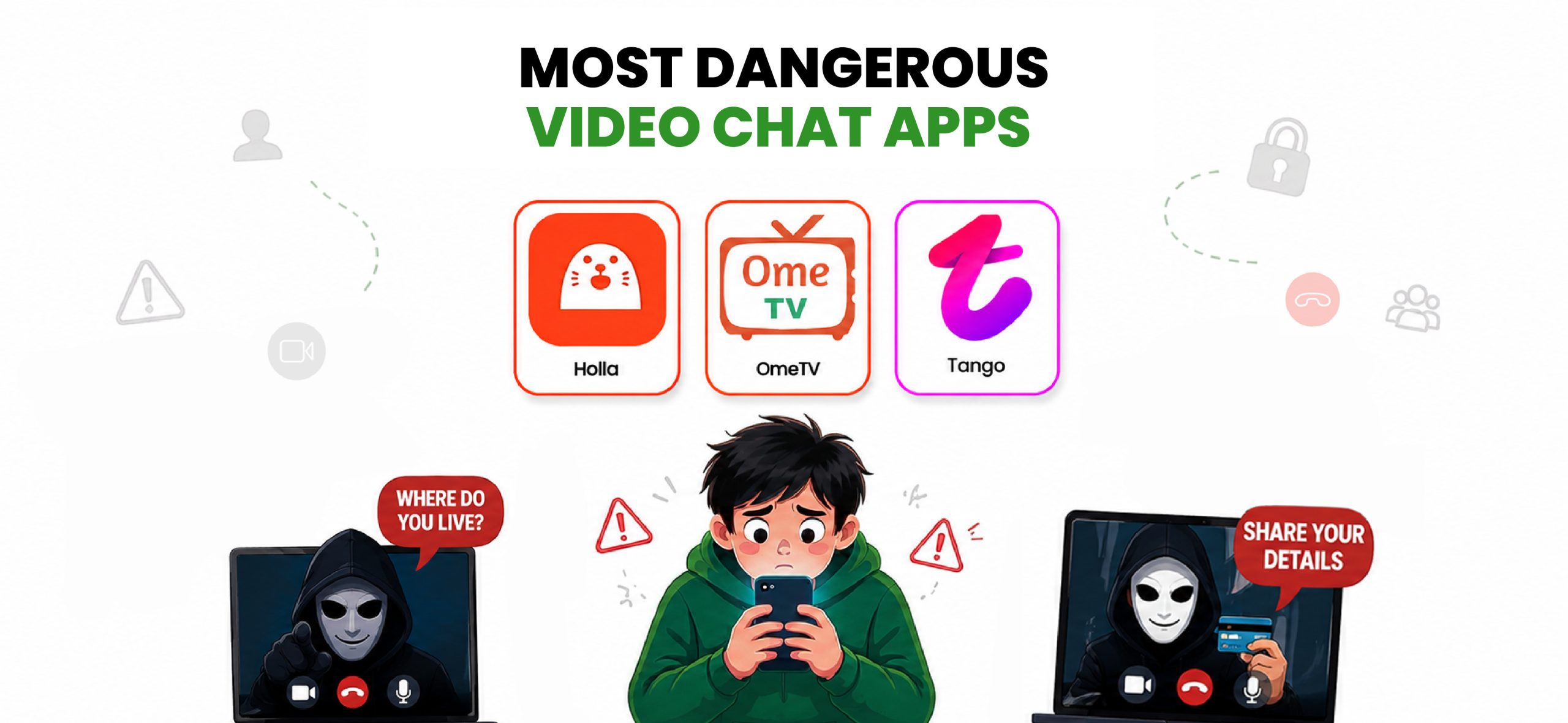
13. Holla (High Risk – Random Video Chat)
Holla lets users connect to strangers by video. Ideally, it is supposed to be 18+, but kids can still use it by lying about their age. Moreover, due to no real moderation, users can come across hate speech, nudity, drug abuse, or violent content unexpectedly. Teens who try it often end up scared or upset, which is why I mark Holla high risk.
If you see your teen using it, consider it a sign that they might be looking for excitement or validation from unknown adults.
14. OmeTV (High Risk – Minimal Controls)
OmeTV has taken the place of Omegle and now offers random video chat with strangers across the globe. While it claims to have moderation in place, enforcement is inconsistent, and explicit content can still slip through frequently.
Moreover, since the app pairs users instantly, often without meaningful verification, it can expose teens to unknown adults within seconds.
I rank OmeTV as very high risk because, despite basic reporting tools, there is no truly safe mode.
15. Tango (High Risk – Geo-based Chatting)
Tango is another live-video chat app that uses geolocation to connect you with local people. Teens often use it to find “someone cool nearby.”
I believe this geo-feature is a nightmare for parents because kids might accidentally meet someone dangerous in their own neighborhood.
Not only that, but I also give Tango a high risk rating because, in practice, I have seen teens get spammed by adult strangers asking for meetups.

Worried about Predators, Bullies, and Abusers?
Ease your worries with Xnspy’s child monitoring app.
Most Dangerous Anonymous Apps
Apps built around anonymity can encourage oversharing, bullying, risky confessions, and exploitation.
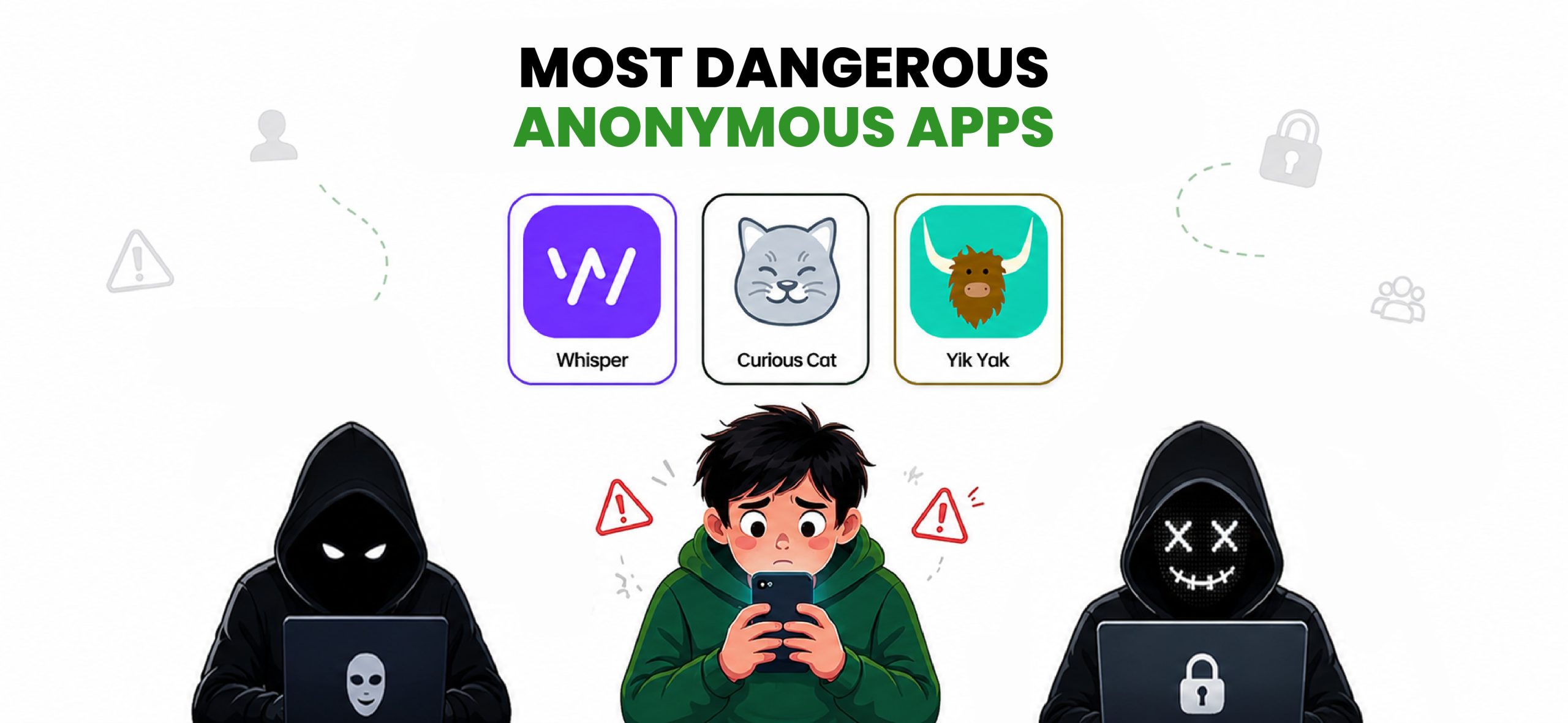
16. Whisper (High Risk – Geo-Anonymous Sharing)
Whisper lets users post secrets anonymously to a local feed. At first glance, it is like journaling, but in reality, kids often see crude or distressing content there. Additionally, the local feature can frequently expose teens to strangers nearby.
To add to the risks, the lack of vetting makes it an easy platform for harmful comments and sexual innuendo. I label Whisper high risk, mostly because teens might treat it as an outlet, but instead find bullying or predators in the replies.
17. Curious Cat (Moderate Risk – Anonymous Q&A)
Curious Cat lets people answer anonymous questions, even if inappropriate. Over the years, while they have added some safeguards to present such example changes, the anonymity still makes it easy to leave mean or sexually-explicit questions. All in all, I give Curious Cat a moderate risk as it can be used innocuously, but often is not.
18. Yik Yak (Moderate Risk – Local Anonymous Chat)
Yik Yak was an iOS app that started off as a college-focused platform used by many high schoolers to anonymously post for people nearby. After it led to multiple bullying incidents, schools began discouraging its use. Nonetheless, it is still used by some teenagers and has the potential for peer harassment.
I mark Yik Yak as a moderate risk since it is not inherently sexual like Kik, but it can damage students’ reputations.
Most Dangerous Online Games
While some online games are kid-friendly, others can expose children to adult themes.
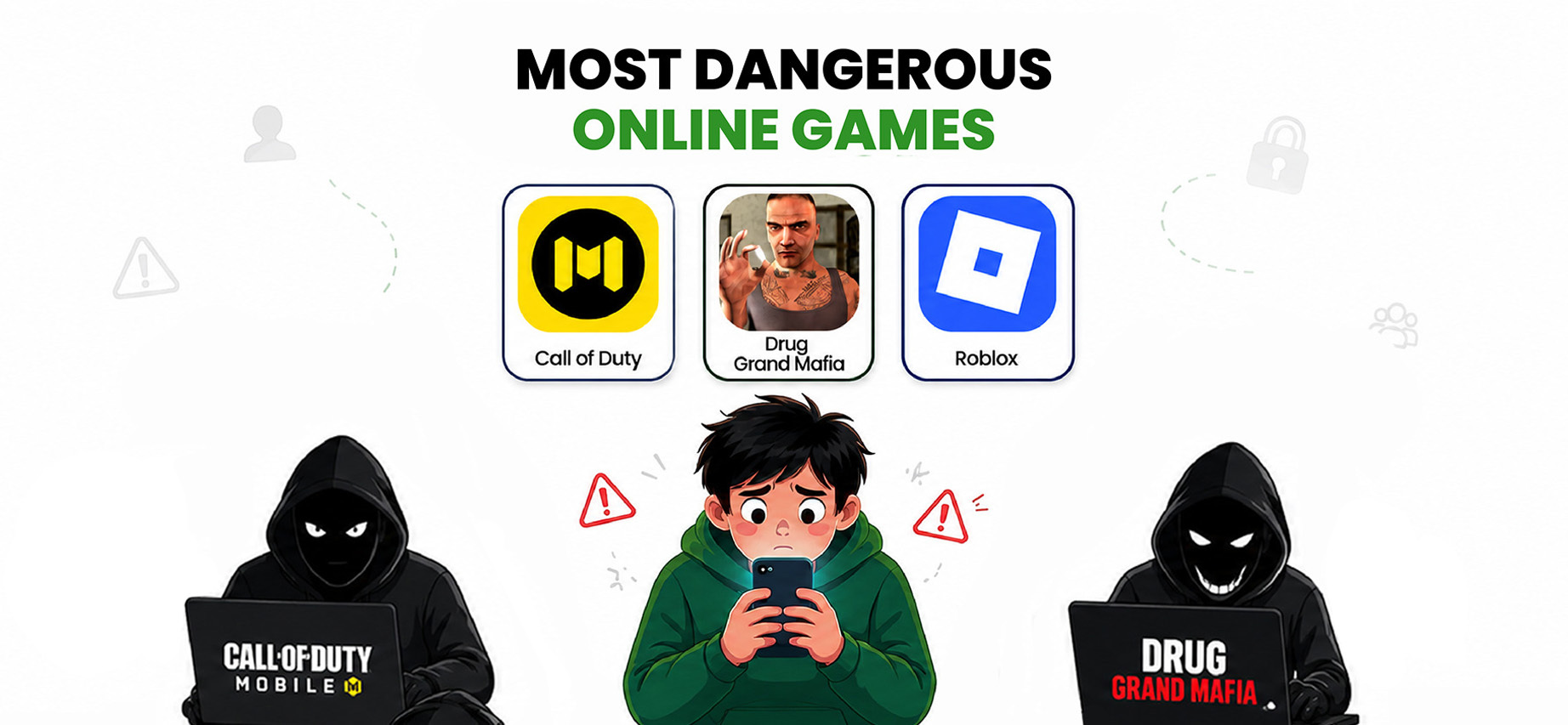
19. Call of Duty (Moderate Risk – Mature Online Gaming)
COD is rated for adults due to its graphic themes like war, blood, and mature language. Another problem with the game is its unfiltered voice and text chats, meaning teens hear insults, hate speech, and even threats.
I call COD moderate risk because it is essentially a combat simulator and can desensitize a kid to aggression.
20. Drug Grand Mafia (High Risk – Drug-Themed Game)
This is a crime simulator game where players run a drug cartel. As can be seen, it explicitly glamorizes drug dealing and violence, which makes it high-risk.
21. Roblox (Moderate Risk – UGC Game Platform)
Roblox is hugely popular with younger kids, and most of its games are fine. However, given that any user can create a game, the contents can vary widely, so much so that there have been cases of sexual or violent mini-games appearing. While I do appreciate that the text chat in Roblox is filtered with dictionaries, it is obviously not foolproof, adding to its risks. I believe Roblox poses a moderate risk.
Most Dangerous Explicit Content Apps
These apps present content that is definitely meant for adults, but teens might download them out of curiosity or peer pressure.
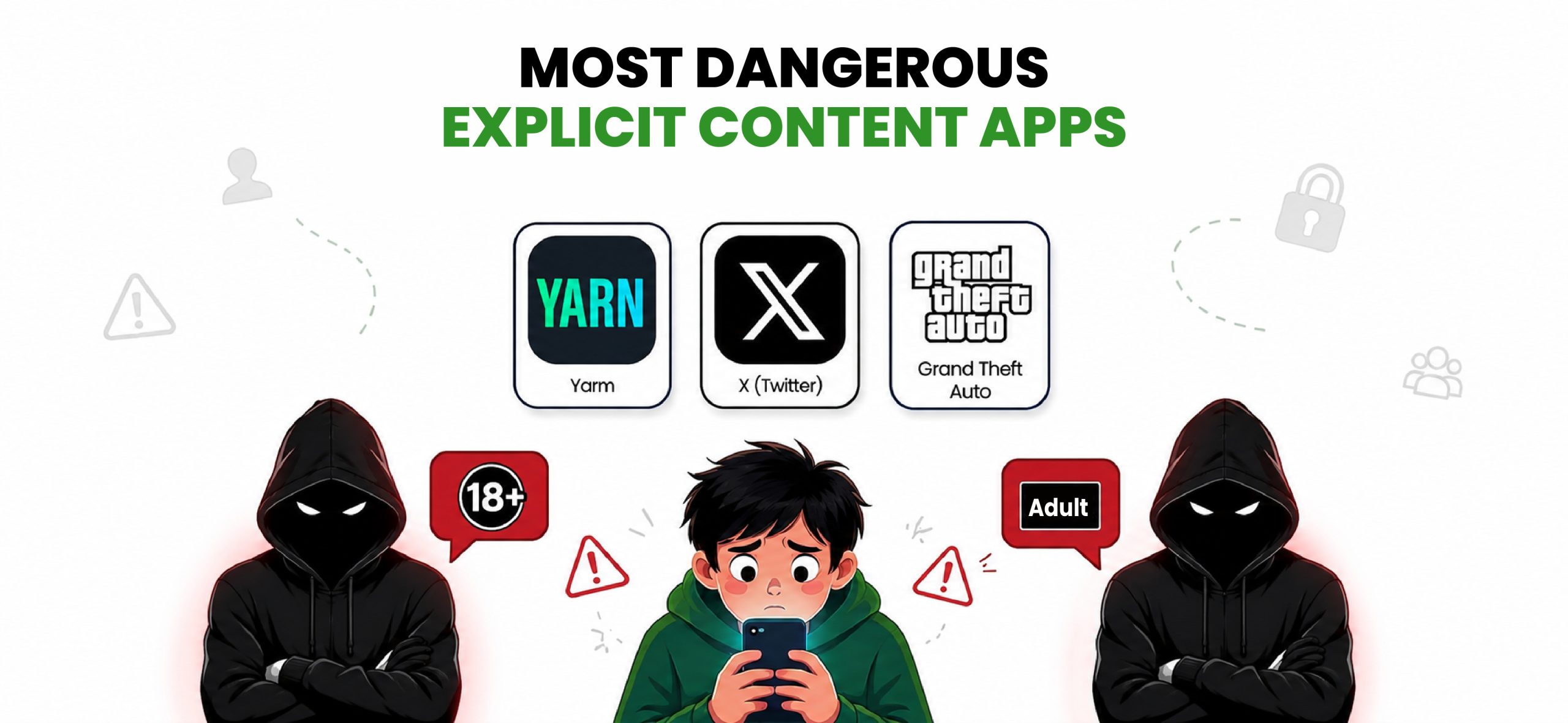
22. Yarn (High Risk – Chat Story Reader with Sexual Stories)
Yarn portrays itself as a chat-story app with text message stories. The problem here is that many of its popular stories are teen soap operas with sexual encounters, bullying, etc. Its user reviews further note that it often highlights teen violence or mature romance. I give Yarn a high risk since it subliminally normalizes teen sexting and drama.
23. X (Twitter) (Moderate Risk – Social Media with Some Adult Content)
X is a mixed bag. It is not exclusively porn, but countless explicit images and videos are just a search away. Now, while for adults and with age restrictions, even my teens sometimes scroll X anyway. In its entirety, considering the platform, I will say it comes with a moderate risk.
24. Grand Theft Auto Series (High Risk – Video Games with Sexual Violence)
GTA games are graphically violent and sexual, with the core gameplay revolving around prostitutes, drug use, misogyny, and murder. Some might say it is just fantasy, but it can still shape adolescent attitudes. I wholly mark GTA high risk.
Most Dangerous Deepfake Apps
Apps that let users manipulate photos or create fake conversations can be used with malicious intent.
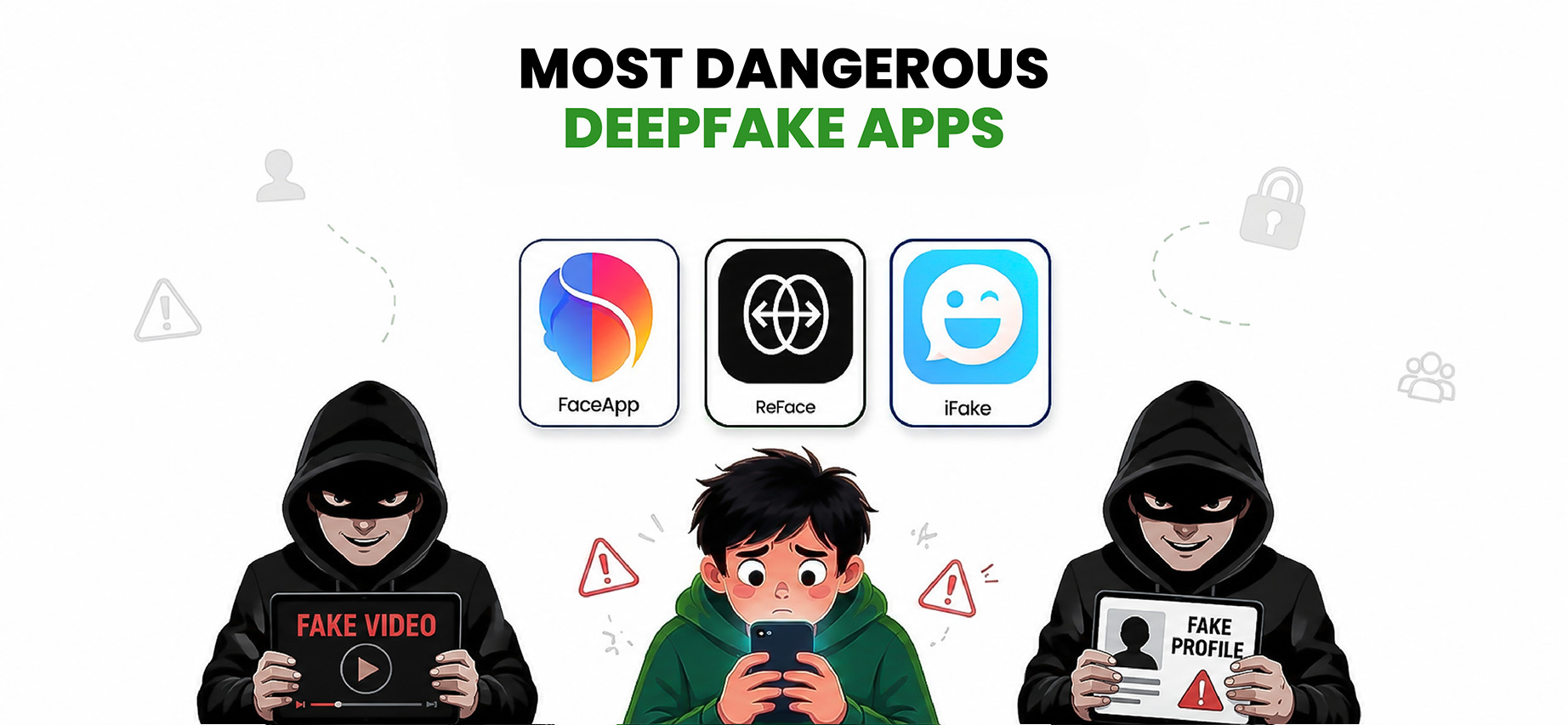
25. ReFace (Moderate Risk – Face Swap Videos)
Reface allows users to swap faces in videos and GIFs using AI-powered editing tools. While it may seem harmless at first, I consider it a moderate-risk app for teens because of how easily the feature can be misused. Not only can a child’s face be inserted into inappropriate images to damage their reputation, but constant exposure to perfect deepfake edits can also negatively affect a teen’s self-image.
26. iFake (Moderate Risk – Fake Chat/Messages)
iFake creates fake phone conversations and social media messages, which have also been used to bully, to stir trouble, and even to spread gossip. For these reasons, I label iFake as moderate risk.
27. FaceApp (Low to Moderate Risk – Glamor Filters)
FaceApp is known for age and gender filters. On the surface, it is pure entertainment, with even I having tried it myself, but in teen circles, it can trigger insecurity. Kids might end up wondering if they looked like a model or looked more appealing.
Overall, I need to mention that while it is low risk for predators, it is moderate risk for self-image issues.
Most Dangerous Secret Storage Apps
Apps that look innocent, like a calculator, can be hiding photos or messages.
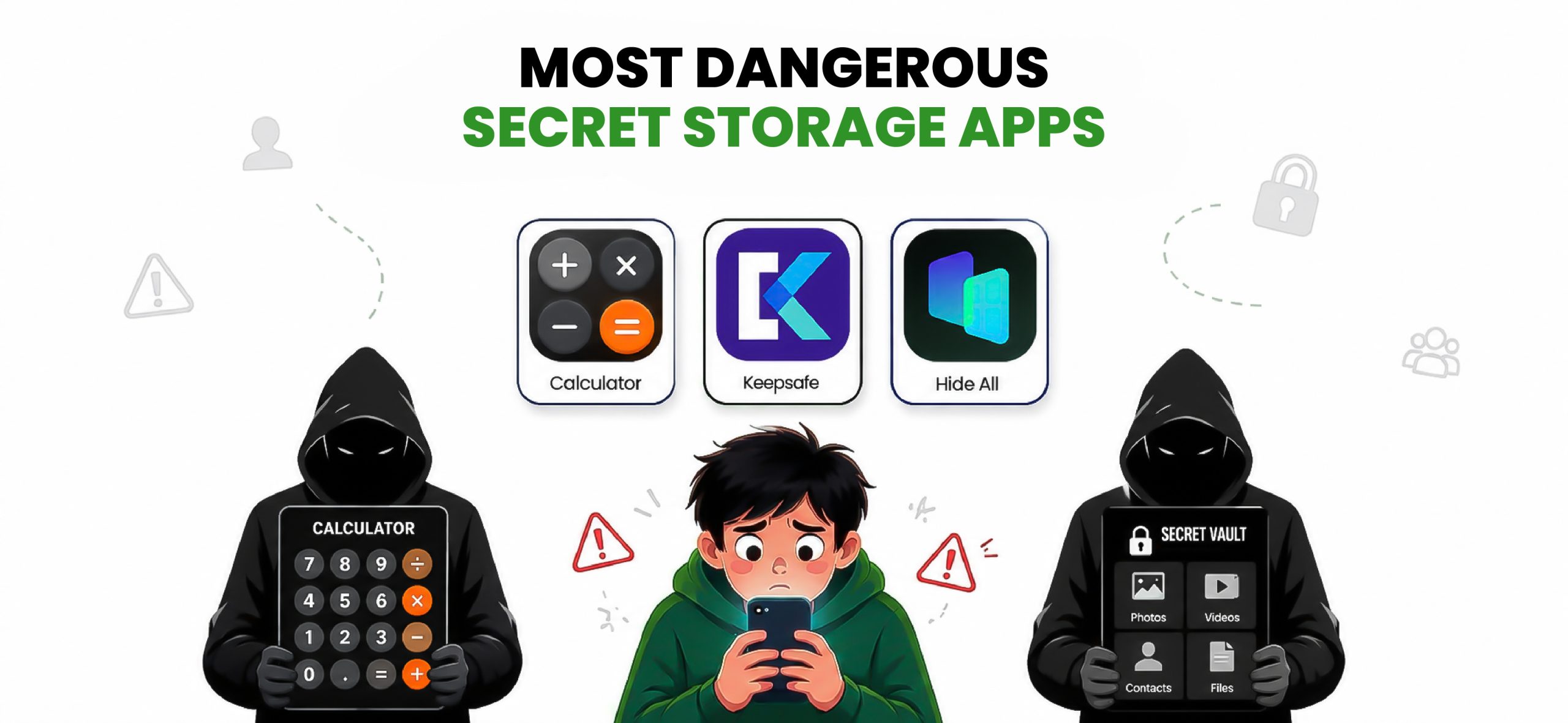
28. Calculator: App Hider & Locker (High Risk – Hidden Vault)
Calculator: App Hider & Locker appears like a normal tool at first, but it is basically used by teens to secretly store photos or chats that their parents might disapprove of. My concern for this app is two-fold. Firstly, the teen may hide evidence of something concerning from trusted adults, and secondly, unknown vault apps may introduce malware into their phone. Therefore, I rank it a high-risk app.
29. Keepsafe (Moderate Risk – Photo Vault)
Keepsafe is a popular app used to lock photos with a PIN. Again, its intent is privacy, and teens often use it for hiding explicit images or diary entries. I see this as a moderate risk since it facilitates secret behavior.
30. Hide All (Moderate Risk – Remove Apps Shortcut)
Hide All simply removes an app icon from view. Truthfully, on its own, it is benign and used as a mere organizer, but kids can use Hide All to make forbidden apps vanish. I label it Moderate risk because it can hide sexting apps, dating apps, etc.
Safe Apps for Kids: Top Alternatives You Can Consider
After all that, you might be thinking, “Well, what can they use?” The good news is that there are kid-friendly apps with robust safety features. Here are some I trust for younger users, along with what makes them safer.
1. Safe Texting Apps for Kids
Messenger Kids is a child version of Facebook Messenger. When using the app, parents approve every contact and can limit usage times. Moreover, it allows no contact with strangers or hidden chats. As long as both parent and child follow guidelines, this is low risk.
Another app is GeckoLife, which is a social network for kids and families. All accounts accessible to the kid must connect to a parent or teacher account first. Additionally, content visible to minors is screened and encourages learning and creative posts. Overall, it is low risk with the parent oversight in place.
Kinzoo is one more app for kids to safely text and share media with family or friends. For all users, it is fully private without any ads or access to strangers. To ensure parental oversight, parents are the ones to create the kid’s friend list. Again, I call it Low Risk, and I personally recommend it to new parents.
2. Safe Social Media Apps for Kids
Grom Social is a social platform for kids under 13. All the content present within the platform is moderated by real people, not just algorithms. Overall, it is essentially what Facebook or Instagram would be if it were made for kids, so they can share photos safely. I rank it low to moderate risk because it is limited-age by design.
Azoomee is a safer option for children today because it provides games, videos, and art projects for kids up to 12. If I were to explain it, I would say it is like a child-friendly YouTube Premium and game hub. All in all, everything is age-appropriate, filtered by educators, making the platform very low risk. I use it often in my family too, and I appreciate that my teen daughters were allowed to use the teen-appropriate sections when younger.
Another creative app where kids answer challenges with video responses is Zigazoo. Some of its most helpful features include the requirement of parental approval for account creation and the lack of in-app purchases. As a whole, I rank it low risk.
3. Safe Game Apps for Kids
Several LEGO games, like Harry Potter, Star Wars, Marvel, etc., are available on consoles/PC. These games are rated E10+, i.e., everyone 10+. What makes them kid-friendly is that the violence in them is cartoony and goofy. Sure, there are bad guys, but no gore or real threats exist. Therefore, I rank it low risk.
Moving forward, PK XD is a cartoon virtual world where kids play mini-games and decorate avatars. While it has a chat option, parents can entirely turn it off. Without chat, it is low risk.
Lastly, if your teen likes art and puzzles, Monument Valley is brilliant for usage and age-neutral. Not only does the app have no chat, but it also lacks violence, making it low risk.
Now, I know you must have noticed how many safe apps rely on parental involvement. Well, that is intentional because parents need to be present. Even with the safest apps, chatting with your kids about what they see is crucial.
How Does Monitoring Your Kid’s Phone Help?
Even the most involved parents cannot manually keep up with every app download, disappearing message, private group chat, or late-night interaction happening on a teenager’s phone. I say this not just as someone who studies teen digital behavior, but as a mother of two teenage girls myself.
Over the years, I have noticed that most teens do not necessarily hide things because they are bad kids. More often than not, they hide things because they fear judgment or punishment. That emotional gap is exactly where risky behaviors begin to grow unnoticed.
To tackle that, phone monitoring can help when used responsibly and transparently. What I mean by this is that parents must view monitoring as a safety measure rather than a means of punishment.
Personally, I have used the Xnspy monitoring app for visibility into my girls’ digital behavior patterns, and that is what I will dwell on a bit, but you can choose a similar app that suits you best.
What is Xnspy?
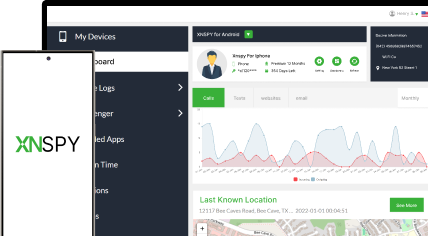
Xnspy is a child monitoring application for parents to stay informed about their kids’ smartphone activity. When I initially selected this app, it was for its background activity, since it allowed immediate updates without disrupting my teen’s phone activity.
What Does Xnspy Offer?
1. Screen Recorder
While I was using Xnspy’s screen recorder, it captured the phone’s activity at regular intervals.
Personally, I think its screen recordings were most useful to identify patterns rather than isolated incidents. Instead of having to rely on only a single concerning video to take action, I could see whether my daughter had repeated exposure to something harmful.
2. IM Chats
Xnspy monitored around 13 social media apps on my kid’s phone to show their message exchanged. I did appreciate that the details included contacts, timestamp, message content, etc., within a list and chat view. While it seemed a bit excessive to me, regardless, I was able to watch out for grooming attempts, manipulative friendships, bullying, social exclusion, and requests for secrecy.
3. Keylogger
The app’s keylogger recorded keystrokes entered on the monitored device alongside the specific platform and timestamp.
However, this is also one of the more sensitive monitoring features because of privacy issues. Because of that, I generally believe keylogging should only be considered when parents already suspect serious risks.
4. Installed Apps Monitoring
I was also able to view installed applications on their phones and then remotely block or unblock them.
This mattered more than many parents think because teens frequently migrate toward newer apps that adults have never heard of.
Overall, monitoring installed apps allowed me to identify anonymous platforms, hidden vault apps, risky dating apps, unmoderated chat communities, and more.
5. Screen Time Monitoring
Xnspy also provides app usage and screen time insights.
Since teens are particularly vulnerable to developing emotional dependency with an app and relying on it for validation and emotional escape, excessive screen time for specific apps reflects these patterns.
What Parents Should Keep in Mind
Monitoring without communication can damage trust if teens discover it unexpectedly.
Excessive monitoring can create secrecy-driven behavior in some teenagers rather than openness.
Parents should avoid turning monitoring into constant surveillance because adolescents still need age-appropriate independence to develop healthy decision-making skills.
Speaking truthfully, in my experience, the healthiest outcomes happen when monitoring is paired with openness.
Conclusion
Remember, knowledge is power. By understanding what the top dangerous apps for kids are, you can guide your child safely. To do so, you can always start by using age-appropriate apps, employing parental oversight, maintaining trust, and ensuring continuous communication.
However, once you have successfully raised a digitally savvy teen, you will have to gradually step back and trust them.
Over time, you can continue to stay informed and keep the conversations going. Why? Because a teen who feels understood is far less likely to take dangerous risks online.
FAQs
What are the warning signs that my child is using dangerous apps secretly?
Warning signs include sudden secrecy with their phone, quickly hiding screens, increased use of privacy features, unexplained new contacts, mood changes after using the phone, staying online late at night, and refusing to share device activity.
Which apps are most commonly used for sexting among teenagers?
Any app with private and temporary messaging can be misused. Apps most commonly linked with teen sexting include Snapchat due to disappearing messages, Kik for anonymity, and Signal or WhatsApp because of encrypted chats. Dating apps like Tinder, Grindr, and Hoop also increase the risk of explicit conversations with strangers.
Which dangerous apps can bypass parental controls?
Parental controls at the network level, like Wi-Fi filtering or DNS blocks, can often be bypassed by the most dangerous apps. However, device-level controls like those offered by Xnspy are harder to evade because they monitor activity directly on the phone, regardless of whether they use encryption or disappearing messages.
What makes an app dangerous for kids?
An app becomes dangerous for kids when it includes features like anonymity, disappearing messages, weak moderation, or open access to strangers. Moreover, high-risk design elements such as live streaming, geo-location sharing, unfiltered content, etc., increase exposure to bullying, grooming, explicit material, and manipulation.
Which types of apps pose the highest risk for children?
The highest-risk app types for children include anonymous chat apps, disappearing message apps, dating apps, random video chat platforms, live streaming apps, and unmoderated gaming apps with open chat. That is because these increase exposure to strangers, harmful content, bullying, and manipulation while reducing parental visibility and oversight of activity.
What age is appropriate for using social media apps?
Most social media apps are officially designed for users aged 13 and above, but that does not automatically mean younger teens are fully ready to use them regularly. While exposure to these platforms is often inevitable, their early experiences should be paired with proper guidance and appropriate monitoring.
Xnspy Makes Phone Monitoring Hassle-free
Track content, messages, screen time, and more remotely.
5 Comments
Leave a reply:
Your email address will not be published. Required fields are marked*

Nikola Jack
January 22, 2025 at 11:13 amOk
Nova
February 5, 2025 at 1:38 pmso many fangerous apps, how do i protect my daughter and son?
Fatma Aydın
March 7, 2025 at 7:37 amOur kids are not safe anywhere 💔
Jack
March 14, 2025 at 11:17 amI have tried some of these safe texting apps too, they are no good either.
Adam
March 19, 2025 at 11:06 amThis is very helpful