Jellyfish Parenting: What It Is & Is It Still Relevant in 2026?
 By Mike Everett
The complete monitoring experience for your phone
Get XNSPY and start tracking calls, texts, multimedia, locations and more on any phone!
Get Started Now Live DemoIf you analyze by era, before the 80s and 90s, most parents employed an Authoritarian style, characterized by low warmth and high expectations. In the early 2000s, parents started to open up to the idea of gentle parenting, where they would provide high warmth to children and have high expectations for their children.
Looking into today’s parenting, most parents believe in providing everything to their children and don’t expect anything in return, which is called permissive parenting, and if you take permissive parenting up a notch, it becomes jellyfish parenting.
Over the years, people, whether parents or children, have become more attuned to their emotions. Becoming sensitive to a child’s emotions is beneficial, but the question is whether it is an effective approach to parenting responsibilities, especially if you are not strict or fail to set boundaries for children.
In this article, we examine jellyfish parenting and whether it is an effective approach to raising responsible children.
Key Takeaways
– Jellyfish parenting is an extreme form of permissive parenting where parents avoid conflict, rules, and consequences to keep their children emotionally comfortable.
– This style prioritizes a child’s feelings over guidance, which can weaken their ability to handle responsibility, adhere to boundaries, and navigate real-world challenges.
– Children raised without structure often struggle with self-control, decision-making, and managing frustration or failure.
– Jellyfish parenting makes children more exposed to online dangers because there is little oversight of screen time, content, or digital behavior.
– Xnspy can help jellyfish parents protect their children online without intervening in their choices.
– The healthiest approach blends empathy with clear expectations, helping children grow into confident and responsible individuals.
What is Jellyfish Parenting?
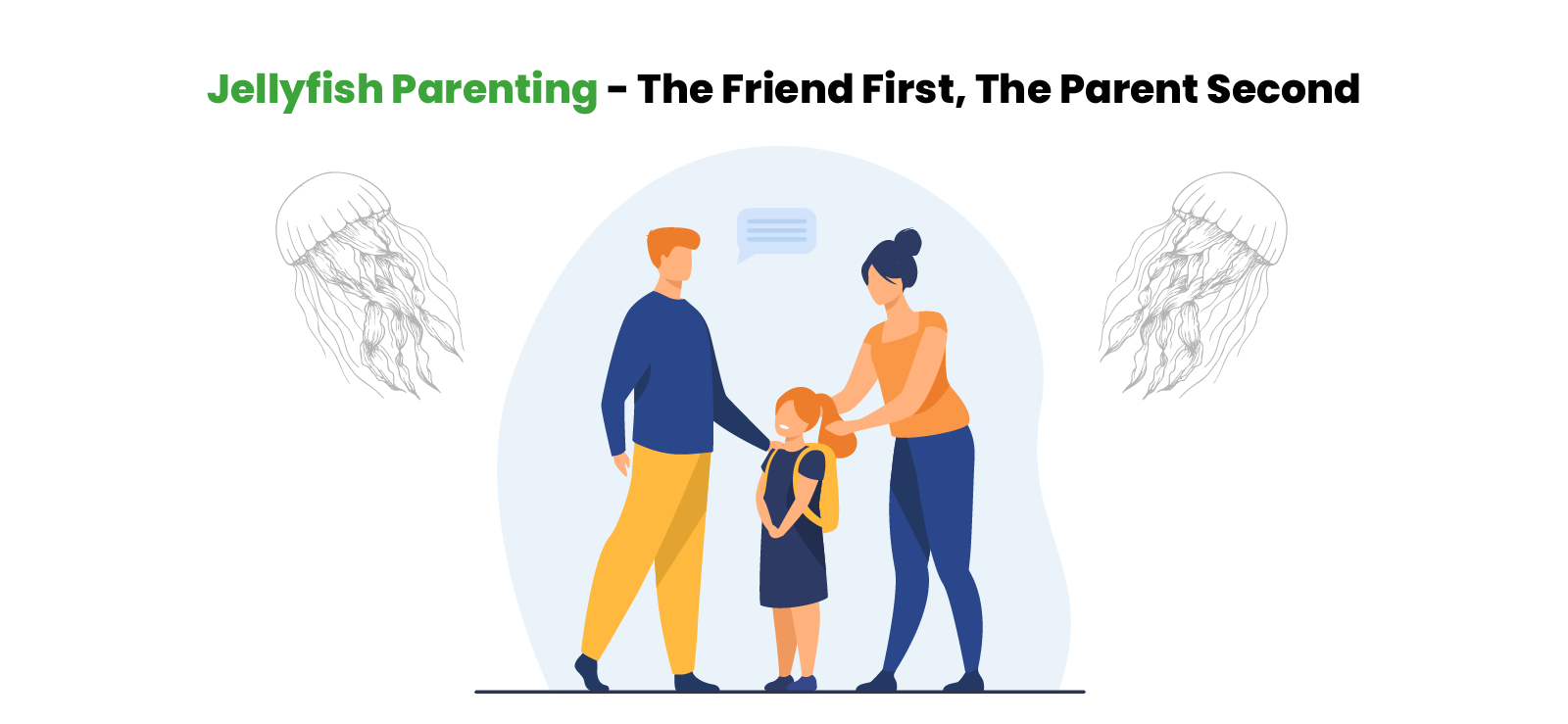
A jellyfish parent is best described as “the friend first, the parent second.” They usually let kids be the driving force and avoid arguing with them, choosing the path of least resistance. The primary aim is to avoid confrontation and maintain a peaceful and conflict-free household.
In this parenting style, parents become extremely lenient and don’t believe in setting any boundaries to keep children happy at all costs. So, they become jellyfish; they go with the flow that children decide and don’t try to swim against the tide.
From one perspective, the jellyfish parenting style offers freedom and self-expression; however, from another perspective, children are naive, lack experience, and don’t understand the consequences of their actions. While children may feel emotionally supported, they may struggle with self-control, decision-making, and understanding boundaries.
Guides Worth Your Time
🧑🍼 FAFO Parenting: What It Means, Why It Works, & When to Use It
🧘 Digital Detox App: What It Is & Why You Need It + 5 Best Options
👻 How to Monitor Your Child’s Snapchat: 7 Methods for Parents
💣 Bullying in Schools Statistics: The Numbers Every Parent Should See
Examples of a Jellyfish Parent and Their Common Behaviors
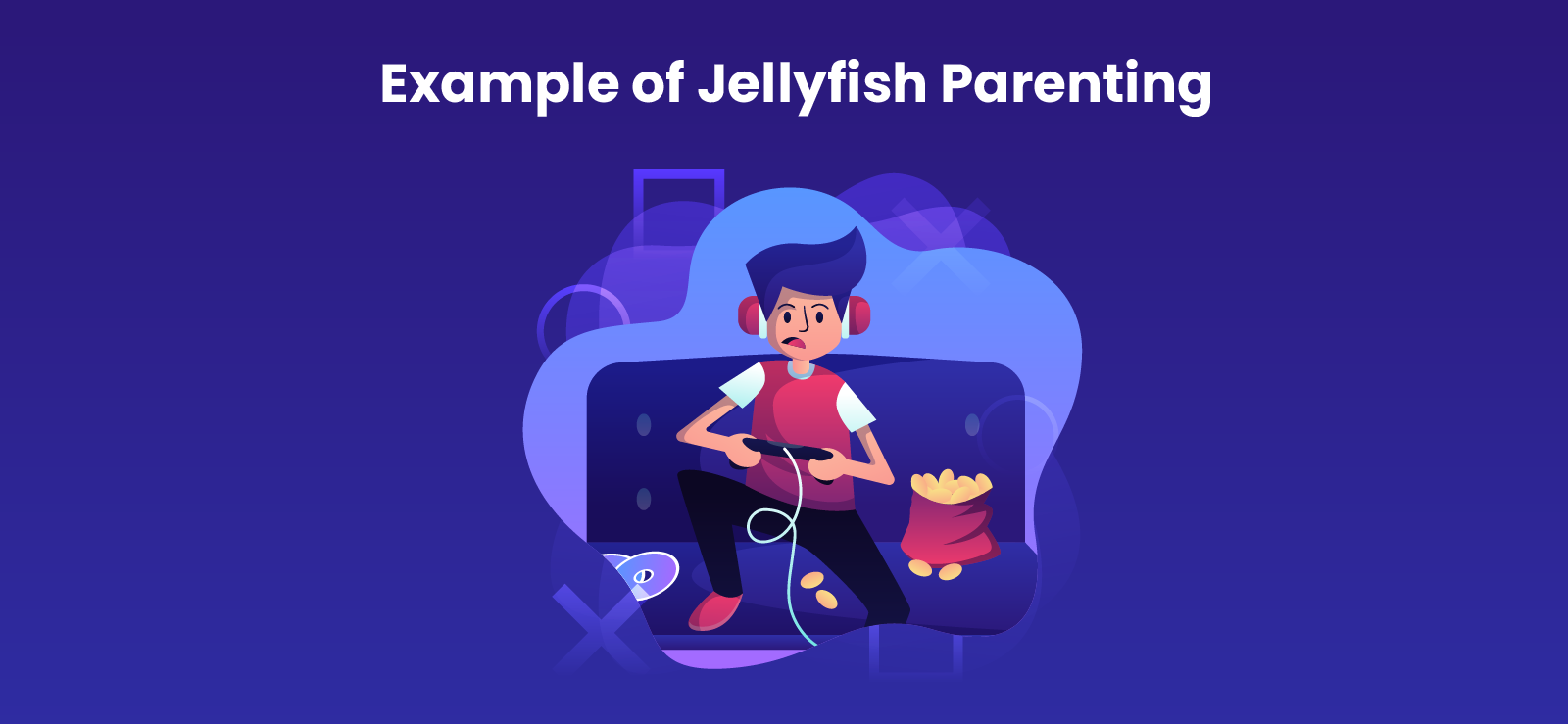
To make you understand how it works, here are a few examples;
You have a 10-year-old child who likes to watch YouTube Shorts. It is Wednesday night, and they are watching videos at 11 PM. You ask them to go to bed, but they refuse and request more time. You agree and ask them if they can watch 15 more minutes. Even after half an hour, they refuse to put down the phone.
In this case, a jellyfish parent might simply let the child stay up until they fall asleep on the couch. They would fear that enforcing a bedtime would cause an unnecessary argument or upset the child.
In another setting, you have prepared a balanced meal of chicken and vegetables. Your child takes one look at the plate and demands a bowl of sugary cereal or a bag of chips instead. If you are a jellyfish mom, you would let them have sugary snacks, rather than strictly asking them to eat their veggies, so the child could be happy.
After telling them that they can have anything they want, they might even end up making the child a bowl of ice cream for dinner just to avoid seeing them upset, prioritizing immediate emotional comfort.
At a local playground, your child wants to use the swing, but another child is already there. Instead of waiting their turn, your child begins badgering the other child or tries to push them off. The other parent looks to you to intervene. A Jellyfish parent, wanting to avoid the child’s tears, would defend their child, saying that they are just very passionate about the swings.
Rather than teaching the child about social cues, sharing, and boundaries, the parent lets the behavior continue to avoid making the child feel restricted or ashamed.
How Does the Jellyfish Parenting Style Differ from Permissive Parenting?
Jellyfish parenting is an extreme form of a permissive parenting style. Most people consider them the same; however, there are subtle signs that one is becoming a jellyfish parent.
For example, in permissive parenting, parents rarely enforce rules, but may set some limits. Whereas in jellyfish parenting, parents almost completely avoid rules or consequences, just so they don’t scold their child.
Similarly, in permissive parenting, parents listen to their children a lot, but they still guide when it is needed to ensure that the child is not following a problematic path. But in jellyfish parenting, children are in charge of their lives completely, and no one questions them, even if they make an inappropriate decision.
In short, permissive parenting is warm and nurturing, but teaching children remains a priority, whereas the jellyfish parenting style is extremely accommodating; sometimes parents become overly accommodating to a fault just so their children don’t feel sad.
Advantages of Jellyfish Parenting
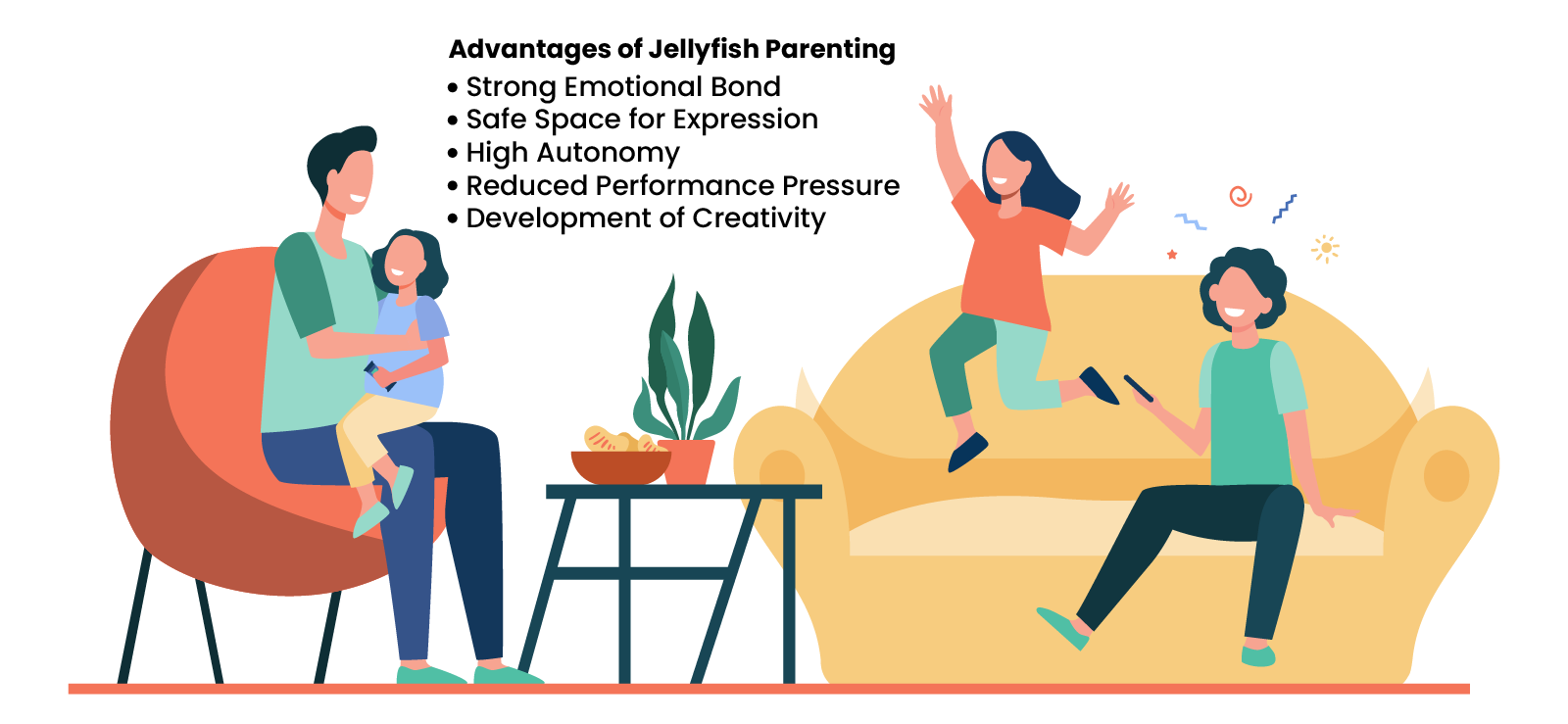
Being aware of your child’s emotions and letting them decide for themselves has some advantages that one cannot completely deny.
- Strong Emotional Bond: Jellyfish parents make strong emotional bonds with their children. They listen to their children, which allows them to open up more easily and to rely more on their parents, trusting them without question.
- Safe Space for Expression: Children feel comfortable sharing their thoughts and feelings because they know their parents will not contradict them and will always support their decisions. There is no fear of judgment in the child, which leads to high emotional honesty.
- High Autonomy: As jellyfish parents allow children to decide for themselves, they are trained to decide for themselves. They may not think too much before taking risks, trying new things, or even following their interests. They usually have a strong sense of individuality and self-direction.
- Reduced Performance Pressure: Children who are raised in an environment where parents don’t expect anything from them experience much less stress and anxiety.
- Development of Creativity: The absence of rigid “dos and don’ts” in jellyfish parenting can help encourage unconventional thinking and creative problem-solving. Children don’t hesitate to try new things and experiment with things around them.

Xnspy: Balance Freedom and Safety While Kids Explore
Help your child explore and make responsible choices online.
– Monitor calls, texts, and app activity in real time
– Track location history and set safe zones for alerts
– View social media chats to understand daily interactions
– Access browsing history to see what your child explores
Disadvantages of Jellyfish Parenting
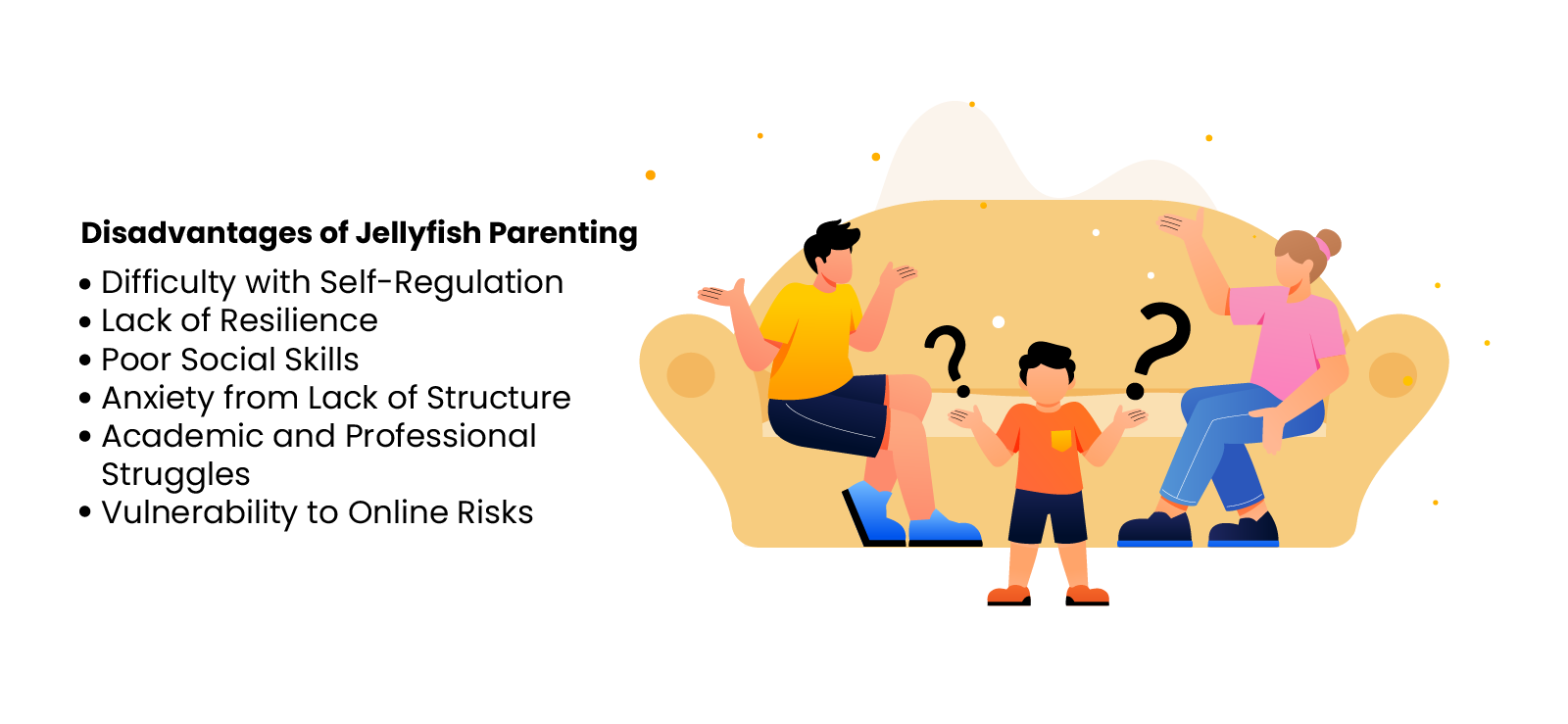
While giving children freedom and autonomy all the time can be effective, it has some drawbacks that should not be ignored.
- Difficulty with Self-Regulation: Boundaries provide a structure and balance that usually protect children. Without boundaries at home, children often struggle to manage their impulses, time, and emotions. They follow their pleasure rather than understanding what is good for them.
- Lack of Resilience: As jellyfish parents don’t let their children think that they are wrong, they often don’t understand what failure, rejection, or disappointment is. So when faced with such situations, they take it more seriously.
- Poor Social Skills: Children raised under jellyfish parenting may struggle in peer groups because they haven’t learned the art of compromise or the importance of respecting others’ boundaries.
- Anxiety from Lack of Structure: Ironically, too much freedom can be overwhelming. Most children don’t know what to do or how to react. For example, pre-teen children often feel more secure when they know exactly where the “lines” are.
- Academic and Professional Struggles: When children lack boundaries, they often choose to use their phones or play with friends instead of studying. So, when placed in academic or professional settings, these children may find it difficult to follow rules, meet deadlines, or accept feedback from authority figures.
- Vulnerability to Online Risks: As mentioned earlier, the lack of oversight makes these children prime targets for digital dangers. They are easily drawn to technology and don’t really understand the concept of self-discipline or how to navigate the internet safely.
Why Jellyfish Parenting Fails to Protect Kids Online?
When it comes to jellyfish parenting, parents’ primary rationale is that they are letting children choose for themselves. They believe that children should explore and process what is good for them, whether or not it is good for them. So while exploring the internet, they don’t impose any boundaries or check up on kids about what they are doing, but the question is whether it is wise for parents.
The digital world is perhaps the most dangerous place for a “go with the flow” approach. The internet is built on algorithms that exploit impulsive behavior. Communication channels, Social media apps, gaming apps, and even streaming channels keep on showing things that the user would stay hooked on, no matter what.
So when a jellyfish mom tells children to stop looking at their phone, they might not leave the tablet or cell phone, and without parental boundaries, screen time often becomes unlimited, leading to sleep deprivation and exposure to age-inappropriate content.
Additionally, jellyfish parents fail to protect their children online because they view monitoring as a violation of trust or an invitation for conflict. They feel that if they look into online activities like messages and calls, it will upset the children, and they will suffer trauma.
However, this is not the case. In actuality, if parents don’t keep proper checks and balances, phone usage can go out of proportion, and children can be exposed to issues that can affect them much worse.
How to Keep Your Teen Safe Online While Practicing Jellyfish Parenting
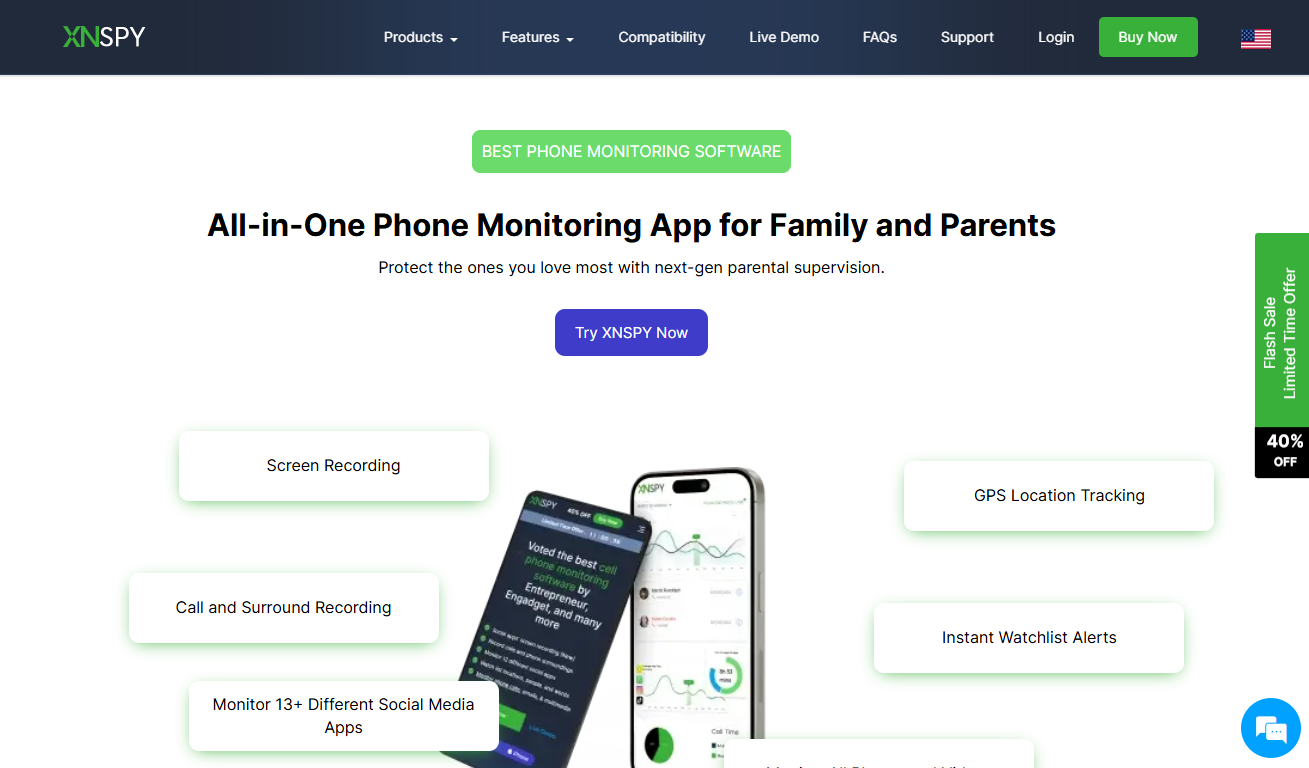
Even if you follow a jellyfish approach, protecting your child online is essential. One practical method is using a reliable parental monitoring tool. With the tight tool, you can just ensure that your child is using their internet privileges responsibly. You don’t have to intervene until it is absolutely necessary. One such tool is Xnspy.
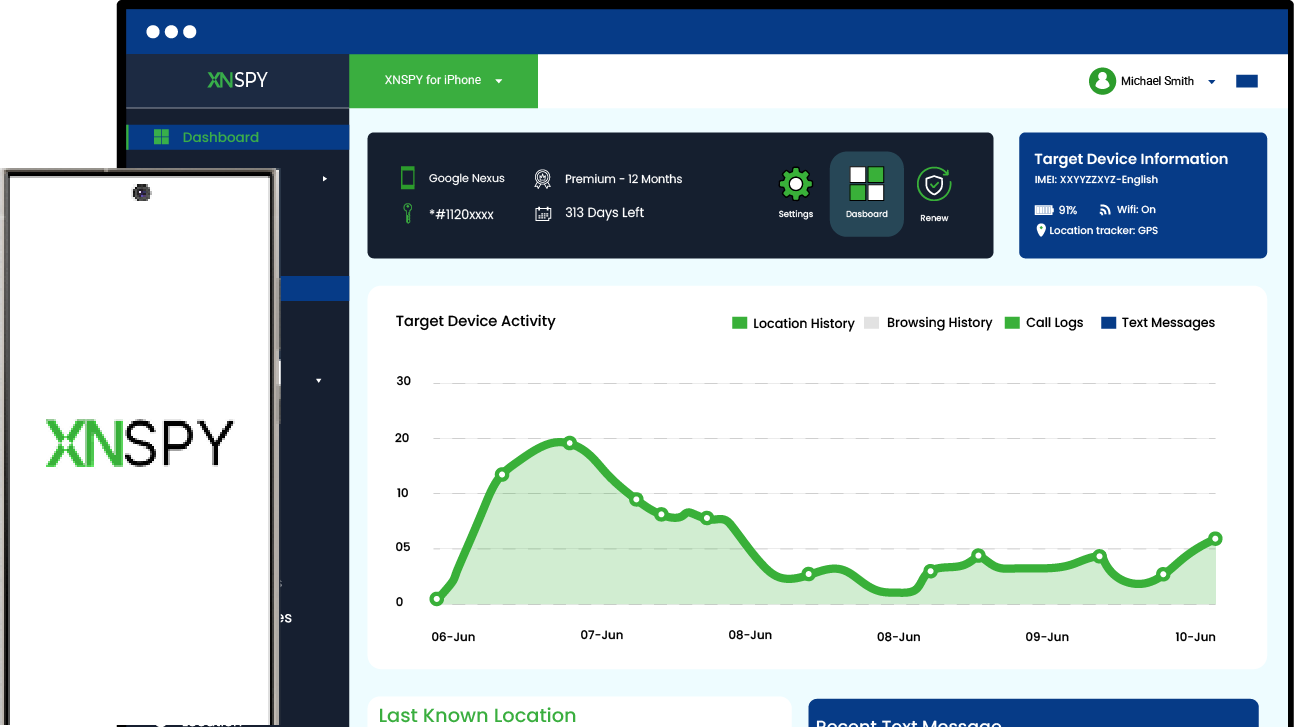
Xnspy is a parental monitoring tool that provides insights into phone activity that parents can use to guide their children and protect them from online dangers. The app has several features that provide you with information about various activities, including calls, SMS, screen time, internet browsing, app activity, social media usage, and even location tracking.
Additionally, Xnspy offers hands-off monitoring, with instant alerts in case of an issue, so you don’t have to check the dashboard multiple times a day.
To see all the relevant information, you have to install Xnspy on the target device. The installation process only takes a few minutes. You just have to ensure that you follow the guide properly. Once installed, Xnspy goes into stealth mode and starts working in the background without interfering with what children are doing on the phone. This ensures that children don’t uninstall the app or manipulate the insights.
Xnspy stores all the information on the user-friendly dashboard, which you can access from any browser. The features provide updated and to-the-point information that suits the laid-back jellyfish parenting style.
Considering the main concern of a jellyfish parent is that their child uses the phone in limits, you can use Xnspy’s screen time feature. It shows the overall phone usage duration and also provides information about the time spent on each app and the visit frequency. If your child is not pushing the limits, you don’t have to do anything.
Additionally, if your child is constantly scrolling through social media apps or watching YouTube, you can view their activities using the Xnspy screen recorder feature. This feature shows what they are watching with timestamps. If the content is age-appropriate and is within limits, you don’t have to interfere or have a confrontation.
Furthermore, if you don’t like asking your teen where they are going or how long they are staying, you can use Xnspy’s location-tracking feature. The location tracking feature will show you where they are and for how long they stayed, assuring you that they are safe. You can also use the geofencing feature and just get a notification when they enter or exit a place.
Xnspy monitoring app also offers customization, where you can turn off a few features to avoid looking too much into the usage. Overall, it offers you the option to maintain distance and act only when absolutely necessary, aligning with the true spirit of Jellyfish parenting.
Conclusion
While explaining what jellyfish parenting is, one may think that it is a style where parents don’t care. However, this is not true. It can be helpful to some extent when parents consider children as human beings and understand that they have the right to navigate their own lives.
While this liberty develops self-esteem, personality, and confidence, if taken too far, it can create issues for children, who may take advantage and end up wasting their time and lives.
Also, the lack of structure can leave them unprepared for challenges, particularly online. The best approach is to know when to be flexible and when to take a stand as parents. Especially for long-term goals and complete protection, parents should learn to question, confront, and impose strict rules.
FAQs
Is jellyfish parenting the same as permissive parenting?
No. Jellyfish parenting is a more extreme version of permissive parenting. While permissive parents may still offer some guidance, Jellyfish parents avoid rules and consequences almost entirely to prevent conflict or emotional discomfort.
How is jellyfish parenting different from gentle parenting?
Gentle parenting focuses on empathy while still setting clear rules. Jellyfish parenting removes most limits and consequences to avoid upsetting the child.
Can jellyfish parenting work with older children and teens?
Jellyfish parenting can be harmful at any age. If you apply this approach to a toddler, they will become in habit of throwing tantrums and will get their way no matter what. When it comes to tweens and teens, they actually need guidance, accountability, and structure to prepare for real-world responsibilities. Taking the balanced approach is the best way.
What are the biggest risks of Jellyfish parenting?
Children, usually, are unaware of what the real world holds, and they need to have a little understanding of what they have to face. The guidance and structure can prepare them to navigate challenges. Otherwise, they may end up with issues such as poor self-control, difficulty following rules, lack of resilience, and trouble handling authority or setbacks.
Can Jellyfish parents still protect their kids online?
Yes. Using a monitoring app like Xnspy that provides information without urging parents to create unnecessary schedules can help protect, even if you are following a gentle parenting style.
Leave a reply:
Your email address will not be published. Required fields are marked*
Mike Everett
Member since October 20, 2014
Mike Everett
Member since October 20, 2014
Mike Everett is a consumer technology journalist with expertise in hands-on testing and evaluation of iOS and Android monitoring applications. With over 11 years in the industry, he focuses on how mobile monitoring tools perform in real-world conditions, including accuracy, feature reliability, device compatibility, and practical usability for parents.
He conducts live-device testing of monitoring apps to assess how well their features function beyond marketing claims. His work primarily includes comparative reviews, feature breakdowns, and buyer-focused guides designed to help parents understand which tools actually deliver usable results in everyday scenarios.