FAFO Parenting: What It Means, Why It Works, & When to Use It
 By Jenny Nicole
The complete monitoring experience for your phone
Get XNSPY and start tracking calls, texts, multimedia, locations and more on any phone!
Get Started Now Live DemoParenting is one of those responsibilities that doesn’t come with a set of rules. There is no manual, and most parents are improvising as they go. It is a process of constant learning; you make mistakes, reflect, and try not to repeat patterns that aren’t working.
Parenting involves balancing multiple variables, including personal choices, perceptions, opinions, children’s personalities, needs, wants, resources, and experiences. The ultimate goal is to create a healthy and productive life for children, and every parent has their own way of getting there.
The modern world has classified these processes as different parenting styles. Parenting styles define the core strategies parents use to make day-to-day decisions for their children and can provide a more structured approach, thereby reducing the risk to a child’s emotional and developmental well-being.
One such style is FAFO parenting. This article explores the philosophy, benefits, drawbacks, and best practices for implementing FAFO parenting effectively.
Key Takeaways
– FAFO parenting lets children learn by failing and figuring out solutions.
– Focuses on autonomy, problem-solving, resilience, accountability, and independent decision-making.
– Encourages children to face natural consequences rather than relying on parents.
– Most effective for children who understand cause-and-effect and basic responsibilities.
– Requires careful supervision and guidance, especially for online activities and safety.
– Drawbacks include safety risks, emotional distress, and being unsuitable for younger children.
What is FAFO Parenting?
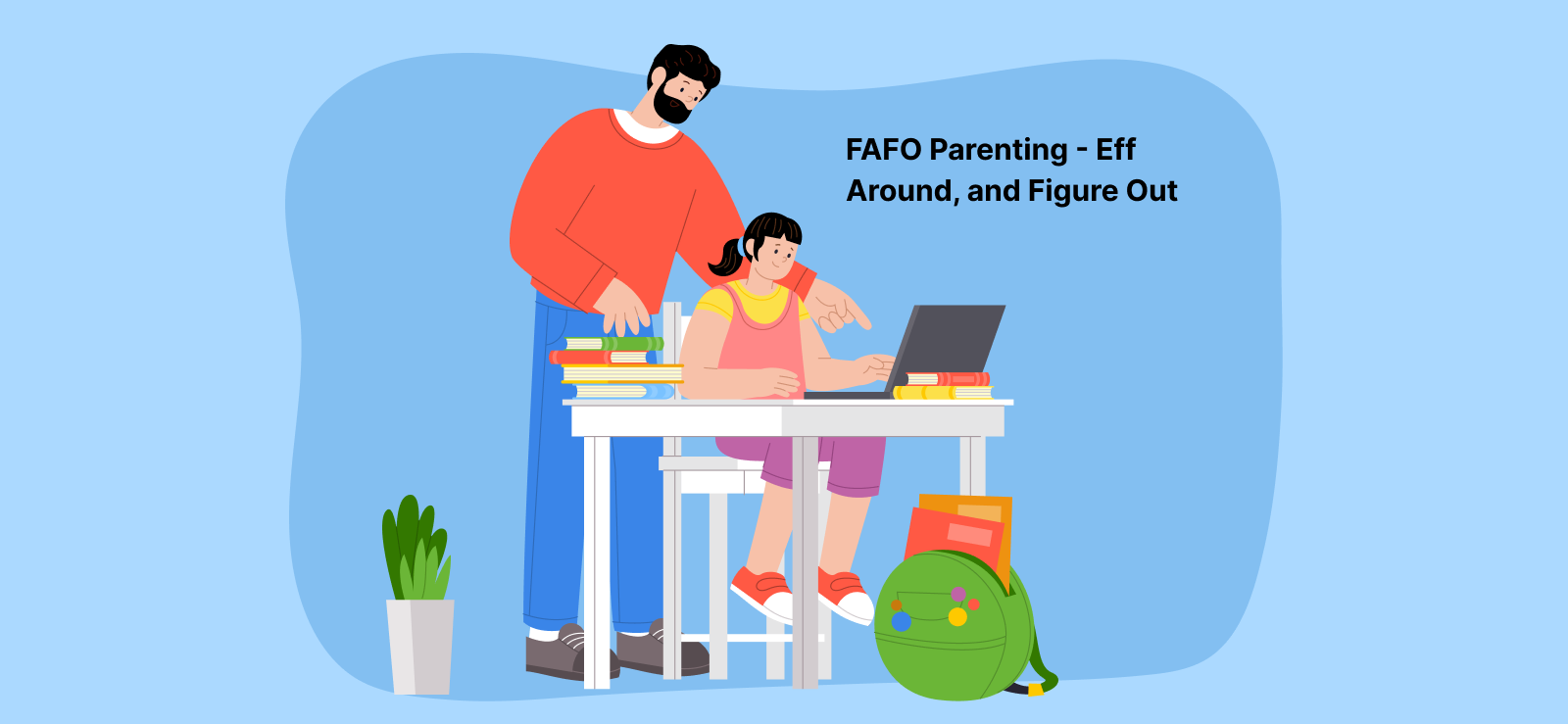
FAFO parenting literally is F**k Around, and Figure Out, and contextually it stands for “Figure it out, Fail, and Own it.” The term came from African American Vernacular English (AAVE), where people used it to figure things out.
FAFO parenting meaning and philosophy centers on experiential learning and self-directed decision-making. For example, rather than telling children what to do in any situation, you let them make mistakes, face the consequences, and figure out a way themselves.
It is the opposite of helicopter parenting, where you immediately intervene when a child faces a hurdle. So instead of becoming a fixer for your children, you play the role of a facilitator. The primary goal of this style is to enable children to develop the grit and autonomy necessary to navigate the complexities of adult life independently.
Example of FAFO Parenting Style

FAFO parenting is more direct and can be practiced more frequently than other parenting styles. Here are a few examples that illustrate how it works.
A 12-year-old was struggling to complete a school science project. It was about dropping an egg from a height of 10 feet. The child made one prototype, which didn’t work, and then tried a few more times. Instead of stepping in to correct mistakes or redo the work, you let them figure out on their own where the issue exists.
You can provide notes, such as “What worked?” What didn’t? What could be done differently next time? But ultimately, let them do what they want to do and keep them at it until they figure it out.
In another scenario, an 8-year-old keeps forgetting to pack their sports uniform for practice, even though you have reminded them multiple times. If they still don’t, instead of rushing to drop it off or calling the coach with an excuse, you allow them to face the consequence of being careless with instructions or listening.
They will get punished or have to explain the situation themselves. Later, you can discuss that if they had heard, it might not have happened. You can also mention the cause of carelessness and suggest a better way to approach things, but the responsibility remains theirs. Over time, the child learns the importance of preparation and accountability without feeling lectured or controlled.
Through these examples, one can readily see how this style promotes experimentation and decision-making. It allows children to navigate challenges independently and to be confident, creative, and independent.
Check These Out

🧘  Digital Detox App: What It Is & Why You Need It + 5 Best Options
💡  Lighthouse Parenting: What It Is and How It Works
🎵  10 Discord Alternatives Parents Can Trust for Their Kids
🏅  What Is Sharenting & Why It Might Be More Harmful Than You Think
Benefits of FAFO Parenting
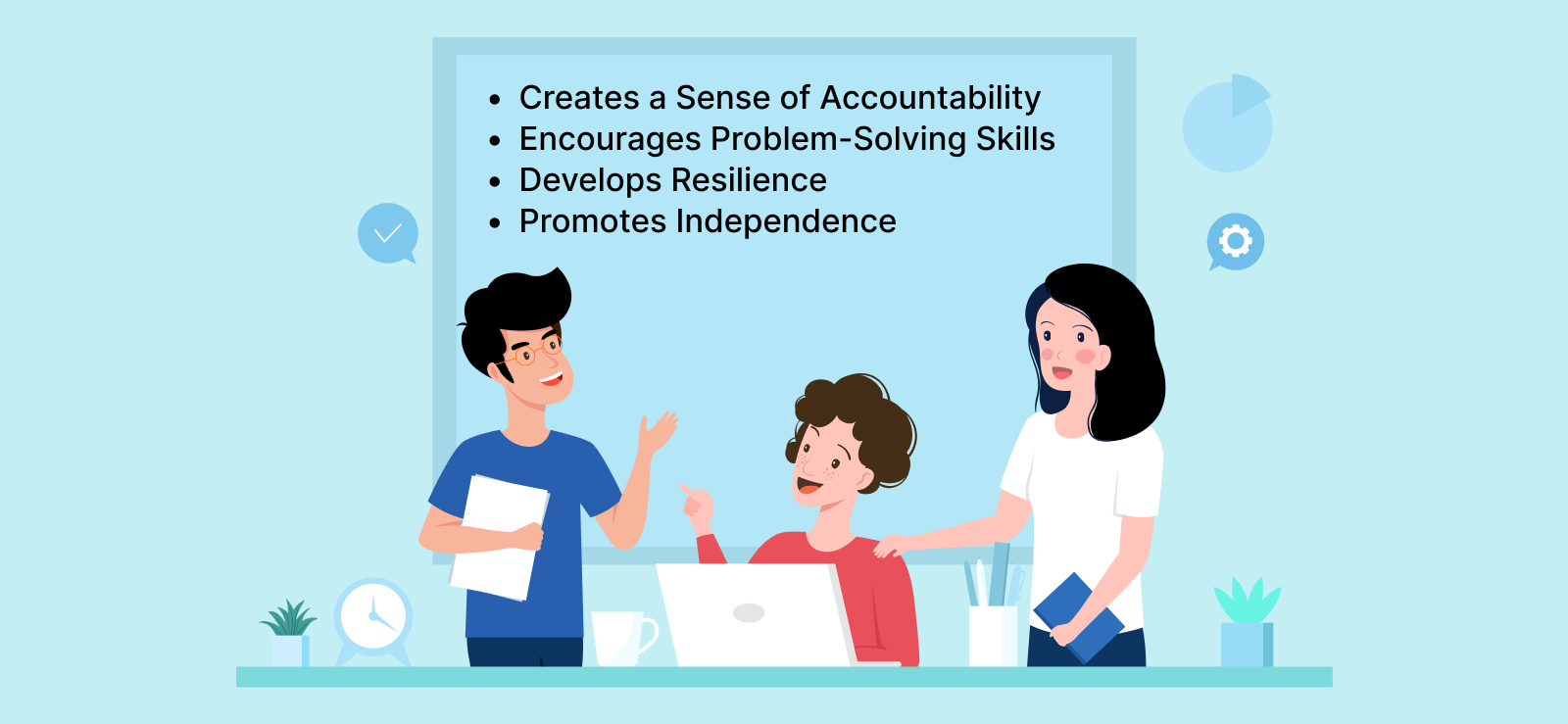
In comparison to gentle parenting, the FAFO parenting style is becoming more popular with parents. Here are the benefits of this approach.
1. Creates a Sense of Accountability
When you come to your child’s rescue every time they make mistakes, they stop taking accountability for their actions. When children face consequences for their actions, they become more careful and don’t repeat the same mistake or adopt a different approach. They learn that decisions carry weight, and they become more mindful of their choices.
2. Encourages Problem-Solving Skills
The FAFO parenting style encourages children to resolve issues independently. It gives them the option to try out different methods until something works. Whether by asking around or by finding other resources to solve the problem, they must act on their thinking capacity. This way, they develop critical thinking and condition their minds to explore different strategies, weigh options, and find solutions on their own.
3. Develops Resilience
FAFO parenting demands trying until you find the solution. This kind of mindset develops resilience in children. They don’t fear failure or taking risks; rather, they cope with setbacks with persistence and critical thinking and bounce back from disappointments.
4. Promotes Independence
FAFO parenting nurtures self-reliance. It gives children the confidence to take steps towards getting what they want. From their parents, they receive assurance that they can handle tasks, solve problems, and make decisions without assistance from others or constant adult intervention.
5. Improves Decision-Making Over Time
When children are conditioned to make every small decision themselves, they become trained to take on bigger challenges without going through a lot of pressure. They become self-reliant and don’t get confused while deciding on small things. With the improved decision-making skills, children gradually develop better judgment and foresight.
6. Reduces Power Struggles
According to a study, 87% of children experience perceived parental pressure. Today’s children like to make their own decisions, and when parents don’t allow them to, they become confused and afraid to make small decisions. When FAFO parenting gives autonomy, conflicts over control between parent and child often decrease. Kids feel respected, reducing the likelihood of rebellion.
Overall, the FAFO parenting movement focuses on equipping children with essential life skills that extend beyond the home. They become more confident and can handle situations outside the home with a strong, actionable mindset.
Drawbacks of FAFO Parenting
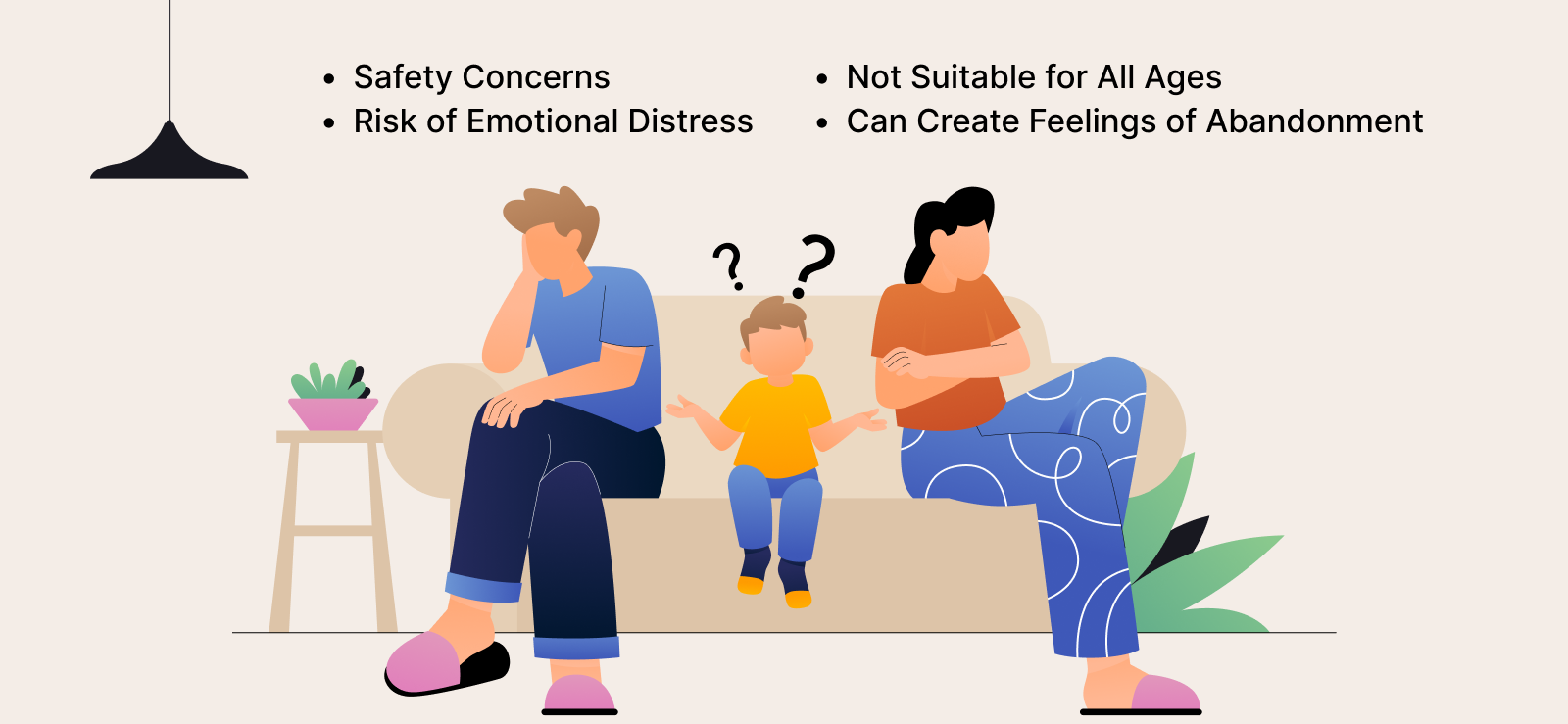
As mentioned, not every parenting strategy works for every child, so FAFO parenting too has some drawbacks that don’t make it the best parenting style for children.
1. Safety Concerns
One of the most talked about issues parents have with this parenting style is that it doesn’t give any kind of security to children. Allowing children to experience consequences after every mistake they make carries inherent risks. While figuring out the way for themselves, they can become stuck in an even bigger issue, sometimes resulting in physical harm.
2. Risk of Emotional Distress
Not every child has the ability to take failure as a lesson. Repeated failures or setbacks without proper support may cause them stress or anxiety. Most children today need guidance to interpret failures as learning opportunities, not personal shortcomings.
3. Not Suitable for All Ages
Younger children or those with specific developmental needs may struggle with the independence FAFO parenting demands. If you pressure them to think about every menial thing, they may get exhausted or confused, especially when they are developing cognitive and emotional maturity.
4. Can Create Feelings of Abandonment
If children perceive that their parents will not be there when they make mistakes, they may think that they are not interested in their lives and don’t care enough. Facing every issue on their own may make them feel unsupported or isolated, undermining trust and emotional security.
5. Inconsistent Learning
Some children may not internalize lessons from failure. Sometimes they develop insecurities, and at other times they may believe no one will question the decisions they make. The learning curve with FAFO parenting is too unpredictable and uneven.
6. May Reinforce Risky Behavior
Without appropriate boundaries, FAFO parenting can unintentionally encourage children to do whatever it takes to get the correct answer for their situation. Sometimes, children may cross ethical boundaries, leading to dangerous or irresponsible choices, especially when the consequences are minimal or unclear.

Xnspy: Monitor Activities & Guide Your Child’s Digital Growth
Help your child explore, learn, and make responsible choices online.
– Monitor calls, texts, and app activity in real time
– Track location history and set safe zones for alerts –
– View social media chats to understand daily interactions
– Access browsing history to see what your child explores
Is the FAFO Parenting Movement Favorable for All Children? When to Implement
While the FAFO parenting style is well-intentioned and aims to give children autonomy and confidence to tackle issues with a strong mind, it entails many drawbacks that can have long-lasting effects on children’s mental and, at times, physical health.
Is it all problematic, and should parents not consider it at all? The answer lies in how you understand the situation and this parenting style.
As mentioned, what to follow largely depends on your child and how they respond to your parenting style. For example, if your child frequently forgets homework and you keep reminding them or doing it for them, they may become lazy and rely too much on you. Here, FAFO parenting can be helpful, as a brief punishment can provide them with the clarity they need.
Similarly, if you leave them to figure everything out on their own without providing any assistance, they may resort to any means to ensure they achieve their goal. The idea is to understand what works for your child.
If you adopt the FAFO parenting style, first determine the extent to which you allow children to make their own decisions. You have to check at what point you need to be strict and at what point you have to be gentle.
Another thing you have to be careful about is that you cannot go entirely FAFO on toddlers or younger children, who are trying to figure out their own selves or trying to make sense of their surroundings.
FAFO parenting is most effective for children who have already mastered basic responsibilities and can understand cause-and-effect relationships. If you introduce it too early, it may overwhelm a child; if you apply it too late, it may reduce its impact on developing independence.
The best approach is to balance he technique and follow some precautions. For example, parents should consider the environment. In safe, supportive contexts, like home or structured school projects, FAFO can be applied more liberally. In high-risk situations, such as traffic safety or hazardous outdoor activities, parents must establish clear boundaries and intervene when necessary.
Moreover, always check with children about how they feel about it. Children always need reassurance that they are supported even as they navigate challenges. Ensure that guidance is provided, outcomes are discussed, and reflection is encouraged, thereby helping children process failures constructively.
Overall, when applied thoughtfully, FAFO parenting can help children grow into independent, resilient, and confident individuals.
Balancing FAFO Parenting with the Monitoring App
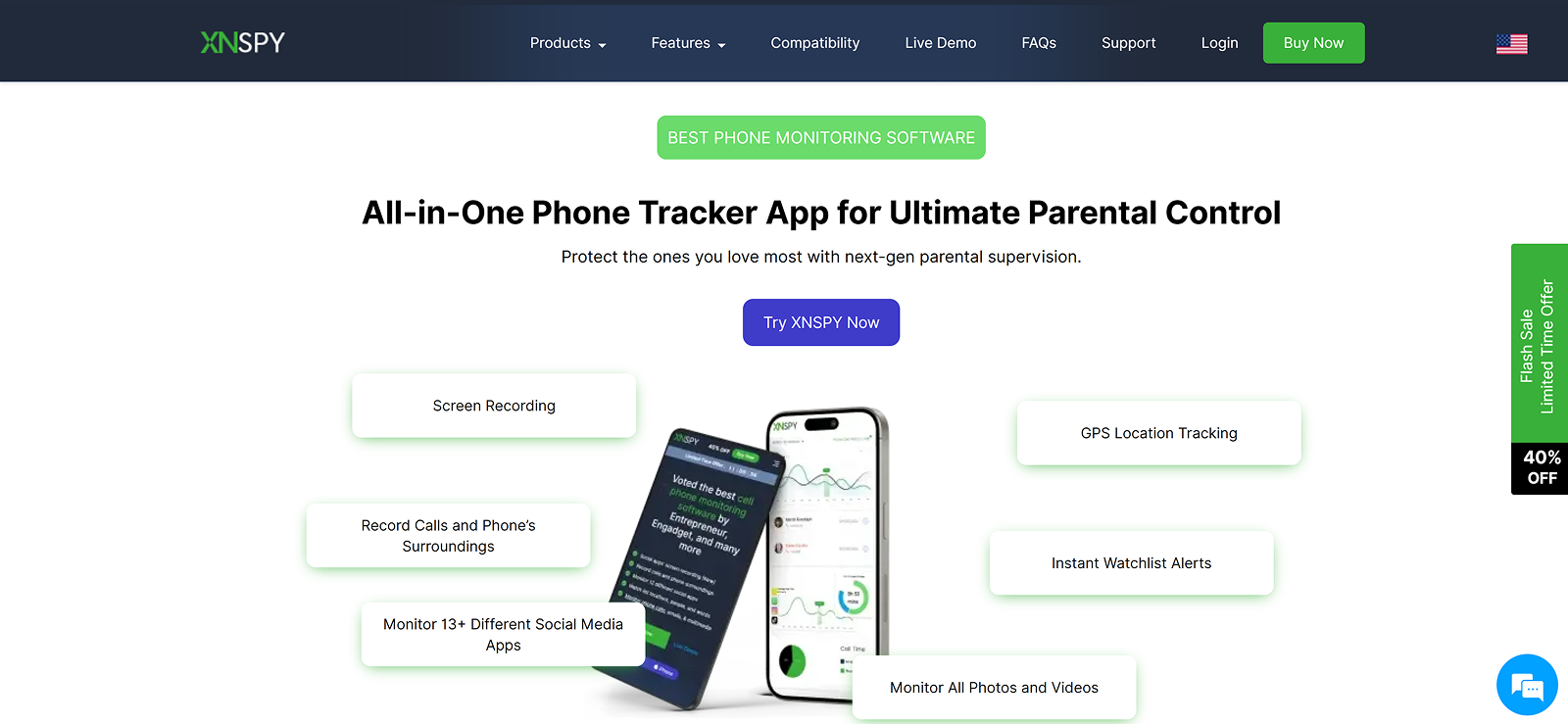
One of the biggest mistakes parents make when applying the FAFO parenting style is assuming they need to leave children alone and not look into what they are doing. Whereas, it is actually the opposite.
FAFO parenting does not mean abandoning supervision; it requires careful monitoring of every activity so that you can navigate the situation and help them understand it better. This also includes reviewing every aspect of your child’s life, including online activities, given that children spend time on their phones.
In FAFO, you guide them about how to operate in the online world, and then you let them make your choices. But it doesn’t end there because to guide them further, you need to know what they are doing online, and for that, you need to have a reliable monitoring app like Xnspy.
Xnspy is a comprehensive parental monitoring solution that allows you to view every activity your child is doing online. From screen time to social media and location tracking, Xnspy covers it all. For FAFO parenting, the app is appropriate because it allows you to observe your child’s preferences and responses when given choices to help mitigate potential internet-related risks.
For example, your teenager likes to make friends online and start trusting them blindly. They made a friend and shared personal matters with them, but that friend mocked them rather than understanding.
Through the Xnspy dashboard, you saw the screen recording and understood how to guide them. They again made a friend, which, unfortunately, turned out to be a predator, and asked them to meet outside. Here you can intervene to protect your child before it is too late.
Overall, a tool like Xnspy can provide information to determine whether FAFO parenting is working for your child. The app is easier to install and navigate, and it covers all phone activities. Here is a complete breakdown of the features for your convenience.
- Screen Time: Shows how much time your child spends on their phone and individual apps.
- Screen Recording: Tracks activity on popular social platforms using periodic screenshots of each app.
- Text Message Logs: Provide access to sent and received messages, including deleted messages.
- Call Logs & Contact: Displays call history and saved contacts to identify unfamiliar or concerning connections.
- Browsing History: Displays visited websites, bookmarks, and private browsing.
- Location Tracking: Allows you to view real-time and past locations.
- Geo-Fencing Alerts: Sends notifications when your child enters or leaves predefined locations.
- Installed Apps: Reveals which apps are installed, along with timestamps and version details.
- Keyword Alerts: Notifies you when specific risky or sensitive words appear in messages or searches.
- Remote Features: Enables you to block inappropriate or distracting apps, record the surroundings, lock the phone, and remotely wipe data.
Summing up
FAFO parenting is a hands-on approach that encourages children to learn through real experiences, mistakes, and natural consequences. In this style, instead of constant correction, parents allow kids to try, fail, reflect, and adjust, helping them build accountability, problem-solving skills, resilience, and independence.
However, this style also has drawbacks, including safety risks, emotional stress, and the possibility that some children may feel unsupported when boundaries are unclear. The best approach is to assess your child’s capacity and then choose the style that fits the need of the hour.
When it comes to FAFO parenting, it is most effective when integrated with other parenting styles and adapted to a child’s age, personality, and circumstances. To ensure the effectiveness of any parenting style, stay alert and know what children are doing, especially online. No matter the approach, a child’s safety must always come first.
FAQs
What is FAFO parenting meaning?
FAFO stands for “Figure It Out, Fail, and Own It.” It’s a parenting style where children are encouraged to make decisions, experience consequences, and learn from mistakes while parents provide guidance and support.
At what age can I start FAFO parenting?
FAFO parenting is most effective for school-age children (approximately 8+) who can understand cause-and-effect and reflect on their actions, with monitoring adjusted for safety.
Why should I use a monitoring app with FAFO parenting?
While FAFO promotes independence, parents still need insights into their child’s activities, particularly online. Xnspy phone monitoring app allows you to monitor screen time, social media, messages, and locations, helping you guide your child safely.
How can I determine whether FAFO parenting is working?
Signs include improved problem-solving, better decision-making, accountability for actions, and responsible online behavior. Monitoring applications such as Xnspy can help track these outcomes.
Should I choose gentle parenting or FAFO parenting?
Observe how your child responds to each approach and adapt accordingly. You can combine the best of both techniques to balance support, guidance, and independence.
Xnspy: Know Their World, Protect Their Future
Get detailed insights into your child’s digital habits without hovering.

2 Comments
Leave a reply:
Your email address will not be published. Required fields are marked*


Bowen Higgins
February 19, 2026 at 8:29 amThe only reason I am so confused whether to try out FAFO or not is because of feelings of abadonment, I have experienced that with my parents and do not want my children to feel the same.
Drew George
February 26, 2026 at 11:01 amSo much confusion, I would rather not have any kids then run around trying to understand all these parenting styles