
The complete monitoring experience for your phone
Get XNSPY and start tracking calls, texts, multimedia, locations and more on any phone!
Get Started Now Live DemoThe itch returns as the whispers grow louder. You give in. Once again, you pick up your phone and open WhatsApp, only to be greeted by those grey ticks. No blue, no closure. When will they change? No one knows. Maybe they never will.
The mental back-and-forth continues, wearing you down one unread message at a time. But before curiosity consumes you entirely, let me give you a way out.
So, in this guide, I have listed 5 reliable methods on how to tell if someone read your message on WhatsApp, each one tested on real devices so you know exactly how often they actually work.
Quick Look Before You Chase the Blue Ticks
- There is no guaranteed free way to know if someone read your WhatsApp message once they turn off read receipts, but comparing several signs together gets you a high-confidence answer instead of a guess from one clue.
- Try in a Group Chat: The “Read by” list is the most reliable free signal because group read receipts cannot be turned off, though it only works if you already share a group with the person and it is not private from other members.
- Check the Typing Indicator: A “typing…” label confirms a read the moment it appears, but it only fires if the person is about to reply, so it tells you nothing if they read and stay silent.
- Send a Voice Note in Group Chat: Pairing the blue microphone icon with the group’s “Read by” list gave a perfect double-confirmation in testing, with the same group-only limitation as the text method above.
- Watch “Last Seen”/”Online”: Timing can hint at a read message, but the method breaks completely the moment the person restricts their privacy settings.
- Look for WhatsApp Activity: Profile picture and status changes are the weakest clue, since they depend on unrelated behavior most people do not repeat daily.
- Use Xnspy: The only method that confirmed reads with accuracy in testing, since it captures device-side screenshots directly, but it requires installation and access to the target phone.
Before You Learn How to Know if WhatsApp Message Is Read Without Blue Tick, Understand How Read Receipts Work
You would think figuring out how to know if a WhatsApp message is read would be simple. But, unfortunately, it is not due to the read receipt system, which leaves room for uncertainty.
Before looking into what an unread receipt looks like, let us first understand how read receipts work.
When read receipts are enabled, here is what each message indicator means:
- Clock Icon: Your message has not left your device yet. This usually points to a connectivity issue. Check your internet connection and wait for the message to be sent.
- One Grey Checkmark: The message has been sent from your mobile phone but has not reached the recipient yet. It is still somewhere in transit.
- Two Grey Checkmarks: The message has been delivered to the recipient’s device (and any linked devices like WhatsApp Web), but they have not opened it yet.
- Two Blue Checkmarks: Your message has been read. This is your only solid confirmation unless read receipts are turned off.
Trending Blogs You’ll Actually Enjoy

📱  Does WhatsApp Notify Screenshots: What You Need to Know
📍  How to Check Someone’s Location on WhatsApp Without Them Knowing
⛔  How to Read Someone’s WhatsApp Message Without Their Phone
⚡  How to View Twitter Without an Account: 6 Methods That Work
4 Tricks People Use to Read WhatsApp Messages Without Letting You Know
But if it is all so easy, why do you still find yourself asking, “How do you know someone read your message on WhatsApp?” The answer is simple: people have found ways to read messages without triggering blue ticks. Let us take a closer look at how to know if a WhatsApp message is read without a blue tick
Turning Off Read Receipts
The confirmation you get from two blue checkmarks vanishes as soon as someone disables their read receipts. Even if they open and read your message, the checkmarks stay grey, therefore giving you no insight into whether the message was seen.
Moreover, if they turn read receipts back on later, the previous messages will not be updated. Meaning, those checkmarks will stay grey, and you will still be left in the dark.
Using Airplane Mode
Users can also get creative to avoid triggering blue ticks. For instance, if they enable Airplane Mode before opening WhatsApp, they can read your message offline without any network activity. Once done, all they need to do is exit the chat and close WhatsApp entirely.
This only stays effective as long as the person does not reopen WhatsApp after turning their internet back on. If they do, the app syncs and the blue ticks can still appear. So the trick works only if they read your message in Airplane Mode and then keep WhatsApp closed after reconnecting; otherwise, they can read your text, and you may never know.
Reading via Notifications
For users who have enabled WhatsApp notifications on their phone, simply swiping down their notification panel allows them to preview incoming WhatsApp messages. Some phones even go as far as to offer options to expand received messages for reading them.
Since WhatsApp has not been launched, the message is not marked as read, and no blue tick appears.
Using WhatsApp Web Secretly
There is more. When trying to read WhatsApp messages discreetly, users can also turn to WhatsApp Web. Instead of clicking into a chat, they can simply hover over it to preview the latest message.
Since the chat is not technically open, the read status remains unchanged, and no blue ticks appear on your end.

Checking Their WhatsApp Activity Is Just a Few Clicks Away
With Xnspy, you can gain full visibility into their WhatsApp messages and calls remotely.
How I Tested Different Methods to Know if Someone Read My WhatsApp Message
To find out how to know if someone read your message on WhatsApp when read receipts are off, I did not rely on theory. I set up controlled test chats using two devices: an iPhone running iOS 17.5 and a Samsung Galaxy running Android 14, paired with five test contacts across individual chats and three separate group chats.
Testing ran over 6 days, with messages sent at different times to avoid results being skewed by any one usage pattern. Every method was tried a minimum of 15 times before I counted it as reliable or unreliable.
I considered the following parameters during testing:
- Read Receipt Status: Every method was tested with read receipts turned both on and off, since several of these tricks only matter once the blue ticks disappear.
- Message Type: I separated text messages, voice notes, and group messages because WhatsApp uses different read indicators for each.
- Platform Differences: I compared iOS and Android behavior side by side because typing indicators, notification previews, and privacy toggles differ across platforms.
- Privacy Settings: I ran a second pass with “Last Seen,” “Online,” and profile photo visibility restricted, to see how much that changes the reliability of indirect methods.
- Repeated Outcome Consistency: No method was judged on a single attempt. I logged every try, every failure, and the reason behind it, so the numbers below reflect real, repeated outcomes and not a lucky guess.
The goal was to find out which of these signs are strong enough to actually answer “how do you know if someone read your message on WhatsApp?” and which ones just feel like confirmation but fall apart under repeated testing.
How Do You Know if Someone Read Your Message on WhatsApp: Proven Methods That Work
So, coming to the main question: how do you know someone read your message on WhatsApp? It is not as difficult as you might think if you know what to look for.
Below are the 5 methods I tested, along with exactly how each one performed.
| Method | Reliability | Time Required | Best For | Limitation |
| Try in a Group Chat | Very High | 1 Minute | Confirming reads with contacts you already share a group with | Requires a mutual group; not private, since every member can see who’s read it |
| Check the Typing Indicator | Medium | 1 Minute | Real-time confirmation while a chat is actively open | Only works if the person is about to reply; gives no signal if they read and stay silent |
| Send a Voice Note in Group Chat | Medium | 1 Minute | Double-confirming a read using two independent signals at once | Requires a mutual group; forwarded or externally played notes won’t trigger it |
| Watch “Last Seen”/”Online” | Medium | 1 Minute | Quick checks on contacts with default privacy settings | Breaks completely once privacy settings are restricted; can produce false positives from background app activity |
| Look for WhatsApp Activity | Low-Medium | 1-2 Minutes | Casual, indirect confirmation when no other signal is available | Depends on unrelated behavior; most people don’t update their profile or status daily |
1. Try in a Group Chat
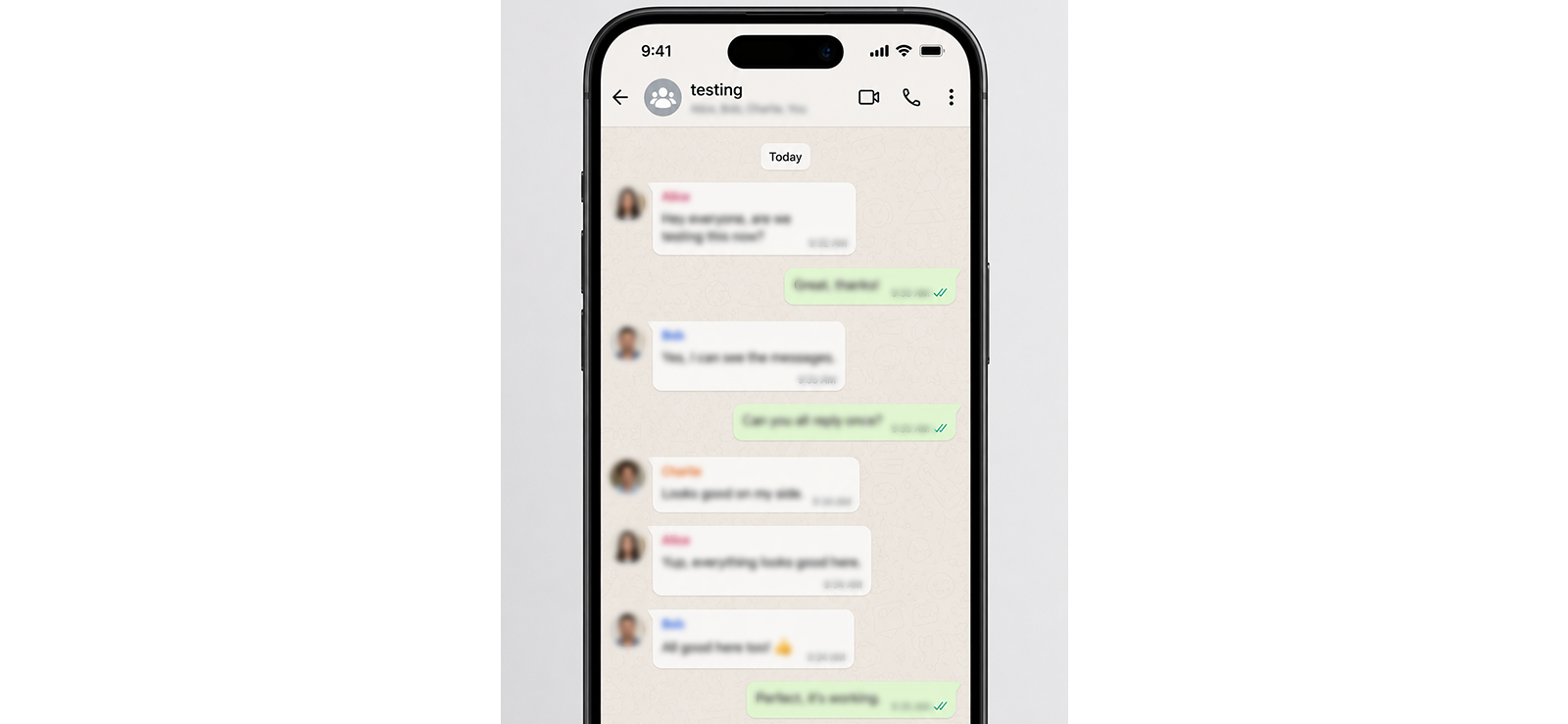
Of everything tested, this method did not rely on guesswork or on the other person’s mood; it relied on how WhatsApp’s group read receipts are built.
In a private chat, the other person can flip a single switch and turn their read receipts off, and every blue tick you were hoping for disappears with it. Group chats do not give anyone that option. WhatsApp ties group read receipts to the group setting itself, not to each member’s individual privacy toggle, so no single person in the group can hide whether they have opened a message.
That means if you are wondering whether someone has been quietly reading your texts and ignoring them in your private chat, you can drop the same kind of message into a group you both belong to and get a real answer. Open the message’s info screen afterward, and WhatsApp will tell you exactly who has seen it and precisely when they did.
Here’s how to tell if someone read your message on WhatsApp by following the given steps:
- Send a message in a group chat where both of you are members.
- Long-press the message you sent.
- Tap the info (i) icon at the top of the screen.
- Check the “Read by” section to see if their name appears, along with the time it was read.
How Did It Turn Out in My Testing?
I tested this method on both the iPhone and the Samsung Galaxy by sending messages into 3 mutual group chats so I could compare the “Read by” list across both platforms.
On the iPhone, I sent 15 messages across two of the groups and logged 15 correct reads out of 15 tries, with each timestamp matching exactly when the test participant reported opening the message. On the Galaxy, I ran the same test with 15 messages in the third group and logged the same result, 15 out of 15, with no discrepancy between what the app showed and what participants confirmed.
That gave a combined 30 out of 30 tries across both platforms, with zero failures in the entire run, because group read receipts genuinely cannot be disabled by an individual member, whether they are on iOS or Android.
The only limitation I ran into during testing is not technical; it is situational: this method only works if you already share a group with the person. It also is not private, since anyone in the group can see who has and has not read a message, so it is not something you can use quietly on a one-on-one contact.
2. Check the Typing Indicator
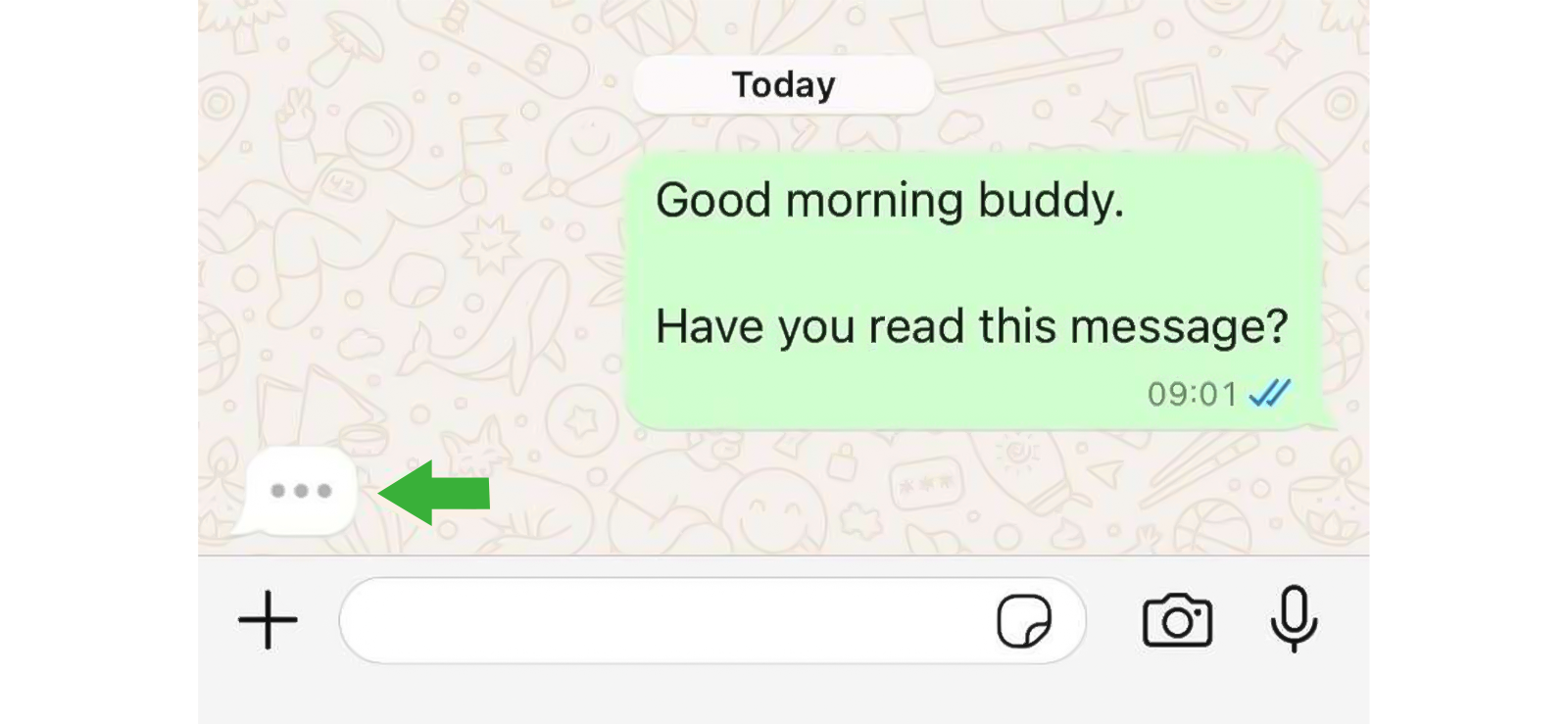
You might still be wondering how to know if a WhatsApp message is read without a blue tick, so let’s get into another method, i.e., checking the typing indicator.
When the “typing…” sign appears at the top of the chat, it means the person is responding to your message. Therefore, it acts as a confirmation that not only have they opened your chat, but they also, most likely, have read your message even if the blue ticks are turned off.
Here’s how to check your WhatsApp message is read using the typing indicator:
- Send your message and note the delivery time.
- Keep the chat window open and watch for the “typing…” label at the top.
- If it appears, the other person is writing a reply, which means they have seen your message.
- Use this moment as an indirect confirmation of a read message without needing blue ticks.
How Did It Turn Out in My Testing?
I sent 25 test messages across 5 contacts with read receipts disabled and asked them to reply to some messages but ignore others. In 14 out of 25 tries, I could see the “typing…” popup appear at the top of the chat, which meant they had seen the message and were writing a reply.
The other 11 attempts failed for the same reason every time: the contact opened and read the message but chose not to reply immediately, so no typing indicator ever appeared, even though the message had clearly been seen.
Testing this over multiple days confirmed that this method only works when the person is actively about to type. If they read the message and set the phone down, this method gives you nothing, and you will not know if they even opened the chat.
3. Send a Voice Note in Group Chat
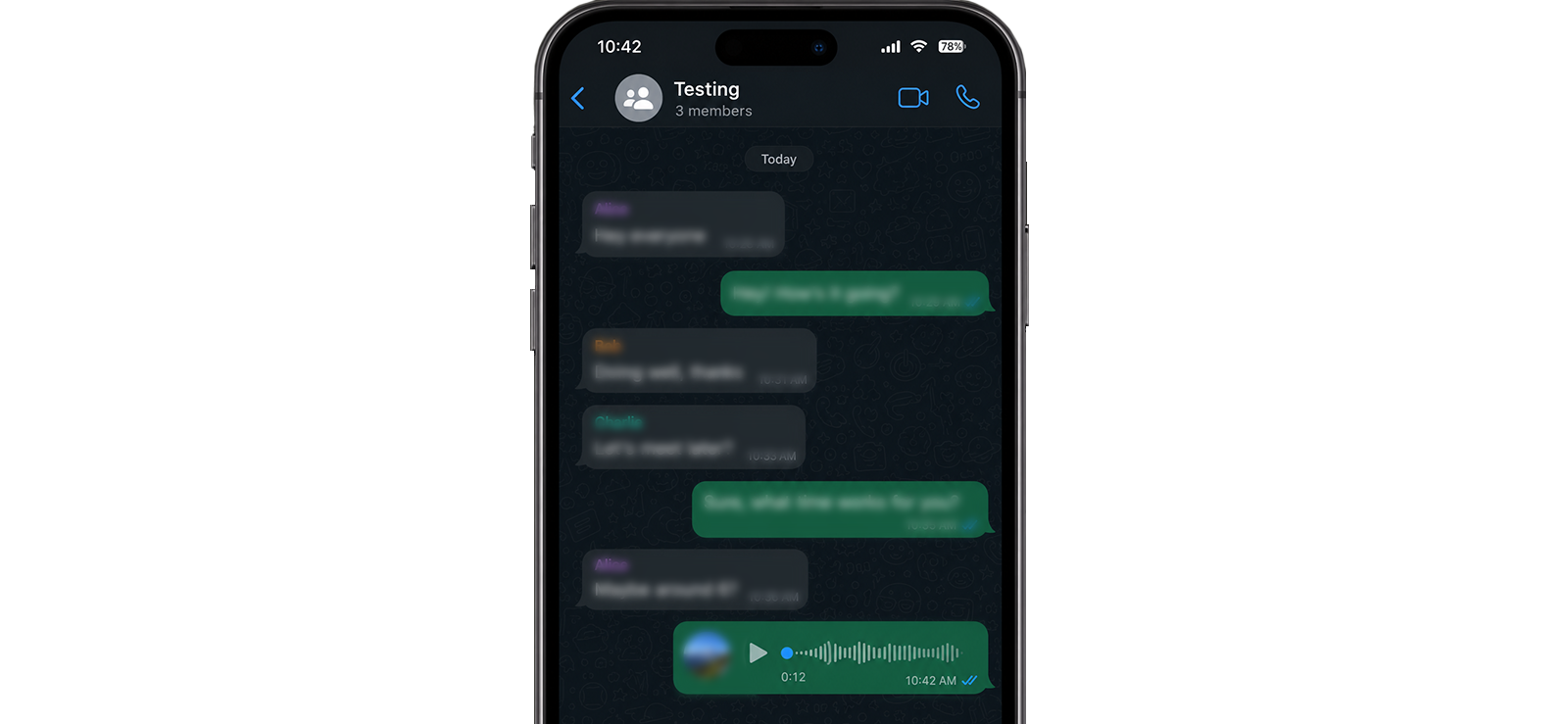
Think of this method as running two lie detectors on the same message instead of one.
Voice notes carry their own read indicator that works independently of the standard read receipt toggle: the microphone icon beside a voice note turns blue once it has been played, whether or not blue ticks are enabled for that chat.
Sending that voice note inside a mutual group, rather than a private chat, stacks a second confirmation on top of the first, since group read receipts cannot be disabled by an individual member. That gives you two independent signals to cross-check against each other instead of relying on just one.
Here’s how do you know someone read your message on WhatsApp by sending a voice note:
- Send a voice message in a group chat where both of you are members.
- Wait for the message to be delivered to every member of the group.
- Keep an eye on the microphone icon next to your voice note to see if it turns blue.
- Long-press the voice note and tap the info (i) icon to cross-check the “Read by” list against the same timestamp.
How Did It Turn Out in My Testing?
I tested this method on both the iPhone and the Samsung Galaxy, sending voice notes into 3 group chats and checking two signals after each one: whether the microphone icon turned blue, and whether the “Read by” list showed a timestamp.
On the iPhone, I sent 10 voice notes across two of the groups and logged 10 out of 10 blue icons with the “Read by” timestamp. On the Galaxy, I sent 10 voice notes in the third group and logged the same result, 10 out of 10, with no lag or mismatch between the icon and the list.
One test inside the 8-member group made this especially clear: out of the 8 members, only 5 had actually listened to the voice note, and only those 5 names showed up in the info tab’s “Read by” list. The other 3, who never played it, simply did not appear there at all, which confirmed that the list only logs members who have genuinely listened, not everyone the note was delivered to.
After 6 days of testing, the only limitation I ran into was the same one that applies to any group-based method: it only works if you already share a group with the person, and it is not private, since other members in the group can also see the “Read by” list.
There is also no way to tell anything at all if the person simply has not opened the group chat yet; the microphone icon stays as it is, and their name is absent from the “Read by” list either way, so you cannot distinguish “hasn’t opened the chat” from “opened it but hasn’t played the note.”

Did You Know?
You can also see deleted WhatsApp messages without alerting the other person.

4. Watch Their “Last Seen” or “Online” Status
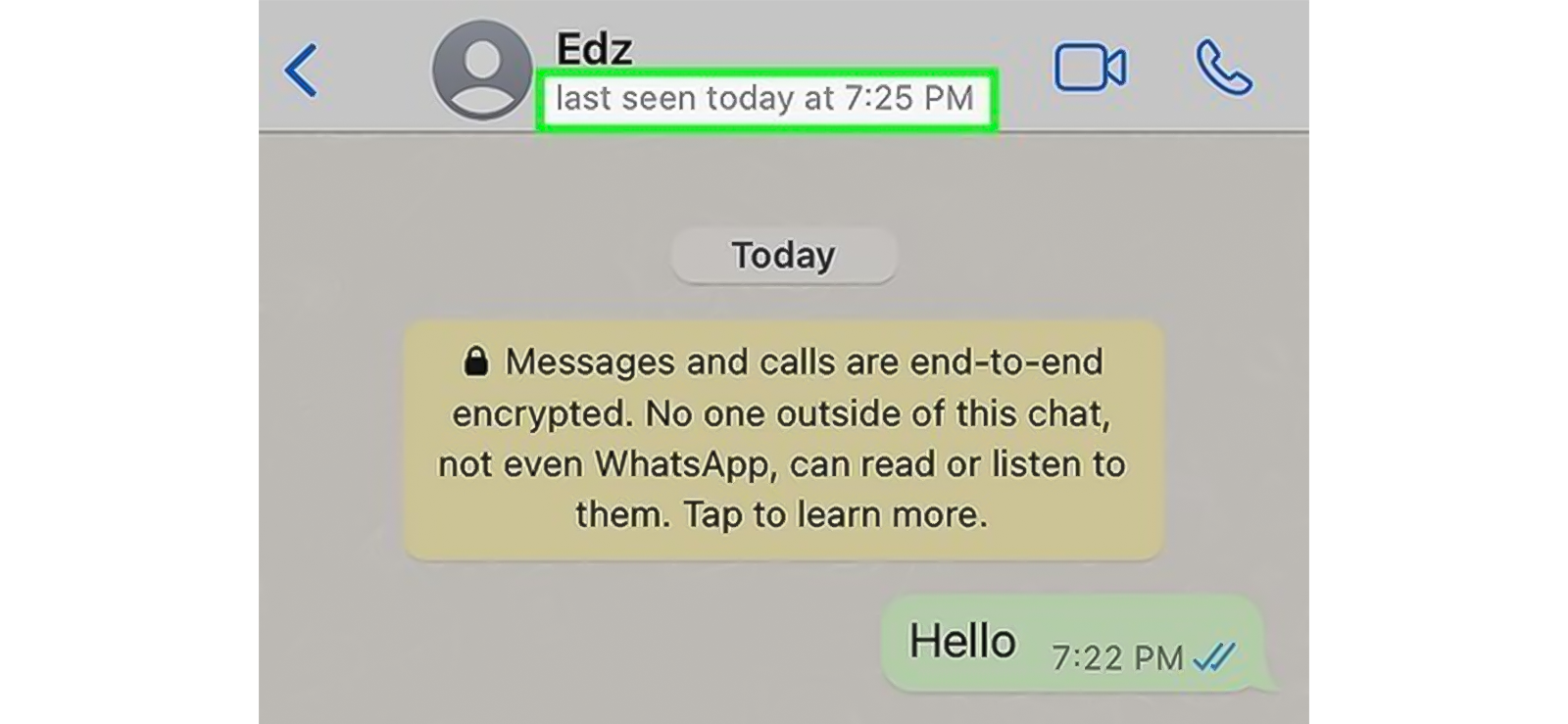
When you are unsure whether your message has been read, check the person’s “Last Seen” or “Online” status.
Seeing them appear “Online” right after you send a message suggests they may have opened your chat. Similarly, a “Last Seen” timestamp shortly after message delivery often indicates they viewed it before going offline.
Here’s how to know if someone read your WhatsApp message with their “Online” and “Last Seen”:
- Send a message and note the delivery time.
- Refresh the chat to see whether the person comes “Online.”
- If not, check their Last Seen timestamp under their name in the chat window.
- Use these indicators to guess if your message was read or not.
How Did It Turn Out in My Testing?
I tracked 20 messages sent to contacts using default privacy settings with Last Seen and Online visible. The Online/Last Seen timing lined up with an actual read message in 12 out of 20 tries on both iPhone and Android.
Of the 8 failures, 5 happened after I restricted Last Seen and Online visibility on the test accounts, which immediately made the method useless, exactly as expected. The other 3 failures happened when the recipient’s phone showed “Online” because WhatsApp was simply open in the background on another chat, not because they had read my message, which produced a false positive I only caught by cross-checking with the voice-note test running at the same time.
The clear limitation here is that this method breaks the moment privacy settings are restricted, and it can also mislead you when “Online” reflects general app activity rather than your specific chat.
5. Look for WhatsApp Activity
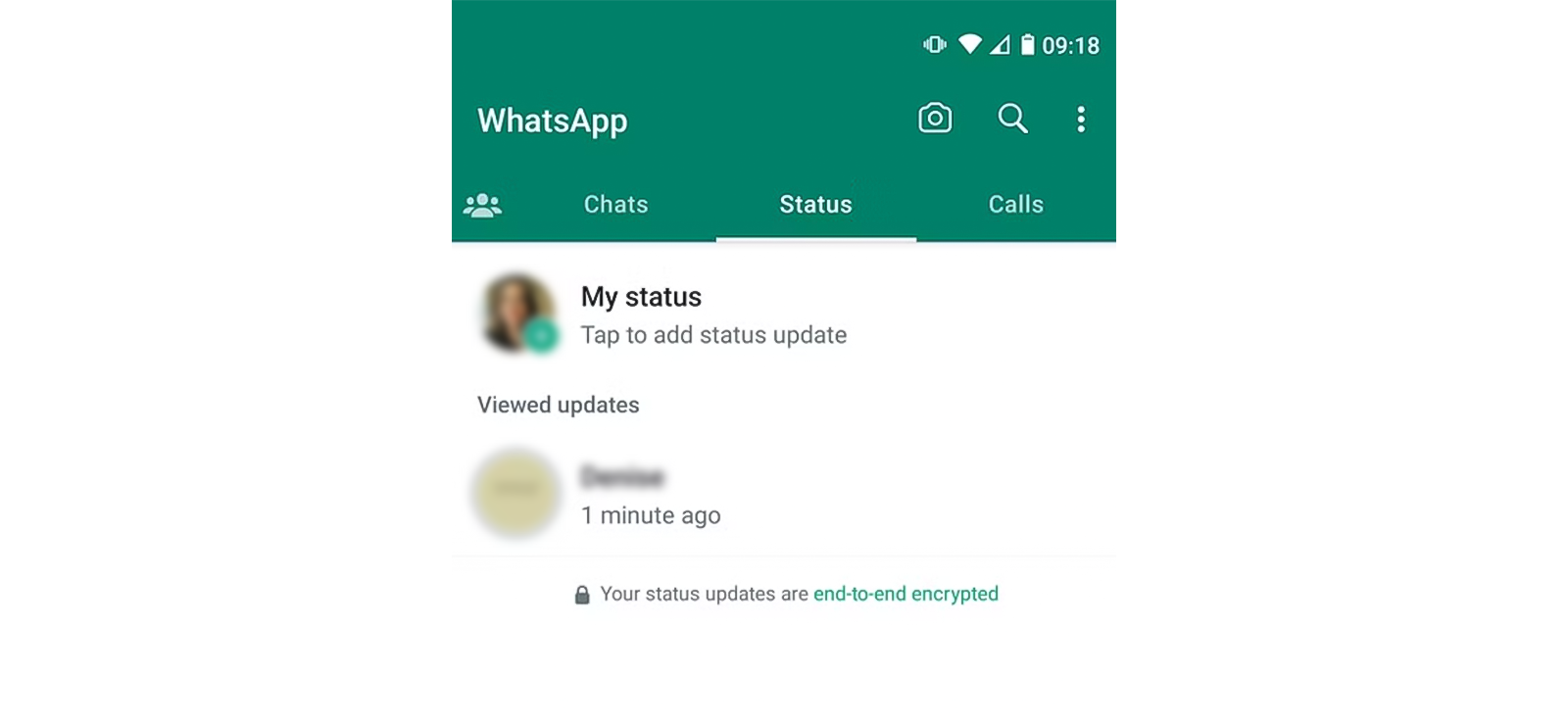
When blue ticks are not showing, one indirect method to get some insight is to observe their profile picture and status updates. Even if read receipts are off, any changes in both can indicate that the target person has recently used WhatsApp and likely seen your message.
This works because a profile or status change means the person opened the app around the same time, which raises the odds they also opened your chat, even though it does not confirm it directly.
How to know if someone read your WhatsApp message? Use these steps:
- Send the message and note the delivery time.
- Notice their profile picture for any recent changes.
- Check the “Status” tab to see if they have posted a new status update.
- Compare the timing of the changes with your message’s delivery to make a guess.
How Did It Turn Out in My Testing?
This was the weakest method in the entire test. Out of 20 messages sent to 4 test contacts with read receipts off, only 7 lined up with a profile or status change within the same session as the message being read.
The remaining 13 attempts failed simply because the contact had no reason to update their status or photo right after reading a message; most people do not do that daily, let alone within minutes of opening a chat.
After running this method for 6 days, I found its biggest limitation is that it depends entirely on unrelated behavior. It never directly confirms a read; it only tells you the person was active on WhatsApp around that time, and even that clue disappears completely if they restrict who can see their profile and status updates.
How to Know Whom Your Kid Is Talking to on WhatsApp?
Everything above works well when you are trying to figure out whether a friend or partner has seen your text. But if you are a parent, the question that actually keeps you up at night usually is not “did they read it”; it is “who are they even talking to?”
A read receipt does not tell you if that new contact messaging your child every night is a classmate or a stranger, and indirect clues like a typing bubble or a status update will not tell you that either.
This is where a tool like Xnspy steps in. Xnspy is a monitoring app installed on your child’s phone that gives you a direct view of who they are messaging on WhatsApp, instead of a guess pieced together from indirect signals. It runs in the background in stealth mode, and everything it logs is uploaded to a private web dashboard you can check from your own phone.
Several Xnspy features work together to help parents answer an important question: “Who is my child talking to on WhatsApp?”
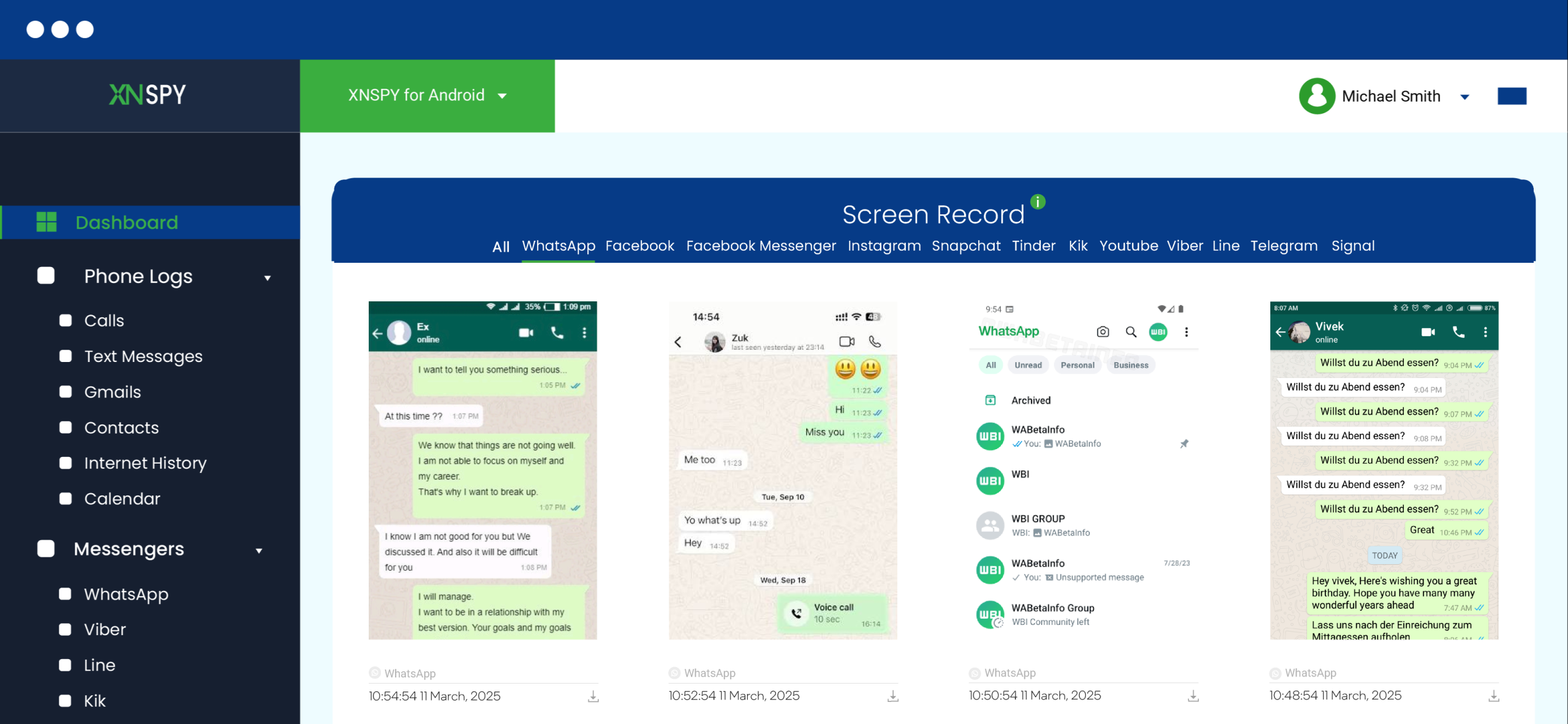
The Screen Recorder provides the clearest starting point. It captures screenshots of the child’s phone at regular intervals, typically every five to ten seconds. Whenever a WhatsApp conversation is open, the contact’s name and the visible messages may appear in the activity timeline. This gives parents a direct, time-stamped view of who their child was communicating with and what appeared on the screen.
The Keylogger adds another layer of context by recording text typed on the device, including messages entered in WhatsApp. This can be useful when the Screen Recorder does not capture a particular moment, as the typed message may still be available for review. In many cases, the surrounding activity can also help indicate which conversation the message was intended for.
Keyword Alerts make the process more focused. Parents can create alerts for specific names, words, addresses, or phrases that may raise concern. Instead of manually reviewing every conversation, they can receive a notification when one of those terms is typed.
Also, the Screen Time feature shows how often and for how long WhatsApp is used each day. Although it does not identify a contact on its own, it provides useful context on the child’s overall activity and whether their app use has increased significantly.
Together, these tools provide a broader picture of WhatsApp activity by combining visible conversations, typed messages, targeted alerts, and usage patterns.
Here is how to set it up:
- Visit Xnspy’s website and purchase a plan that includes WhatsApp monitoring.
- Once you receive the app download link by email, install it on your child’s phone.
- Use the credentials in the welcome email to log into your web dashboard.
- In the dashboard, check the “Screen Recorder” timeline to see who they were chatting with, open “Keylogger” for a text log of what was typed, set up “Keyword Alerts” for any names or phrases you want flagged, and check “Screen Time” to see how much of their day is going into WhatsApp.
How Did It Turn Out in My Testing?
I installed Xnspy on two of the test devices, the Samsung Galaxy and the iPhone, and set up 5 test contacts to see how reliably I could identify who was actually being messaged.
Across 40 monitored messages over the 6-day window, the Screen Recorder correctly showed the contact’s name and chat window in all 40 captures, and the screenshot timeline lined up with the actual conversation every single time.
Cross-checking with the Keylogger backed that up completely; it logged the typed message and the contact it was sent to in all 40 out of 40 cases as well, since it records keystrokes directly rather than waiting on a screenshot interval.
I also set up a Keyword Alert using one test contact’s first name, and it correctly triggered on all 6 messages that mentioned that name during the test window, arriving within about a minute of the keyword being typed. Screen Time logs matched the phone’s own in-app WhatsApp usage tracker within a minute across all 6 days.
The limitation I ran into here was not accuracy; it was scope. Keyword Alerts only catch what you think to add to the watchlist; a new slang term or a different spelling you have not flagged yet will not trigger anything on its own. So while this was the most reliable method by a wide margin, it still depends on you setting up the right watchlist to catch a name you were not already expecting.
FAQs
How do I know if someone read my message on WhatsApp?
The clearest signal is two blue checkmarks next to your message, which appear only once the recipient has opened your chat. If read receipts are turned off, those checkmarks stay grey even after the message has been seen, so you would need to rely on indirect signs instead: a typing indicator, a voice note’s microphone icon turning blue, or a mutual group chat where read receipts cannot be disabled. For a direct answer instead of an indirect clue, Xnspy reads the activity straight off the device.
How to know if a WhatsApp message is read without a blue tick?
If read receipts are off, the blue ticks will never appear, so you need indirect signs instead. Watch for a typing indicator, check whether a voice note’s microphone icon turns blue after being played, or look for a mutual group chat where read receipts cannot be disabled. None of these are guaranteed on their own, but together they build a reasonably strong picture.
How to see if someone read your WhatsApp message on iPhone vs Android?
The core indicators, blue ticks, typing indicator, and voice note playback, work the same way on both platforms. The main difference is in notification previews and how quickly the “Online” status updates; in our testing, the Galaxy A54 showed a short delay on voice note read status compared to the iPhone 13, which updated almost instantly.
How to know if your WhatsApp message was read but not the last seen status?
If Last Seen is hidden but read receipts are on, blue ticks will still confirm a read message normally, since the two settings are controlled separately. If both are hidden or off, fall back on the typing indicator, a voice note, or a shared group chat, since these do not depend on Last Seen visibility at all.
How to know if WhatsApp message is read when you are blocked?
If someone has blocked you on WhatsApp, there is no way to know if they have read your message because it will not be delivered at all. You will only see one grey checkmark, indicating it was sent but not delivered. Additionally, their profile photo, “Last Seen,” and “Online” status will no longer be visible to you. Even if you try sending a voice note or messaging through a group, they will not receive it.
Leave a reply:
Your email address will not be published. Required fields are marked*

Mike Everett
Member since October 20, 2014
Mike Everett
Member since October 20, 2014
Mike Everett is a consumer technology journalist with expertise in hands-on testing and evaluation of iOS and Android monitoring applications. With over 11 years in the industry, he focuses on how mobile monitoring tools perform in real-world conditions, including accuracy, feature reliability, device compatibility, and practical usability for parents.
He conducts live-device testing of monitoring apps to assess how well their features function beyond marketing claims. His work primarily includes comparative reviews, feature breakdowns, and buyer-focused guides designed to help parents understand which tools actually deliver usable results in everyday scenarios.