The complete monitoring experience for your phone
Get XNSPY and start tracking calls, texts, multimedia, locations and more on any phone!
Get Started Now Live Demo54% of U.S. teens use Snapchat daily, so there is a good chance your kids are incorporating it into their everyday routines too. But have you ever stopped to think about what kind of content appears on their Discover page?
As a parent, this is a valid concern, especially considering how easily adult content on Snapchat is accessible to anyone. This means your child could be exposed to explicit material without you even knowing, which makes it a serious issue.
In such situations, it is important to stay aware and restrict the type of Snapchat content they are consuming. To make this easier, we have compiled a list of effective methods to help you block inappropriate content on Snapchat remotely.
The Short Version
- Snapchat’s Discover page is filled with explicit content that can keep appearing in your child’s feed even if they are not seeking it out.
- Xnspy is a comprehensive option for parents who need full visibility into Snapchat activity. It captures screenshots at regular intervals, logs keystrokes, and sends keyword alerts.
- Snapchat’s Family Center lets parents restrict sensitive content on the Discover feed and monitor messaging activity continuously.
- Apple Screen Time can put a hard daily limit on Snapchat for iPhone users or block it entirely.
- Google Family Link gives Android parents the ability to approve or block app usage, including Snapchat, and it works remotely once set up through a Family Group.
- Logging into your child’s Snapchat account directly lets you block specific accounts and clean up their Discover feed.
- Reporting inappropriate content to Snapchat causes it to be reviewed and removed from the platform, which helps fix the algorithm.
How I Tested These Methods for Blocking Inappropriate Content on Snapchat?
Before diving in, here is how I verified that each method actually works.
I set up a dedicated test environment over several weeks using two phones: one Nothing phone for Android testing and the other iPhone for iOS testing. I created a fresh Snapchat account on the target device and populated the Discover feed with real content to simulate what a teenager’s account actually looks like.
Here are the key factors I evaluated during testing:
- Setup Difficulty: I tracked how many steps each method required and whether non-technical users could realistically complete them without outside help.
- Content Coverage: I tested whether each method could address not just the Discover feed, but also direct messages, Stories, and Spotlight, since inappropriate content can appear anywhere on Snapchat.
- Workaround Resistance: I attempted to bypass each method by creating a second Snapchat account, switching between Wi-Fi and mobile data, and using a VPN to test how easy it was for a determined teenager to undo the restrictions.
- Remote Management: I verified whether each method could be monitored or adjusted after setup without needing to physically hold the target phone.
Why is Snapchat Discover So Inappropriate?
Snapchat Discover is often seen as inappropriate because it features explicit content, sensational headlines, and sexually suggestive imagery, often without age restrictions. Media partners use provocative stories to attract views, sometimes exposing young users to mature topics like sex, drugs, and violence.
Snapchat Discover is based on a system of curated content, meaning what shows up is based on what is trending. Therefore, adult Snapchat content, such as naked Snapchat videos and images, can easily become popular and appear in the feed, even if users don’t seek it out.
Parental controls are limited, making it hard to filter such material. The mix of entertainment and news also blurs the line between factual content and clickbait, which adds to the concern about its suitability for younger audiences.
To address this, Snapchat has put in place various content moderation policies that protect teens by restricting access to 18+ content. However, children can easily bypass those policies by adding an incorrect age when creating their Snapchat accounts.
Even when a child uses their real age, Snapchat’s moderation efforts don’t always work as intended. In many cases, children are still exposed to inappropriate or harmful content through Discover.
Don’t Miss These Blogs

🔴  How To Recover Deleted Snapchat Messages Without the Target Device
⚡ How to Log into Someone Else’s Snapchat: 5 Best Ways
📣 How to Screenshot on Snapchat Without Them Knowing: 5 Best Ways
🚨  How to Block Adult Content on Facebook Without the Target Phone
How to Block Inappropriate Content on Snapchat Without the Target Phone: 5 Proven Methods
Despite having an age restriction, about 20% of Snapchat’s users are between the ages of 13 and 17.
If you are a parent who is worried that your child is being exposed to mature Snapchat media, there are some ways that can discreetly restrict adult content on Snapchat.
Let’s see our top five methods for blocking inappropriate content on Snapchat remotely.
| Method | Requires Physical Access? | Works on New Accounts? | Covers Messages? | Remote After Setup? | Best For |
| Xnspy | One-time install | Yes | Yes | Yes | Full monitoring: activity, messages, content |
| Snapchat Family Center | No | No | Partial (7-day view) | Yes | Basic content filtering and Discover restrictions |
| Apple Screen Time | No (via Family Sharing) | Yes | N/A — limits app access | Yes | iPhone, limiting total Snapchat usage |
| Google Family Link | No (via Family Group) | Yes | N/A — controls app access | Yes | Android, approving or blocking apps |
| Accessing Their Account | Requires credentials | No | Yes | No | Manually blocking accounts and fixing the feed |
| Report Inappropriate Content | Requires credentials | No | No | No | Removing specific harmful content from Snapchat |
1. Use Xnspy
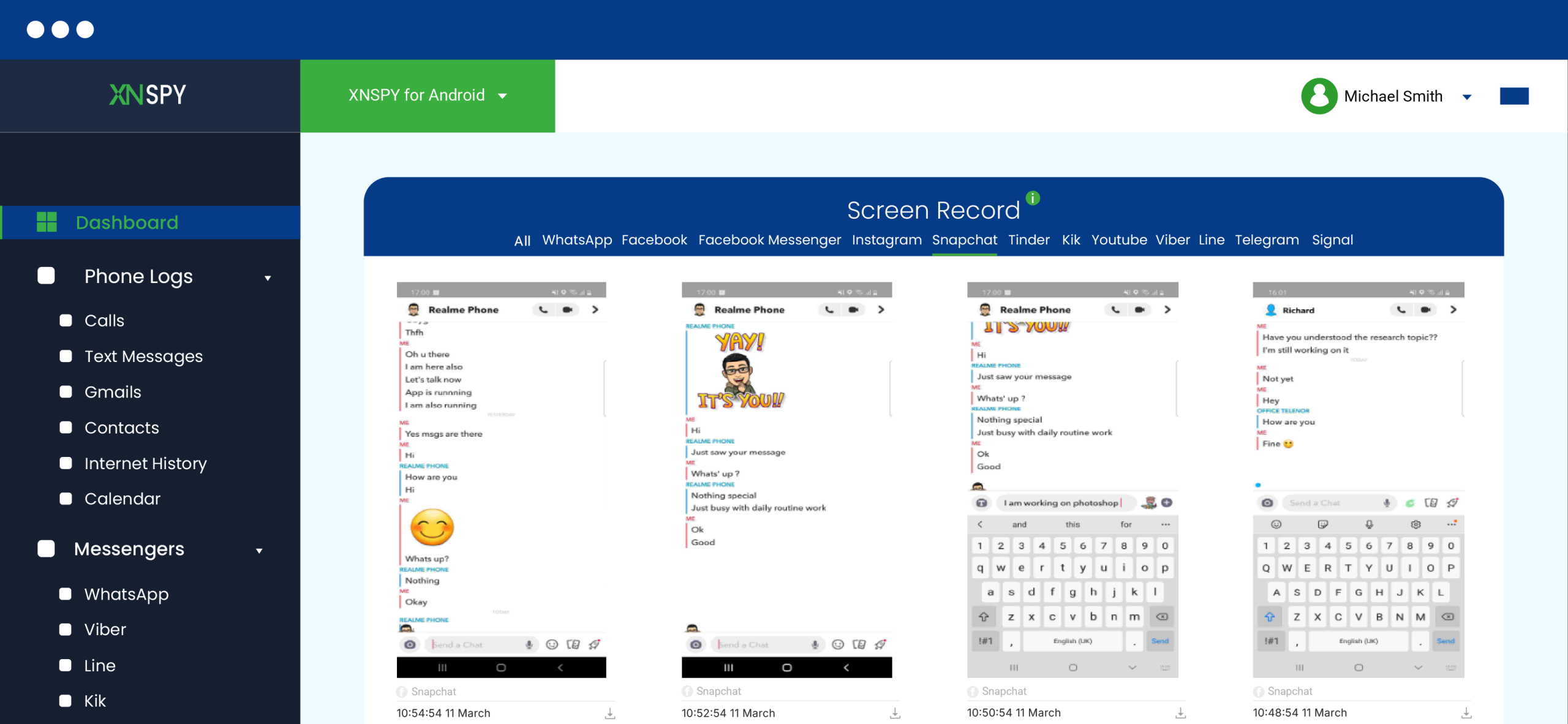
While blocking content might seem like the most obvious solution, it doesn’t always tell the full story. Xnspy is a Snapchat monitoring app that, instead of simply preventing access, lets you see your child’s complete Snapchat activity and content consumption patterns discreetly.
Why does this matter? Because blocking content only limits what your child can see – it doesn’t give you any insight into what they are curious about or who they are interacting with. Moreover, if your child creates a new account, all blocking methods become useless.
Snapchat monitoring, on the other hand, lets you understand potential risks and have meaningful conversations based on real activity. With Xnspy, you always stay informed, which puts you in a much better position to guide and protect your child.
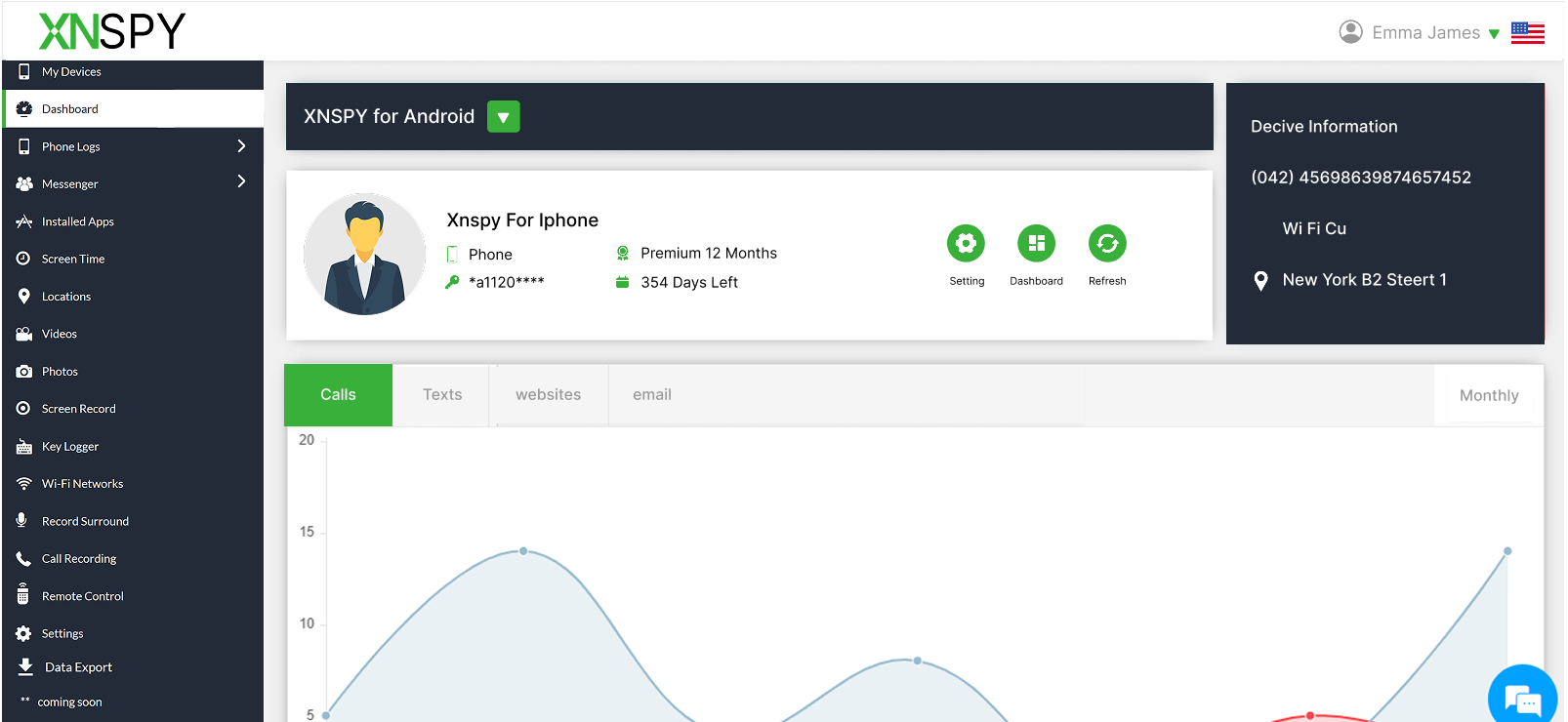
The app offers a lot of features that keep you informed of whether your child is consuming adult Snapchat content without them knowing. For instance, its screen recorder provides you with screenshots at regular intervals, i.e., 5-10 seconds.
Through these screenshots, you can look into the kind of content they are consuming across various Snapchat accounts and what kind of content they are actively searching for.
Moreover, keyword alerts on Xnspy trigger immediate notifications to you whenever your child uses a flagged word. Be it in captions, messages, or the Discover page, the alerts are received as soon as Xnspy comes across them.
The keylogger, on the other hand, logs all keystrokes on the phone’s keyboard. This can be useful for you to ensure that your child is not looking up any inappropriate Snapchat videos on the Discover feed or following any mature content without them knowing.
Here’s how to monitor their content consumption on Snapchat without accessing their phone using Xnspy:
- Purchase an Xnspy subscription according to your needs.
- Install the application on the target mobile device.
- Log in to the account using the credentials provided in the confirmation email.
- Use the key logger or the screen recorder to observe Snapchat content.
- Go to “Installed App” and block Snapchat with a click.
How Was My Experience With This Method?
I installed Xnspy on one of the target phones (Android, although it was fully compatible with the iPhone as well), and monitored a simulated Snapchat session over 14 days. Set up required one-time physical access and took under 10 minutes.
Once running, the screen recorder captured Snapchat activity accurately. I was able to view every Discover page visit, story view, and direct message exchanged through screenshots in the dashboard, organized by timestamp.
Keyword alerts fired within minutes when I triggered a flagged search term. When I created a second Snapchat account on the test device to simulate a workaround, Xnspy continued capturing all activity on that account, too, no additional setup needed.
The only limitations were occasional dashboard loading issues (probably due to my unstable internet) and the one-time installation requirement. If you cannot get physical access to the target phone even briefly, the setup is not possible. But once installed, it is the most complete method on this list, the only one that works regardless of how many accounts a child creates or which network they are on.

Snapchat Safety Starts with Xnspy
Know exactly what your child is seeing on Snapchat.
2. Utilize Snapchat’s Family Center
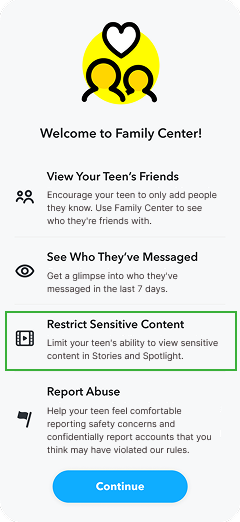
Snapchat’s “Family Center” provides easy-to-set-up parental controls that primarily focus on privacy and content visibility. Parents can keep tabs on their child’s messaging and snaps over 7 days and restrict content on the Discover feed or stories, ensuring safer app usage.
Here’s how you can enable this feature on your device to block inappropriate content on your child’s Snapchat:
- Access the Settings in your Profile.
- Scroll to “Privacy Controls” and tap the “Family Center” icon.
- Sync your child’s Snapchat with Family Center.
- Use In-app reporting to go through content.
- Enable the “Restrict Sensitive Content” option to block inappropriate content on Snapchat.
How Was My Experience With This Method?
I set up Family Center by linking a parent account to the test device. The invite process was simple and took about 3 minutes. Once connected, the ‘Restrict Sensitive Content’ toggle visibly reduced explicit material in the test account’s Discover feed, as stories with sexually suggestive thumbnails no longer appeared.
However, the limitations became clear quickly. Family Center has no visibility into direct message content; it only shows you who your child has been messaging, not what was said. More critically, when I created a second Snapchat account on the same test device, Family Center had no effect on that account whatsoever.
For a tech-savvy teenager, creating a secondary account takes less than two minutes, which completely neutralizes this method’s content filtering.
3. Set App Limits With Apple Screen Time (only for iPhone)
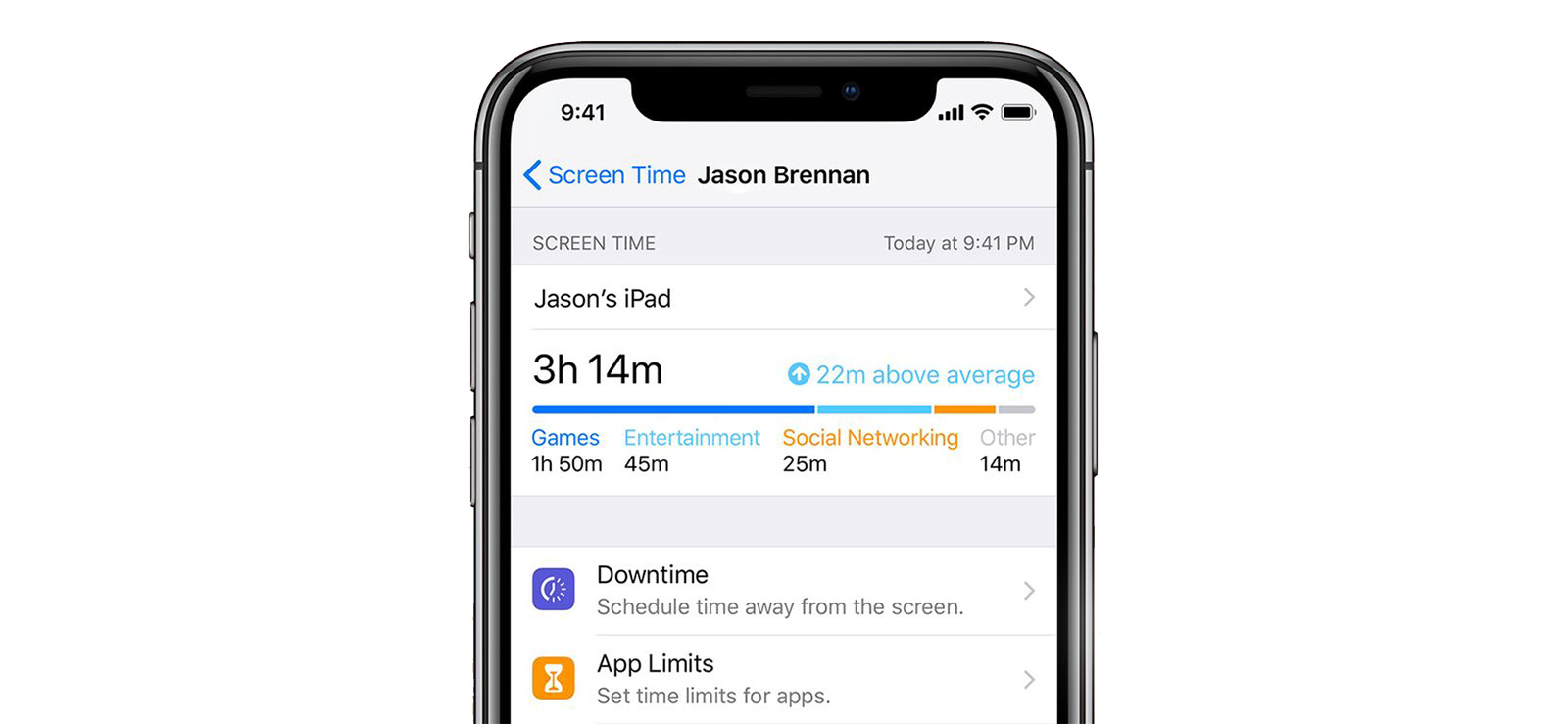
Apple’s Screen Time is a built-in iPhone feature that lets parents set daily time limits on specific apps. Once the limit is reached, the app becomes inaccessible until the next day, or until a parent enters the Screen Time passcode to allow more time. When set up through Family Sharing, parents control the limits from their own device, so a child can’t simply turn them off.
For Snapchat, this allows you to manage how long your child spends in the app each day. It won’t filter content inside Snapchat, but it puts a hard ceiling on access time.
To do so:
- On the parent’s iPhone, open Settings and tap Screen Time.
- Tap Set Up Screen Time for Family and select your child’s device.
- Tap App Limits, then tap Add Limit.
- Select Social Networking or search for Snapchat directly.
- Set the daily time limit (e.g., 30 minutes) and tap Add.
- Go back to Screen Time settings and tap Use Screen Time Passcode to set a 4-digit code your child doesn’t know.
- The limit will activate each day automatically and lock Snapchat once the time is up.
How Was My Experience With This Method?
I tested Screen Time app limits on an iPhone using a parent device linked through Family Sharing. When I added a 1-minute daily limit on Snapchat, it effectively blocked access after the first minute of use. As a result, the app greyed out and displayed a limit message.
When I tried to bypass it from the child’s device, Snapchat prompted for the Screen Time passcode, which I had set on the parent device. That layer held as long as the child didn’t know the code.
The core weakness is that Screen Time only controls app access time; it does nothing about content within Snapchat during those permitted minutes. A child who gets 30 minutes of daily Snapchat time can still see everything in the Discover feed during that window.
For parents who want to limit screen time rather than monitor content, this works well. For parents concerned specifically about what their child is viewing inside the app, it needs to be paired with another method.

Did You Know?
YouTube, too, has a lot of inappropriate content that you might not want your child to watch.

4. Use Google Family Link (for Android)
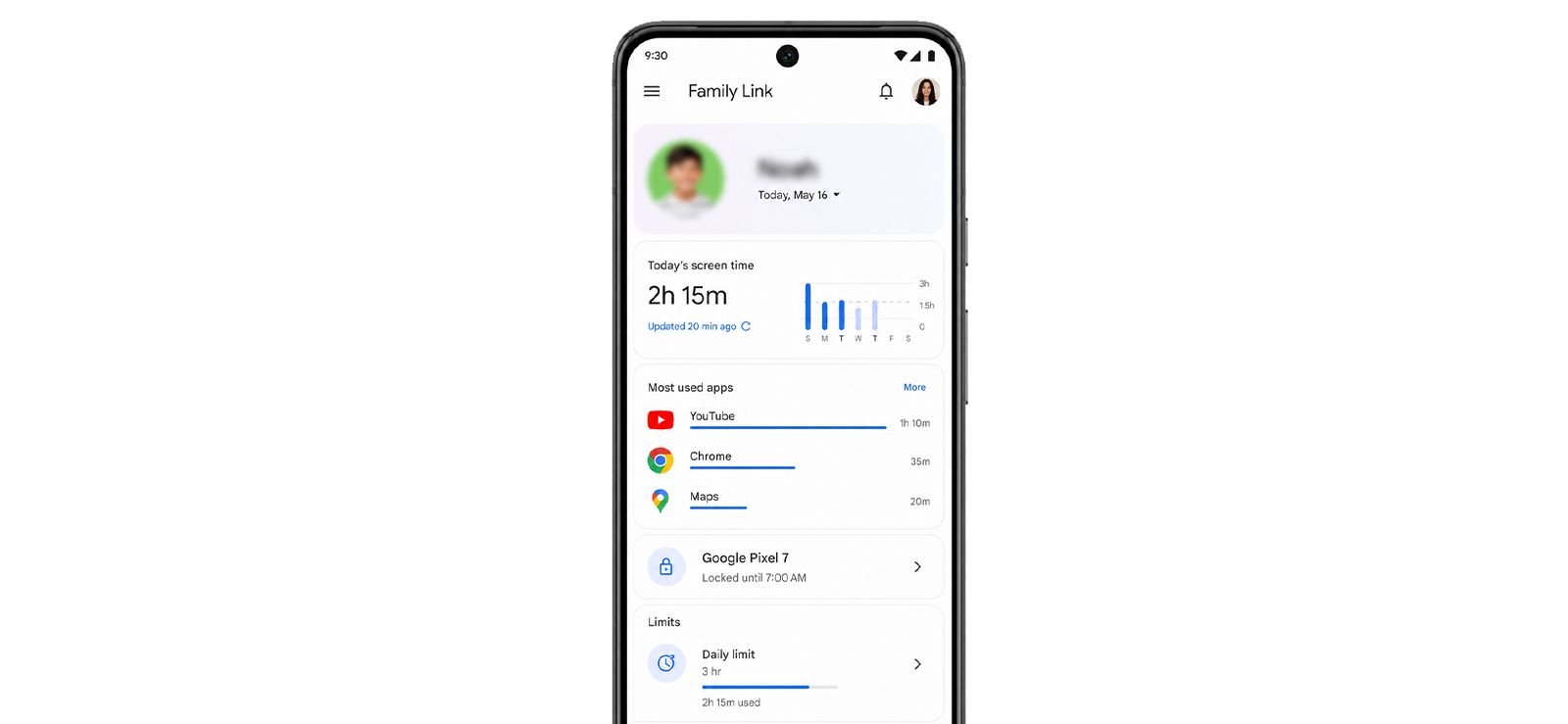
Google Family Link gives Android parents the ability to approve or block apps on their child’s device remotely. While it doesn’t filter content within Snapchat itself, it lets you prevent Snapchat from being installed or used at all, or set daily usage limits that cut access after a defined amount of time.
Here’s how to use Google Family Link to control Snapchat on Android:
- Download the Google Family Link app on your phone and follow the setup steps to create a Family Group.
- Add your child’s Google account to the group and install the Family Link companion app on their Android device.
- Open Family Link on your device and select your child’s profile.
- Tap “Controls” and then “App activity” to see their installed apps.
- Find Snapchat in the list and toggle it off to block access, or tap “Set limits” to define a daily usage cap.
- To prevent reinstallation, go to “Content restrictions” and require your approval for all app downloads.
How Was My Experience With This Method?
I set up Google Family Link between a parent account and an Android test device. The process took about 10 minutes, including the companion app installation on the child’s phone.
Blocking Snapchat through Family Link worked immediately, as the app became inaccessible on the target device within seconds of applying the restriction. When I attempted to reinstall Snapchat from the Play Store, a prompt appeared requiring parent approval, which I had to confirm from my own device.
The limitation of Screen Time mirrors that of Family Link in that it controls whether Snapchat can be accessed, not what is seen inside it. A child who is given any Snapchat access at all can still view inappropriate Discover content during that time. Like Screen Time, it works best as a usage boundary rather than an in-app content filter. For Android parents who want to block Snapchat completely, it is the most reliable native solution available.
5. Accessing their Snapchat Accounts
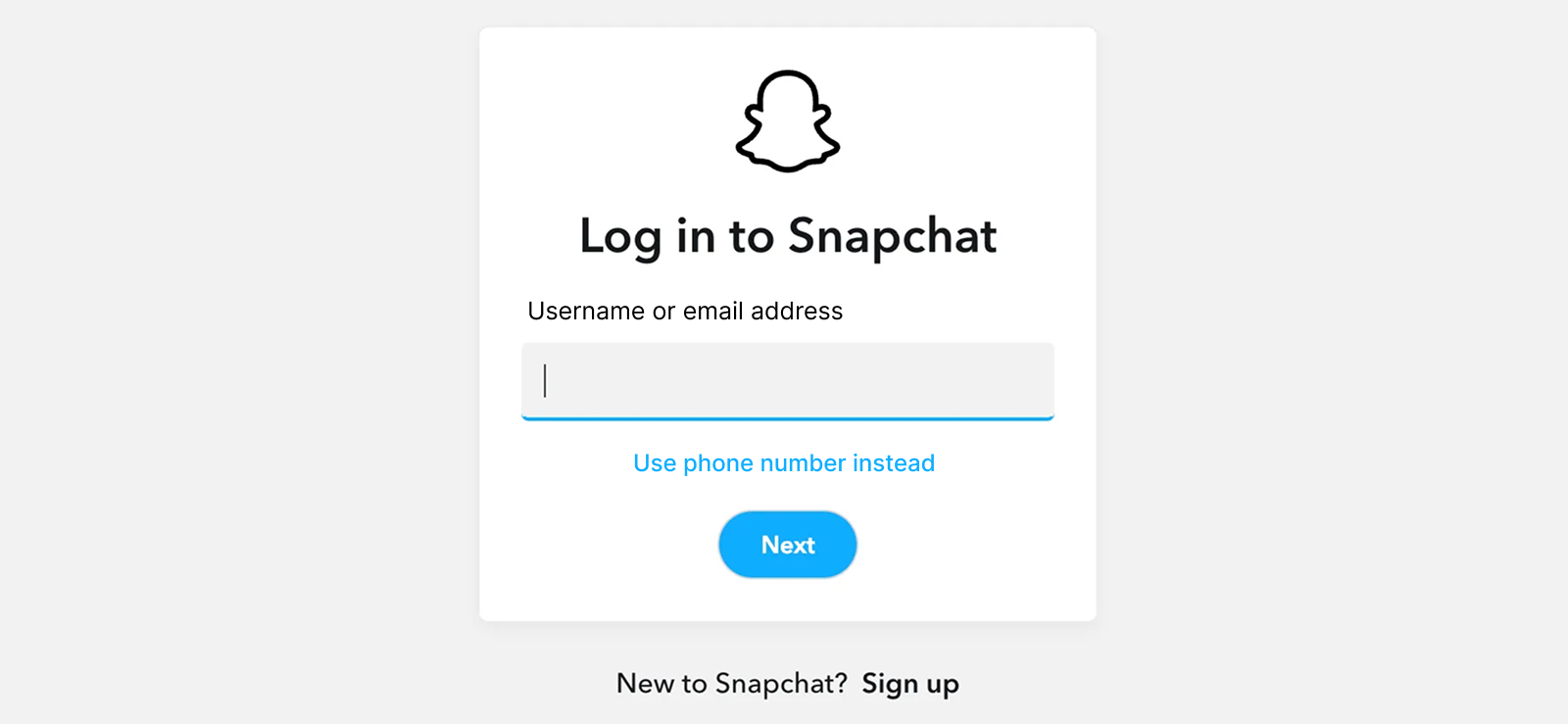
Logging into your child’s Snapchat from your own device lets you directly block inappropriate accounts from their following list, clear their Discover feed preferences, and report content, all from the source. This is the most hands-on approach and gives you the most direct control over exactly what appears in their feed.
Here’s how to block inappropriate content by accessing their Snapchat account:
- Open Snapchat on your mobile device and log in using your child’s credentials.
- Go to their Discover feed and review the content appearing there.
- Press and hold on any content creator or publisher you want to remove, then select “Hide” or “Block.”
- Go to their following list and unfollow or block accounts that are posting inappropriate content.
- Check their friend list and remove or block any contacts sending inappropriate snaps or messages.
How Was My Experience With This Method?
I logged into the test Snapchat account from a separate device and manually worked through the Discover feed and following list. Blocking specific publishers removed them from the feed immediately, and the algorithm visibly shifted after a few sessions; fewer inappropriate thumbnails appeared over the following days.
The practical problem is clear from the start: this requires your child’s login credentials, which many teenagers won’t share willingly. It also doesn’t scale; you would need to repeat this process regularly as the algorithm shifts and new content creators appear. If your child changes their password, access is lost entirely.
6. Report Inappropriate Content
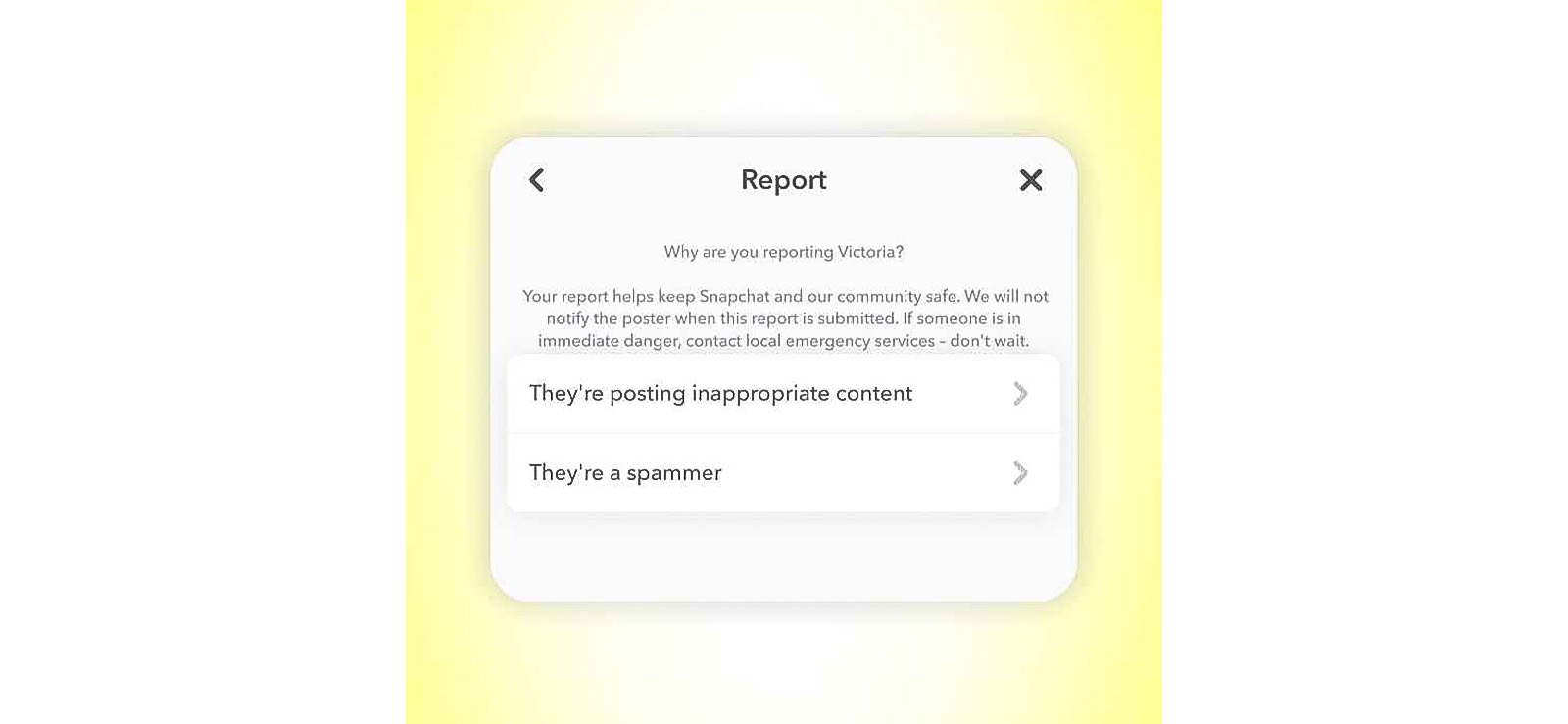
If you come across a specific piece of content that is clearly harmful or violates Snapchat’s guidelines, reporting it is the most direct way to get it removed from the platform entirely. When enough users report the same content, Snapchat’s moderation team reviews it and removes it, which also helps retrain the algorithm to stop surfacing similar material.
Here is how to block inappropriate content on Snapchat through reporting:
- Log in to your child’s Snapchat account from your own mobile device.
- Navigate to the Discover feed, Story, or Snap containing the inappropriate content.
- Press and hold the content you want to report.
- In the menu that appears, tap “Report” (shown in red).
- Select the reason for reporting from the available options and submit.
How Was My Experience With This Method?
I tested the reporting feature by flagging several pieces of test content across the Discover feed and Spotlight sections. The reporting flow was quick; each report took under 30 seconds to submit, and Snapchat confirmed receipt immediately.
However, I could not verify how long content removal actually takes in practice, and a few pieces of content I reported were still visible two days later. This method is reactive by nature: it only addresses content you can actively find and report, and it requires logging into your child’s account each time. It is best used as a supplement to other methods rather than a standalone solution for ongoing protection.
FAQs
Is there a content filter on Snapchat?
Yes, Snapchat offers a “Family Center” feature with content filters that allow you to block sensitive or suggestive content from appearing on your child’s Stories or Spotlight feed. However, this method becomes futile if your child ends up creating a new account. To counter this, a more thorough method is to use Xnspy’s screen recording feature and keyword alerts, which provide detailed Snapchat content observation and restriction.
Can you restrict someone on Snapchat?
Snapchat doesn’t have a dedicated “restrict” feature like some other social media apps. However, you can reduce someone’s interaction with your child by muting their notifications or preventing them from seeing your child’s stories. To fully stop someone from contacting or viewing any of your child’s content, you will need to block that person through your child’s Snapchat account settings.
Can you turn off Discover on Snapchat?
While you cannot completely turn off the Discover section on Snapchat, you can hide specific content or block some media outlets. A great way to do that is to report specific content that you think is inappropriate by accessing your child’s Snapchat on your mobile device. This will clear their algorithm and prevent questionable content from appearing on their feed.
How to block Snapchat Spotlight?
The biggest question on any parent’s mind is how to block inappropriate content on Snapchat Spotlight remotely. Truth be told, Snapchat does not offer a direct “off” button for Spotlight. However, you can minimize its presence with parental controls in the Family Center. By setting restrictions, you can limit exposure to the Spotlight content.
How to turn off Snapchat Discover?
While Snapchat Discover cannot be completely turned off, it can be filtered and limited according to your needs. If you wish to do this directly from your child’s app, you can block certain content or creators by logging into their Snapchat from another device. However, instead of a direct outright ban, you can utilize Xnspy to look out for patterns in media usage and take action accordingly.
Utilize the Best Monitoring
Keep an eye on their every move with Xnspy.

5 Comments
Leave a reply:
Your email address will not be published. Required fields are marked*
Sarah Jon
September 23, 2025 at 2:59 pmOpened my son's discover feed accidentally and the things I have seen have left me very concerned.
S. J
September 24, 2025 at 2:59 pmThe methods given are nice but can you please list a few more methods?
Lewis Zin
September 25, 2025 at 2:53 pmMy daughter is 17, can I use the family center on her?
Mike Tarzon
September 29, 2025 at 12:49 pmWhy does snapchat not block inappropriate content itself? Stupid app
Zoe
September 29, 2025 at 2:38 pmI am so scared. My 10 year old son wants to be on snapchat because all his friends are there but I do not because of concerns around content.