How to Find Hidden Apps on Android Without Your Child Knowing: 5 Best Ways
 By Mike Everett
The complete monitoring experience for your phone
Get XNSPY and start tracking calls, texts, multimedia, locations and more on any phone!
Get Started Now Live DemoOnline abuse, risky behavior, and drug use have rendered parents of teenagers restless and worried. To top it off, the recent rise in the use of hidden apps on Android has made it easier for children to conceal potentially harmful information from their parents.
Not to overstate it, but Android hidden apps have become the norm among teens these days, and some of them can be extremely risky. If you believe your teen is not one of those kids, then you need to reconsider. Rather than letting things go too far, it is better that you learn how to find secret apps on Android discreetly and see exactly what your child is hiding from you.
To help you with that, I have put together this guide, where I tested and then reviewed 5 of the best ways to find hidden apps on someone’s Android.
The Short Version Before You Read Further
- Children can use certain apps on their phone by hiding them from plain sight, so you never know they exist.
- Whether you can find hidden apps on an Android device depends on how those apps were hidden.
- Xnspy: Surfaces all installed apps on an Android device remotely via a web dashboard, including sideloaded and launcher-hidden apps, without requiring physical access after the initial setup.
- Cloud Backup: Reviews the app list stored in a Google Drive backup to identify installed apps, including ones hidden from the home screen, though coverage depends entirely on whether backups are enabled and up to date.
- Google Play Activity: Pulls the complete download and installation history from the Google account linked to the device, including apps that have since been deleted or hidden.
- Linked Devices: Accesses the child’s Google account on a shared device such as a family tablet or laptop to browse their installed app list through Google Play’s device management, without touching the child’s primary phone.
- TeamViewer: Mirrors the child’s Android screen to a desktop in real time, allowing the parent to navigate the app drawer and hidden app settings remotely.
What Did I Do To Test These Methods?
To evaluate each method, I used two test devices: a OnePlus and a Samsung Note. I chose these two specifically because the UI for both devices is different, and a method that works on one Android skin does not always behave the same way on another. That cross-manufacturer gap is something most guides on this topic ignore entirely.
Before testing each discovery method, I set up three concealment scenarios on each device: an app hidden through the launcher’s built-in hide feature, an app disguised using a third-party calculator vault, and an app sideloaded as an APK from outside the Play Store.
I then ran each discovery method several times across both devices for over a 7-day testing window.
To arrive at the final list, I applied the following criteria:
- Discovery Completeness: I prioritized methods that surfaced apps regardless of how they were hidden. Methods that only found launcher-hidden apps but missed sideloaded APKs or vault-disguised apps were ranked lower, and their blind spots are noted explicitly in each results section.
- Remote Operation: Each method was evaluated on whether it can be completed without physical access to the child’s device and without leaving any visible trace. This determined how each method was categorized and presented in the guide.
- Ease of Use: Every tested method was evaluated on how straightforward it is to complete without prior technical experience. Some methods on this list require nothing more than logging into a Google account on a browser. Others involve navigating manufacturer-specific Android settings that differ between Samsung, OnePlus, and other brands, or installing third-party desktop tools.
Is It Legal to Try to Find Hidden Apps on Your Teen’s Android?
Yes, it is legal if you are checking your kid’s Android as their parent or guardian. That said, privacy laws vary by country, but in most places, accessing a device without permission is illegal. So it is best to check local regulations and, if needed, get legal advice.
Found These for You – Take a Look!

💼  How to Block Inappropriate Content on YouTube: 5 Best Ways
🛑  How to Block Websites on Android Without Having the Phone
💭  Can I Mirror My Child’s Phone to Mine? Tools & Methods Explained
How to See Hidden Apps on Android Without Your Kid Knowing: 5 Easy Methods
Teens spend an average of 3 hours a day on social media, which means they are constantly exposed to all kinds of content – and not all of it is harmless. To keep things private, many of them turn to Android hidden apps that help conceal messages, photos, or even entire social media accounts.
| Method | Finds Launcher-Hidden Apps | Finds Sideloaded APKs | Requires Device Access | Child Can See You Looking | Success Rate |
| Xnspy | Yes | Yes | No (after setup) | No | ~95% |
| Cloud Backup | Partially | No | No | No | ~45% |
| Google Play Activity | Yes | No | No | No | ~65% |
| Linked Devices | Partially | No | No (shared device) | No | ~40% |
| TeamViewer | Yes | Yes | No (remote) | Yes | ~30% |
1. Use Xnspy
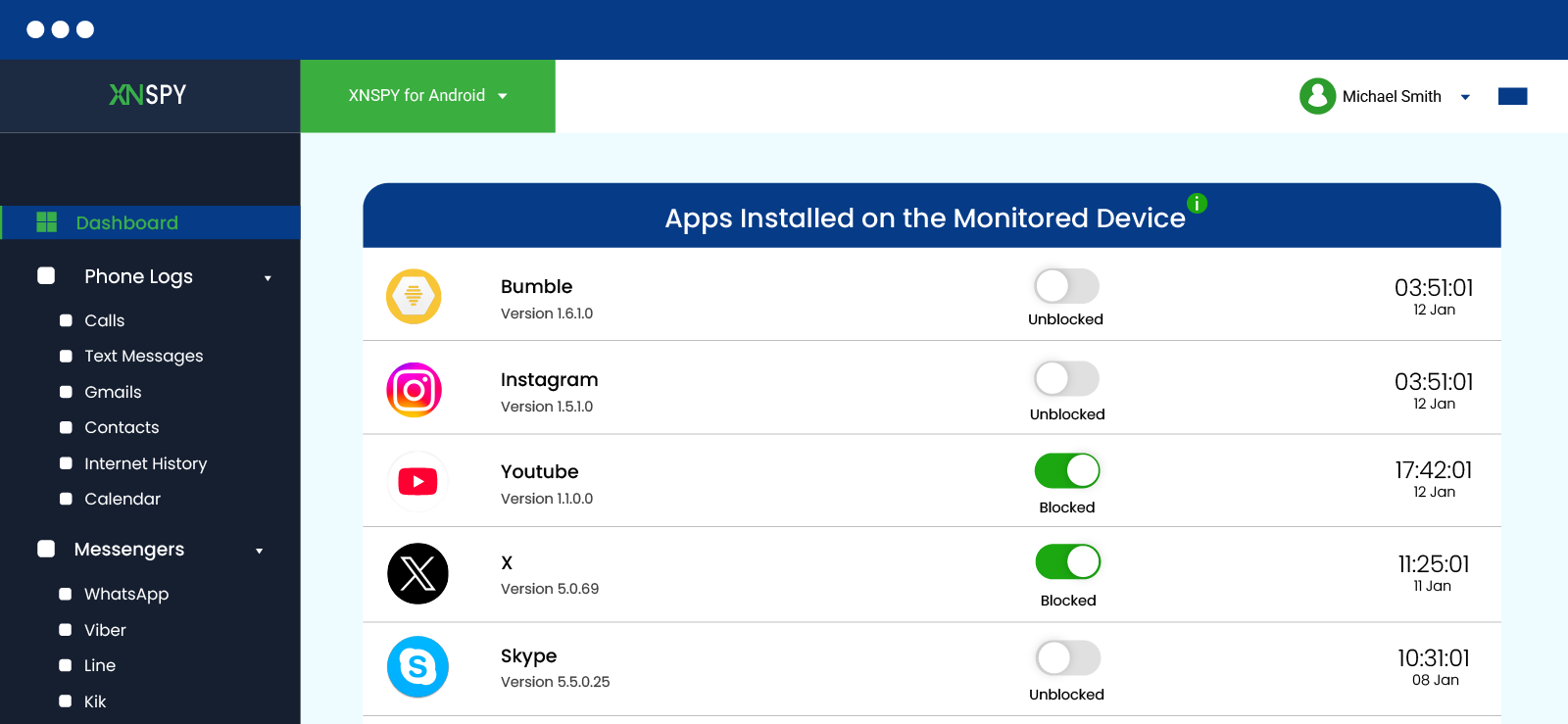
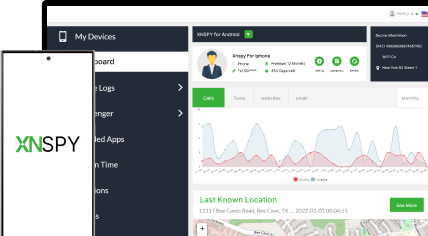
Xnspy is an application that facilitates phone monitoring to help parents uncover their children’s complete online activity and secret apps for Android. With its installed apps feature, you can see all the third-party apps on their phones, including hidden apps. The app logs their name, logo, version, and installation time for comprehensive tracking.
Moreover, for better insight, you get to check their screen time, which includes the time they spend on these hidden apps and how many times they frequent each of them. Therefore, even if the app is hidden in their phone, you can remotely see all the secret apps your child has installed alongside their screen time.
You can also access their content in these apps, like media files, notes, and messages, with Xnspy’s screen recorder. Since the screen recorder takes a screenshot of their phone activity every 5-10 seconds, even inaccessible information in secret Android apps is made available to you via the user dashboard.
With this information at your disposal, you can then decide whether to block these apps using Xnspy’s remote app blocker.
Here’s how to check for hidden apps on Android remotely using Xnspy:
- Purchase an Xnspy payment plan that suits you best.
- Install the app on the target device and grant the required permissions.
- Log in to the user dashboard with the credentials received via your email.
- Go to the “Installed Apps” section in your dashboard to see a list of all apps, including hidden ones.
- Monitor app activity and usage logs to check for any suspicious or newly installed Android hidden apps.
Did It Work For Me?
Yes, and it was the only method that found apps across all three concealment scenarios on both devices. I hid a total of 7 apps via different methods. The launcher-hidden apps appeared in the Xnspy installed apps list exactly as they would if they were sitting on the home screen.
The calculator vault apps appeared with their names and versions, as well as the installation date and time. The sideloaded APK appeared in the list with its package name, which was enough to identify it with a quick search.
Set up on the Samsung Note completed without issue. The OnePlus required one additional permission to be granted manually due to OxygenOS’s stricter background app restrictions, which added approximately a minute or 2 to the setup process but did not affect the monitoring coverage afterward.

See It All, No App Stays Hidden!
Get a full view of their installed apps without touching their phone.
2. Check Cloud Backup
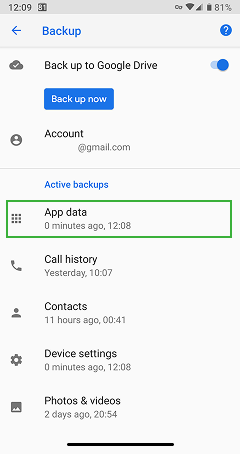
Many Android users sync their data to Google Drive or other cloud services, which may include a list of installed apps. If you have access to their backup, you can review what is stored and spot any apps they might be hiding.
However, this only works if backups are enabled and regularly updated. Plus, some apps may not show up if they are excluded from the backup. Still, it is worth a try if you want to see what’s installed on their device.
Let’s discover how to find hidden apps on Android phone without them knowing via cloud backup:
- Log in to their Google Account using a browser and enter their credentials.
- Go to Google Drive and look for backups.
- Check the latest backup linked to their Android phone.
- Look for installed apps, as some backups include a list.
- Review regularly if backups are automatic to check for updates over time.
Did It Work For Me?
Partially, and the gaps were significant enough that I would not rely on this method as a primary discovery tool. On the Samsung Note, the Google Drive backup included a readable app list that clearly surfaced the launcher-hidden app.
On the OnePlus, the backup existed, but the app list was not included in the backup contents. This is not unusual across Android devices, since Google Drive backup behavior varies between manufacturers, and not all devices include a complete app list in their backup by default.
Neither device’s backup contained the sideloaded APK file itself. This is generally expected, as Android backup systems typically preserve app data and certain app metadata rather than backing up the original installation package. Because apps installed outside the Google Play Store are not usually restored through Play Store reinstallation mechanisms, sideloaded applications often require manual reinstallation after a device reset or migration.
The calculator vault application appeared in the Samsung Note backup under its displayed app name, but the backup provided no obvious indication of the app’s hidden-file or vault functionality. To a parent casually reviewing a backup list, an entry such as “Calculator+” would likely appear to be an ordinary calculator application unless they chose to investigate it further.
The other limiting factor is the recency of backups. Google Drive backups run automatically when the device is charging, connected to Wi-Fi, and idle, typically overnight. An app installed, hidden, and then deleted between two backup cycles leaves no trace in the backup at all.
3. See Their Google Play Activity
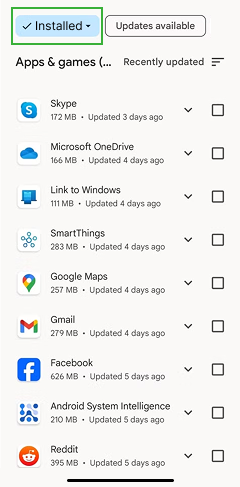
If you are wondering how to find hidden apps on Android, checking Google Play activity is a simple way to do it remotely. Every app downloaded from the Play Store is logged in the Google account, even if it is later hidden or deleted. By accessing their Play Store history, you can see what apps have been installed, including any suspicious ones.
However, this method won’t show apps downloaded from outside the Play Store, like APK files or third-party stores. But if they are using official apps and trying to keep them hidden, this is a quick way to uncover them.
You can find hidden apps on Android by following these steps:
- Log in to their Google Account using a browser.
- Open Google Play and go to “My apps & games.”
- Check the “Library” or “Installed” tab for all downloaded apps.
- Look for any unfamiliar or hidden apps.
- Repeat periodically, as new apps can be added anytime.
Did It Work For Me?
Yes, but within its specific scope, and more reliably than I expected for a method that requires no tools beyond a browser. On both test devices, the Google Play purchase and download history surfaced every app that had been downloaded from the Play Store, including the launcher-hidden app, with its original installation date intact. Even after the app had been hidden from the home screen, its Play Store record remained visible and unaffected.
However, there was a blind spot, and quite frankly, a significant one: the sideloaded APK and the calculator vault app, both installed from outside the Play Store, left no trace in the Play activity log whatsoever. For parents whose primary concern is apps their child downloaded through official channels and then hid, this method is genuinely useful. But for parents concerned about apps deliberately installed to avoid any Google account trail, it returns nothing.

Pro Tip
Using an iPhone means you are not missing out. We have options for you, too.

4. Leverage the Linked Devices Feature
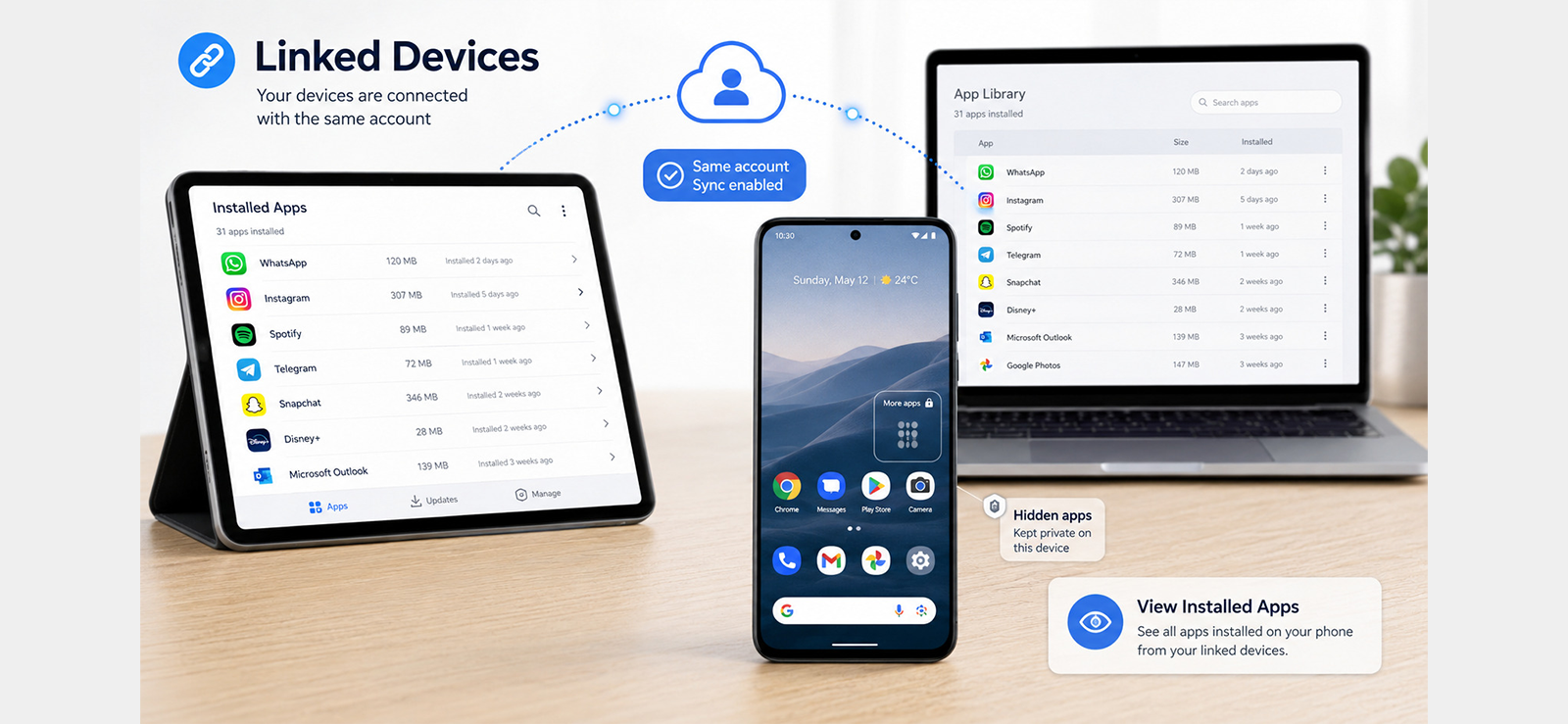
The linked device feature can be pretty handy if you want to see secret apps for Android on someone else’s phone. Many people use the same Google account on multiple devices – like a tablet, laptop, or even another phone. If their account is linked to a device you can access, you can see their installed apps without touching their phone.
Here’s how to access hidden apps on Android without your child knowing, using this method:
- Log in to their Google Account on a shared or accessible device.
- Open Google Play and go to “Manage apps & device.”
- Select the linked Android device from the list.
- Browse the installed apps to spot anything unusual.
- Check back regularly, as apps can be added or removed anytime.
Did It Work For Me?
Partially, and the results are directly tied to whether the child’s primary Google account was the one you are checking. I logged into the targeted Google account on a family laptop, opened Google Play, navigated to Manage Apps & Devices, and selected the targeted Android phone from the device list.
The launcher-hidden app appeared in the installed apps list immediately. The sideloaded APK did not appear at all, which is expected since it was never downloaded through the Play Store and therefore never registered against the Google account.
The real-world limitation here is behavioral rather than technical. Older children who are deliberately hiding apps are often using a secondary Google account that the parent does not know exists, specifically to avoid this kind of visibility.
The installed apps list on both the Samsung Note and the OnePlus reflected the current device state accurately when checked, with no meaningful sync delay observed during testing.
5. Use TeamViewer App
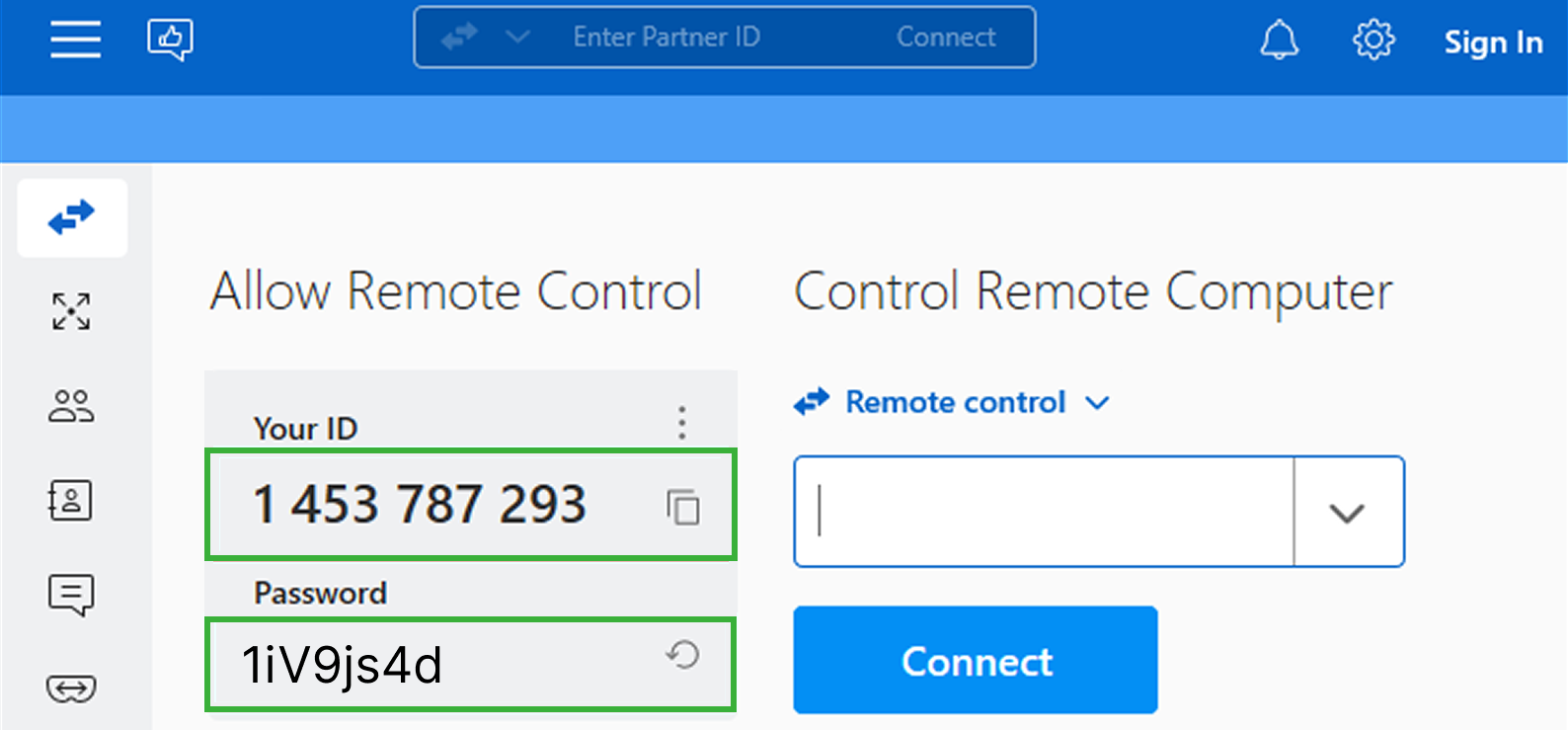
If you are trying to figure out how to see hidden apps on Android remotely, the TeamViewer QuickSupport app can help, though it is not a direct method. This app lets you mirror the target Android device to a desktop and control it remotely. Once connected, you can navigate to the app drawer and check for any Android hidden apps on their phone.
The catch? This method isn’t discreet. Your kid will see everything you are doing on their screen in real time. Still, if remote access is your goal and discretion isn’t a concern, this can be a useful way to check installed apps.
Let’s see how to find a hidden app on Android using the TeamViewer app:
- Install TeamViewer on both devices, get their password, and add it to your app.
- Once connected, request control and open their app drawer.
- Tap the three dots (⋮), go to Home screen settings, and then select “Hide apps.”
- Check their hidden apps in the list remotely.
Did It Work For Me?
Yes, technically, but the method is visible to the child. During testing, every action I took through the TeamViewer remote session was displayed in real time on the target device’s screen. Opening the app drawer, navigating to hidden app settings, and reviewing the installed app list all happened in full view of anyone holding the phone. There is no discreet version of this method.
That said, within a controlled scenario where you have your child’s consent, TeamViewer can prove to be worth it as it surfaces the launcher-hidden app by navigating to the home screen settings and opening the hidden apps list directly.
On the Samsung Note, this was under Settings > Home Screen > Hide Apps. On the OnePlus running OxygenOS, the equivalent path sat under the launcher settings rather than the general device settings.
The sideloaded APK was visible in the app drawer during the remote session, but only because I knew to look for it specifically. Without knowing what to search for, a parent navigating an unfamiliar app drawer remotely through a small screen mirror would likely miss it.
FAQs
How to find hidden apps on Android phone if I don’t have physical access to the target device?
A remote monitoring tool like Xnspy can help if you need to know how to view hidden apps on Android without accessing the device. It allows you to discreetly detect hidden apps on an Android phone. Additionally, with Xnspy’s screen time tracker, you can see how often hidden apps for Android are used, while its screen recorder feature captures real-time activity within these apps.
How to access hidden apps on Android if your teen has installed them using a third-party store?
To access hidden apps on Android remotely when they are installed via a third-party store, check their Google Account activity. Sign in to their account on a browser and review Google Play Protect for security alerts about unknown apps. If their device is linked to yours through a family account or shared Google services, you might see installed apps. Another way is using cloud backups – some backups store app data, even from third-party sources.
How to check for hidden apps on Android remotely if they are masked as a calculator or another tool?
You can find hidden apps on Android remotely – even if they are disguised as a calculator or another tool – by using TeamViewer or Xnspy. For TeamViewer, once you have gained remote control, check app permissions. If an app has unnecessary permissions and is password-protected, it’s likely a hidden app. Alternatively, Xnspy’s screen recorder captures screenshots every 5–10 seconds; therefore, as soon as your child accesses a disguised app, you can see the app’s password and its hidden content.
How to find secret apps on Android if your kid is using multiple user profiles?
Figuring out how to open hidden apps on Android when multiple user profiles are in use can be tricky, but there are ways to uncover them. One method is checking Google Play Store history—simply switch between profiles from the top-right corner to review each one’s app history. However, a more effective approach is the Xnspy software. It runs in the background and automatically logs all installed applications (including hidden ones), regardless of the profile used to install them.
How to open hidden apps on Android if I suspect they are using secret chat apps?
If you’re trying to uncover secret chat apps, start by checking the cell phone’s settings or app drawer. Once located, you may need to guess the password or try common codes like ##12345 or ##0000. For a simpler solution, though, use Xnspy. It reveals hidden chat apps and shows who they are chatting with. Moreover, you can block the app remotely if needed.
Leave a reply:
Your email address will not be published. Required fields are marked*
Mike Everett
Member since October 20, 2014
Mike Everett
Member since October 20, 2014
Mike Everett is a consumer technology journalist with expertise in hands-on testing and evaluation of iOS and Android monitoring applications. With over 11 years in the industry, he focuses on how mobile monitoring tools perform in real-world conditions, including accuracy, feature reliability, device compatibility, and practical usability for parents.
He conducts live-device testing of monitoring apps to assess how well their features function beyond marketing claims. His work primarily includes comparative reviews, feature breakdowns, and buyer-focused guides designed to help parents understand which tools actually deliver usable results in everyday scenarios.