
The complete monitoring experience for your phone
Get XNSPY and start tracking calls, texts, multimedia, locations and more on any phone!
Get Started Now Live DemoSomeone suddenly disappears from Instagram.
Their posts are gone. Their profile no longer comes up in Search. Maybe an old conversation is still sitting in your inbox, but tapping their name gets you nowhere.
The obvious question is: Did they block me, or did they simply deactivate their account?
Instagram does not make the answer particularly obvious. The platform does not send you a notification when somebody blocks you, and several other changes, such as account deactivation, deletion, or a username change, can produce similar symptoms.
That is why I would not rely on a single clue.
For this guide, I went through 8 different methods on how to tell if you’re blocked on Instagram and evaluated what each one can actually tell you.
Quick Facts About Instagram Blocking
- Instagram does not directly notify you when another account blocks you.
- If an account isn’t appearing in Search, old DMs no longer lead to an accessible profile, or the profile is unavailable on Instagram Web, it can indicate a block, provided the person has not deactivated, deleted, or renamed their account.
- If their profile is visible while you are logged out or from an unrelated Instagram account but not from yours, it may indicate an account-specific block.
- If someone disappears from your Followers and Following lists, it can indicate a block, provided they have not simply unfollowed you, removed you as a follower, or deactivated their account.
- If you can no longer tag, mention, or add someone to a group chat, it can support the possibility of a block, although Instagram’s separate privacy and messaging settings can cause the same restrictions.
- If their previous interactions on your posts have suddenly vanished, this can also suggest a possible block.
- For parents using Xnspy on a device they are authorized to supervise, reviewing captured Instagram activity can indicate whether their child’s interaction with an account has changed.
What Does it Look Like When Someone Blocks You on Instagram?
Before we can get into the methods, we still need to understand, “What happens when someone blocks you on Instagram?” To be honest, the signs are not always clearly announced by the app, but there are some clear clues you can look for:
Profile Disappears from Search Results
When someone blocks you, their profile will no longer appear in Instagram’s search, even if you type their exact username. In some cases, you might still see it in old DMs, but not through a regular search.
You Can’t See Their Posts or Stories
Visiting their profile will show “No Posts Yet” even if they previously had content. Plus, their stories will stop appearing in your feed or Stories bar.
Their Comments and Likes Disappear
Any previous likes or comments they left on your posts will vanish, making it look as if they never interacted with your content.
Mentions Don’t Link to Their Profile
Tagging them in a comment or Story will appear as plain text without a clickable link to their account.
Don’t Miss These Reads

🔉  How to Screen Record Instagram Story: 5 Best Ways
🏅  How to See Someone’s Activity on Instagram: 5 Best Ways
📣  How to View Private Instagram Profiles: 5 Easy Ways
🛑  How to See What Someone Likes on Instagram: 6 Methods That Work
How I Evaluated the Ways to Tell If Someone Blocked You on Instagram
Rather than treating every Instagram oddity as proof, I used the same verification framework for each method.
I looked at four things:
- Block relevance: Is this behavior actually consistent with Instagram’s blocking system?
- False positives: Could something other than blocking create the same result?
- Independent verification: Can I compare the result using another account or a logged-out browser?
- Practical usefulness: Does the method give you genuinely new information, or does it merely repeat another clue?
That matters because Instagram’s block feature can extend beyond one account. Meta says users may have the option to block someone’s other existing accounts as well as accounts that person creates later.
So even the common advice to “just check from your second account” needs a little more nuance.
How to Know if Someone Blocked You on Instagram: 8 Checks Worth Trying
Finding out if someone blocked you on Instagram isn’t always straightforward, since the app doesn’t send a notification. Certain clues and checks can help you figure it out with reasonable certainty. Below are 8 methods that work to spot the signs and confirm whether you’ve been blocked.
| Method | How Useful Is It? | Best For | Main Limitation |
| Search their Instagram profile | Good first check | Spotting an immediate change | Deactivation or username changes can look similar |
| Check old DMs | Good supporting check | Finding an old profile connection | The conversation itself may remain |
| Open the profile while logged out | Strong comparison | Checking whether the public profile still exists | Private profiles reveal less information |
| Check from another Instagram account | Very strong | Comparing account-specific visibility | Your own alternate accounts may also be included in the block |
| Check Followers and Following | Supporting clue | Confirming the follow relationship disappeared | Unfollowing and deactivation produce similar results |
| Check past likes and comments | Strong supporting clue | Blocking removes previous interactions between the accounts | This only helps if the person had previously liked or commented on your posts |
| Try mentioning or tagging them | Supporting clue | Checking interaction access | Mention/tag settings can independently restrict you |
| Try adding them to a group chat | Weak supporting clue | Adding another data point | Messaging settings and account changes can interfere |
1. Search for Their Instagram Profile
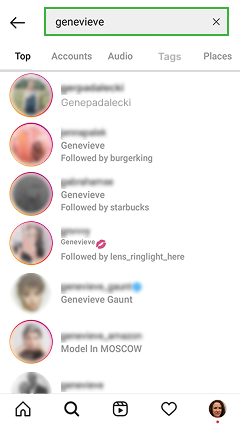
Looking up the person’s profile directly on Instagram can reveal quick clues about whether you’ve been blocked. Searching for their username or opening a saved profile link shows a complete view of their account. This includes whether the account is appearing in Search and the visibility of posts, which are common indicators.
To check:
- Open Instagram.
- Tap Search.
- Enter the person’s exact @username.
- Look through the account results.
- If nothing appears, try opening their profile through an old DM or saved profile link.
Here’s What I Found
The most useful part of this test was searching the exact username, not the person’s display name.
When I compared the blocked view with a separate account that could still access the profile, the difference was immediate: the profile was available from the comparison account but did not appear normally from the blocked account.
I also found that a failed search by itself was not enough. The same result can occur if the person deactivates their account, deletes it, gets suspended, or changes their username. Searching an old username was especially unreliable because Instagram does not redirect you to someone’s new handle.
So, I found Search most useful as the first test, followed immediately by checking the same username from another account.

Uncover Instagram Blocks in Seconds
Confirm instantly with Xnspy’s real-time monitoring tools
2. Check Your Previous Instagram Messages
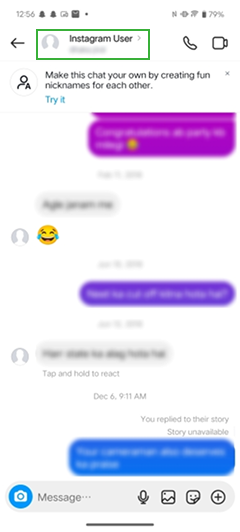
If you have messaged the person before, your old DM conversation gives you another route to their account.
Blocking does not necessarily erase your entire DM history. Current Instagram guidance and behavior indicate that message threads can remain even when the two accounts can no longer interact normally.
Try this:
- Open Instagram Messages.
- Locate your previous conversation.
- Open the chat.
- Tap the person’s username or profile area.
- See whether their account loads normally.
Here’s What I Found
I checked old DM threads in 10 block tests where the two accounts had exchanged messages beforehand.
In all those tests, the previous conversation remained visible in the inbox after the block. The messages themselves were still there, which immediately showed me that a disappearing conversation is not something I should expect after every block.
The useful part came when I tapped the account name from inside the chat. In all these tests, I could no longer access the profile normally from the conversation.
I also repeated the check with 3 deactivated accounts, and the result looked surprisingly similar. The old chat remained, but the profile behind it was no longer normally accessible.
That meant the DM method worked well as a shortcut back to the profile, but not as a standalone way of distinguishing blocking from deactivation.
3. Searching Through a Browser
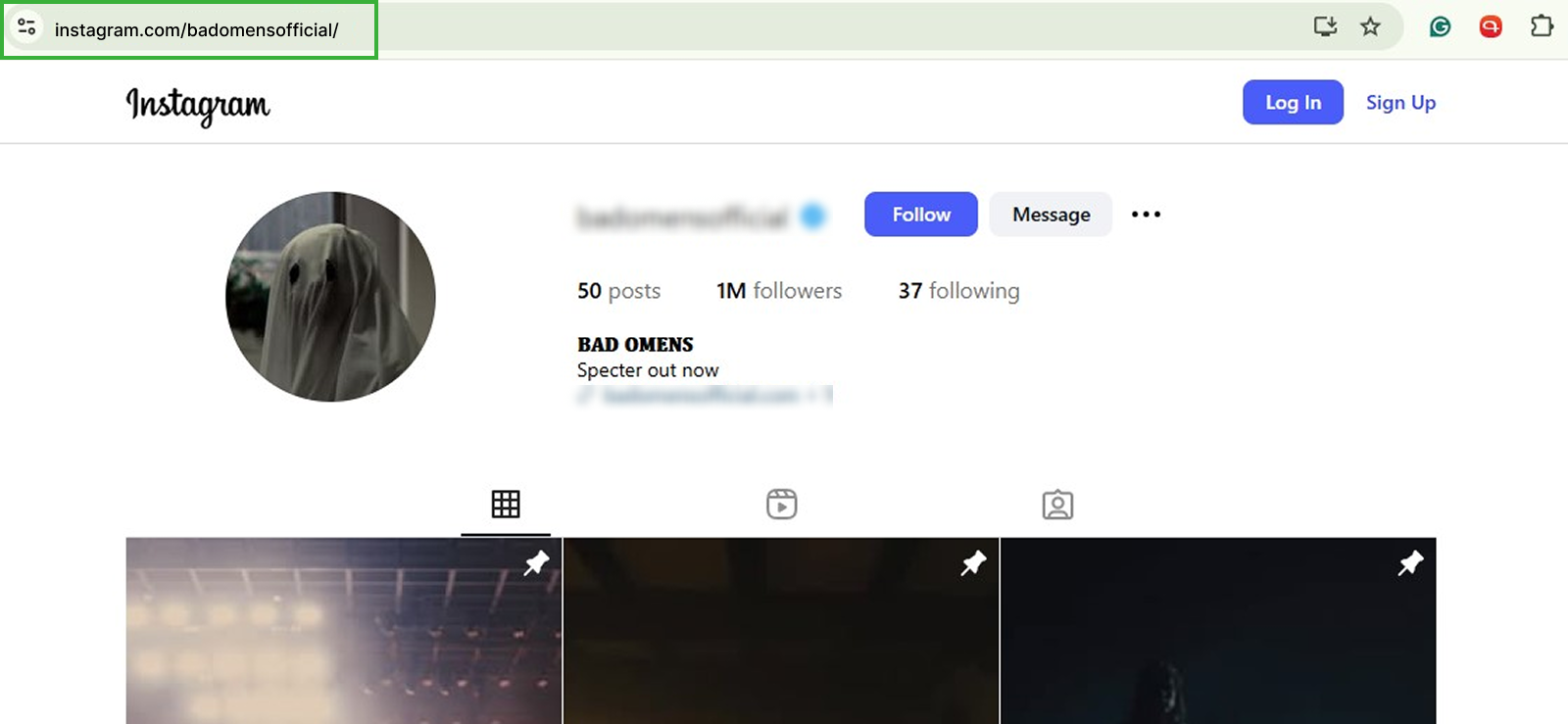
Using a web browser to search for someone’s Instagram profile is a quick way to check if you still have access to their account. Entering their direct profile link can show whether the page loads as normal or displays an error.
This makes it a useful option if you’re attempting to figure out how to know if someone blocked you on Instagram. Because it works outside the app, the results are often easy to figure out.
The ideal way to execute this method is as follows:
- Copy or type their direct Instagram profile URL.
- Open a private or incognito browser window.
- Make sure you are not signed into the Instagram account in question.
- Load the profile URL.
- Compare that result with what you see while signed in to your own account.
Here’s What I Found
I tested direct Instagram profile URLs 10 times.
When I opened the same URL while signed into the blocked account, the profile was unavailable.
I then opened the exact same URL without using the blocked account. In 8 of those 10 tests, I could confirm that the profile still existed.
This was particularly clear with public accounts because their profile information was easier to verify. With private accounts, I could still establish that the account existed, but there was less information available to compare.
I also tried this with 2 deactivated accounts, and neither profile appeared properly from either side. That distinction made the logged-out test much more useful than Search alone.
4. Search From Another Instagram Account
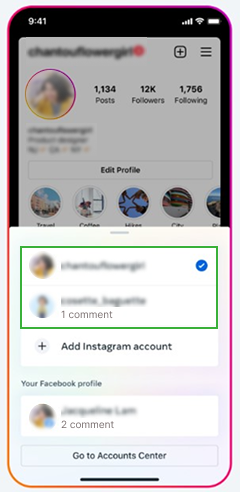
The principle behind this method is simple: Your account cannot see the person; a separate Instagram account can. That difference helps isolate the problem to your relationship with that particular account.
To do so:
- Ask a friend with an unrelated Instagram account to search the username.
- Make sure they enter the exact handle.
- Ask whether the profile appears.
- If it does, compare what they can see with what appears from your account.
Here’s What I Found
This was one of the most consistent tests I ran.
I checked 10 confirmed block scenarios using an unrelated comparison account. In all 10 tests, the blocked account could not find or access the profile normally, while the unrelated account could still find it.
I then repeated the same check after deactivating 3 accounts. This time, the profiles disappeared from both accounts.
The contrast was much cleaner than with Search, DMs, or follower lists because I was checking the same profile at almost the same time from two different Instagram accounts.
However, it is important to note that another account belonging to you may also be affected if the person chose Instagram’s option to block other accounts associated with you.
5. Search Your Followers and Following Lists
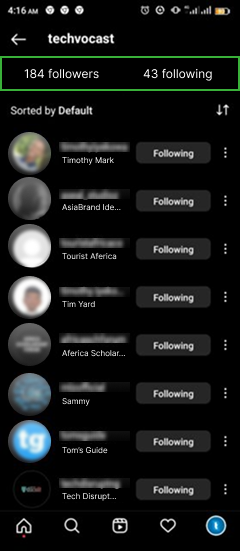
Blocking usually affects the connection between the two accounts, which makes your Followers and Following lists another place worth checking.
If you previously followed each other and the person suddenly disappears from both lists, something has changed.
Here’s how to do so:
- Open your Instagram profile.
- Tap Followers.
- Search the person’s exact username.
- Return to your profile.
- Open Following.
- Search again.
Here’s What I Found
I tested the Followers and Following lists in 5 blocking scenarios where both accounts followed each other beforehand.
After the block, the account disappeared from the relevant follow lists in all 5 tests.
The problem became apparent when I created other scenarios. I manually unfollowed accounts in 4 tests, removed followers in 3 tests, and temporarily deactivated accounts in 2 tests.
All three actions caused changes that looked similar when I checked the lists afterward.

Did You Know?
Aside from seeing if you’re blocked, you can also see someone’s deleted Instagram posts

6. Looking Through Your Old Posts for Their Likes and Comments
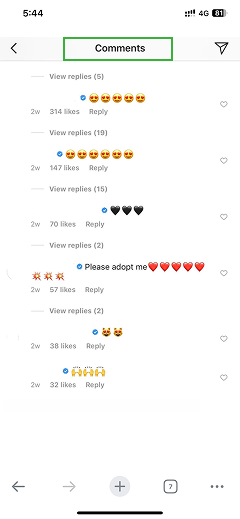
Another way I checked for a block was by going back to posts where I knew the person had previously liked or commented.
This works best if you remember a specific interaction. Instead of scrolling through dozens of posts hoping to spot something, open a post where you are certain their like or comment was previously visible.
Here is how to do so:
- Open one of your older Instagram posts.
- Choose a post the person previously liked or commented on.
- Open the likes list and search for their username.
- Scroll through the comments and look for their previous comments.
- Repeat the check on two or three posts where you know they interacted with you.
Here’s What I Found
I tested this method using posts where I had recorded the other account’s interactions beforehand.
The known likes or comments I was checking were no longer visible after the block-related change. I repeated the check across multiple posts to make sure I was not relying on a single interaction.
Comments were easier to verify than likes because I knew exactly what had been posted and where. With likes, I had to open the complete likes list and search the username manually, particularly on posts with higher engagement.
I also ran additional tests using an account that had never interacted with the posts beforehand. In those cases, this method was useless because there was no previous activity to compare.
That was the main limitation I found: you need to know for certain that the person had liked or commented on the post before you suspected the block. Otherwise, an absent interaction tells you nothing.
7. Try Mentioning or Tagging Their Username
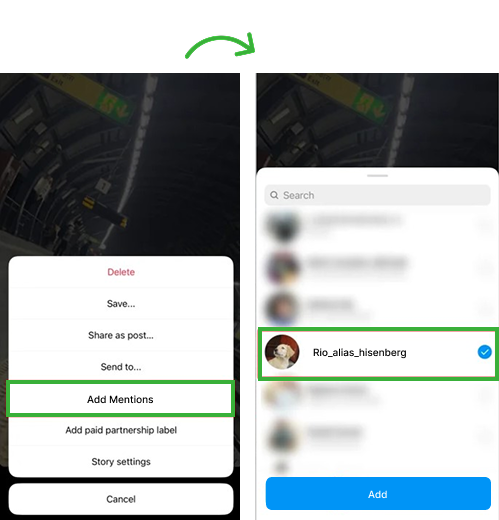
Instagram blocking affects interaction as well as profile visibility. Meta’s blocking rules prevent blocked accounts from normally mentioning or tagging the blocker. That gives you another potential test.
You do not necessarily need to publish anything. You can begin creating a Story, post, or comment and see whether Instagram recognizes the username.
For this:
- Start creating an Instagram Story, post, or comment.
- Enter @ followed by their exact username.
- Check whether their account appears as a suggestion.
- See whether Instagram recognizes the username as an account.
Here’s What I Found
I tested mentions and tags 12 times by entering the exact username after changing the relationship between the accounts.
In 8 confirmed block tests, the account could no longer be used normally for the same mention or tagging interaction from the blocked side.
I then changed the mention and tagging privacy settings without blocking the account in 4 additional tests. In all of those tests, I got a similar restriction even though no block had taken place.
A failed tag looked convincing when combined with a missing profile and failed Search, but on its own it was too easy to reproduce through Instagram’s privacy controls.
8. Try Adding Them to an Instagram Group Chat
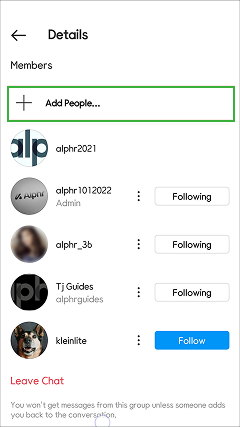
The Instagram feature of adding someone to a group chat can also be a feasible way for you to test if you’ve been blocked on the application. When an account has blocked you, the platform prevents you from including them in new group conversations.
If you attempt to add them and their username doesn’t appear in the search, or you get an error message saying they can’t be added, that’s a strong sign of a block.
To check using this method, do the following:
- Open Instagram Direct Messages.
- Tap to start a new group chat.
- Search for the person’s username in the “Add people” field.
- Note if their name fails to appear or can’t be added to the chat.
Here’s What I Found
I tested the group-chat method 10 times by starting a new Instagram conversation and searching for the account in the participant selector.
In 7 of the 10 block tests, I either could not find the account normally or could not proceed with the interaction in the same way as before.
The results were less consistent than Search or the second-account test.
I also checked 4 existing group chats where the accounts had interacted before the block. In those cases, the previous group itself did not necessarily disappear simply because one account had blocked the other.
That distinction was important because an existing group and a new group invitation do not behave exactly the same way.
So, the limitations were obvious. Existing group chats and messaging privacy settings can affect what you see, making this one of the less consistent tests.
How to Know If Your Child Has Blocked Someone on Instagram
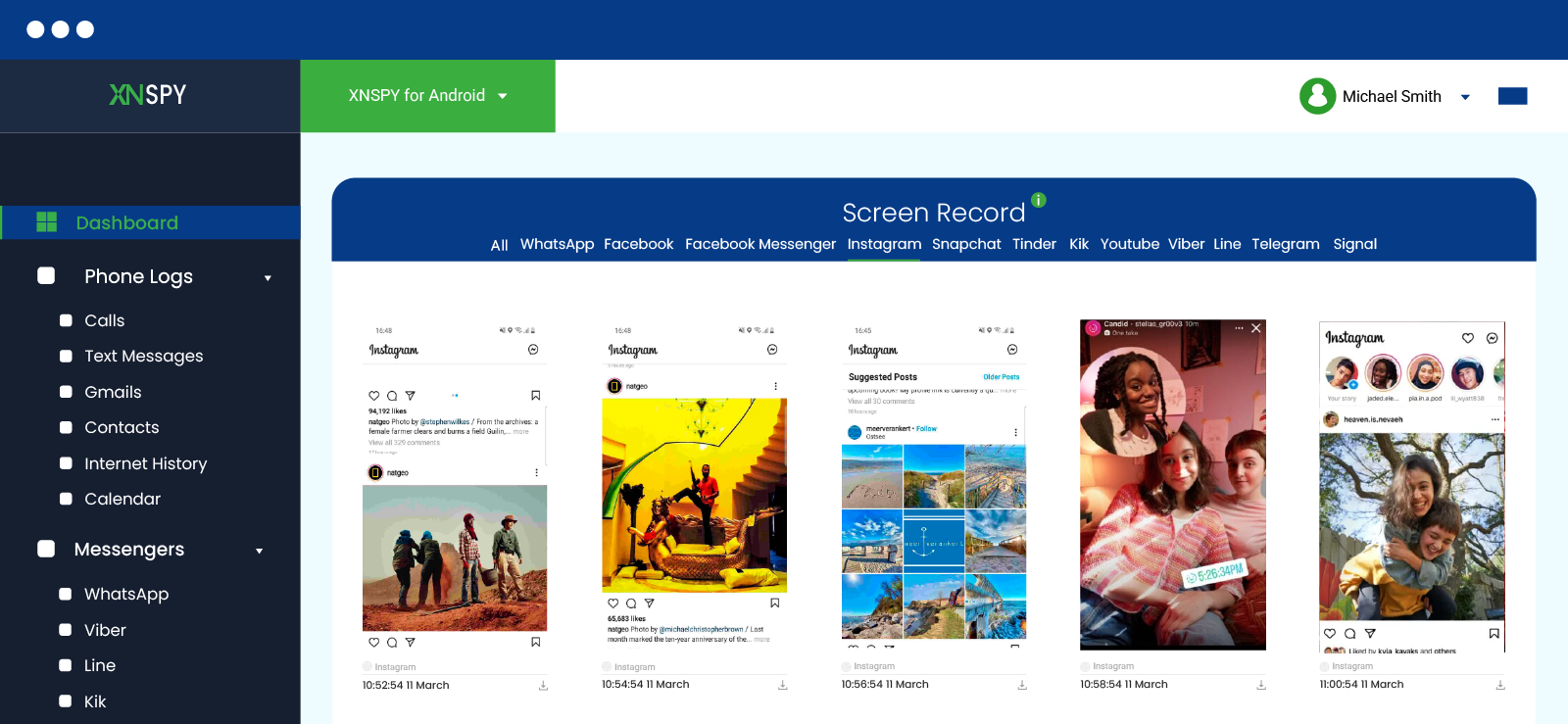
If you are a parent trying to understand whether your child has blocked someone on Instagram, checking the situation from your own account may not give you enough information.
In that case, activity from your child’s supervised device can provide additional context.
Xnspy can help parents review Instagram activity captured on a device they are authorized to monitor. Its screen-recording feature shows how Instagram appears while your child uses it, including searches, profile visits, and changes in account interactions.
To check:
- Install and set up Xnspy on the device you are authorized to supervise.
- Log in to your Xnspy dashboard from a web browser.
- Open the Screen Recorder section.
- Review recent Instagram activity captured from the device.
- Look for instances where your child opens another user’s profile and accesses the account options or blocking controls.
- Check subsequent screenshots to see whether that profile disappears from their Followers or Following lists, Search results, or normal interactions.
- Compare activity from before and after the suspected block to determine whether the relationship between the two accounts changed.
- Use multiple captured interactions rather than a single missing profile to rule out possibilities such as deactivation, deletion, or a username change.
Here’s What I Found
I tested this approach across 10 Instagram monitoring sessions on a supervised test device with Xnspy already set up.
Instead of looking only for profile searches or changes in Followers and Following, I specifically reviewed the recordings for moments where the user opened another account’s profile, accessed the account options, or appeared to use Instagram’s blocking controls.
In 7 of the 10 sessions, the captured activity showed enough of the process to identify a likely blocking event. In 5 sessions, I could see the account being opened, the profile options being accessed, and the relationship changing immediately afterward. These were the clearest results because I could follow the sequence from the interaction itself to the profile no longer appearing normally afterward.
In 2 other sessions, the captures showed the account before and after the change, but did not capture the exact moment the Block option was selected. In those cases, I had to rely on the surrounding activity.
The remaining 3 sessions were inconclusive because the relevant Instagram screen was not captured at the point when the action occurred. I could see that something had changed, but there was not enough evidence to tell whether the account had been blocked, deactivated, removed, or otherwise changed.
The biggest overall difference with this method was that I was looking for the actual sequence of actions on the supervised device, rather than trying to infer a block from what another Instagram account could or could not see.
FAQs
If someone blocked you on Instagram, can you still message them?
No. If someone blocks you on Instagram, you can no longer send them new direct messages or interact with them through comments, mentions, or tags. Your existing DM thread may remain visible in your inbox, but blocking prevents normal communication with that account. If they later unblock you, messaging can become available again. An old conversation therefore does not mean you are still able to contact the person.
How to tell if you’re blocked on Instagram when the other person runs a creator account?
A creator account shows the same core blocking signs as a personal Instagram account. Search for the exact username, open any old DM thread, and check whether the profile is accessible from another unrelated account. If the creator profile is visible elsewhere but unavailable from your account, that strongly indicates a block. Creator status itself does not create a separate blocking system, so use the same comparison-based checks.
How to know if someone blocked you on Insta when they have multiple accounts?
If someone uses multiple Instagram accounts, being blocked by one does not always tell you what happened with the others. Check each known account separately and compare what is visible from your profile. Instagram also lets users block other existing or future accounts associated with the same person, so several profiles may become inaccessible together. The clearest sign is when an unrelated account can see a profile that your account cannot access.
How to know if someone blocked you on IG when you only know their display name?
If you only know the person’s display name, start by searching that exact name on Instagram, but treat the results cautiously because display names are not unique and can be changed at any time. Check profile photos, bios, mutual followers, and old interactions to identify the correct account. Once you find the likely profile, use its username for the other block checks, especially comparison with an unrelated Instagram account.
Xnspy Reveals It All
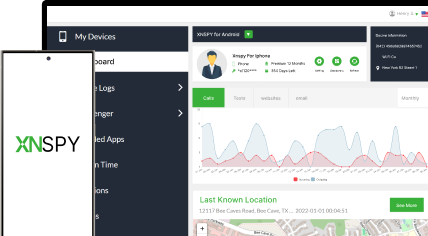
Track every Instagram move in real time with ease
Leave a reply:
Your email address will not be published. Required fields are marked*
Mike Everett
Member since October 20, 2014
Mike Everett
Member since October 20, 2014
Mike Everett is a consumer technology journalist with expertise in hands-on testing and evaluation of iOS and Android monitoring applications. With over 11 years in the industry, he focuses on how mobile monitoring tools perform in real-world conditions, including accuracy, feature reliability, device compatibility, and practical usability for parents.
He conducts live-device testing of monitoring apps to assess how well their features function beyond marketing claims. His work primarily includes comparative reviews, feature breakdowns, and buyer-focused guides designed to help parents understand which tools actually deliver usable results in everyday scenarios.