What Happened to Omegle? Why It Shut Down and What Parents Should Know
 By Mike Everett
The complete monitoring experience for your phone
Get XNSPY and start tracking calls, texts, multimedia, locations and more on any phone!
Get Started Now Live DemoOmegle shut down permanently on November 8, 2023, after operating for more than 14 years.
In its farewell statement, the Founder, Leif K-Brooks, said that the financial and psychological burden of running the platform, moderating its content, and combating its misuse had become unsustainable.
The closure was also followed by the settlement of A.M. v. Omegle, a lawsuit filed by a survivor who alleged that Omegle connected her with an adult who sexually exploited her when she was a child.
Today, the original Omegle service has not returned. Now, the official domain displays the founder’s farewell statement rather than a functioning chat platform.
Omegle At a Glance
Omegle Founder Leif K-Brooks Launch date March 2009 Main function Anonymous one-to-one text and video chats Shutdown date November 8, 2023 Current status Permanently closed Official replacement None
What Was Omegle?
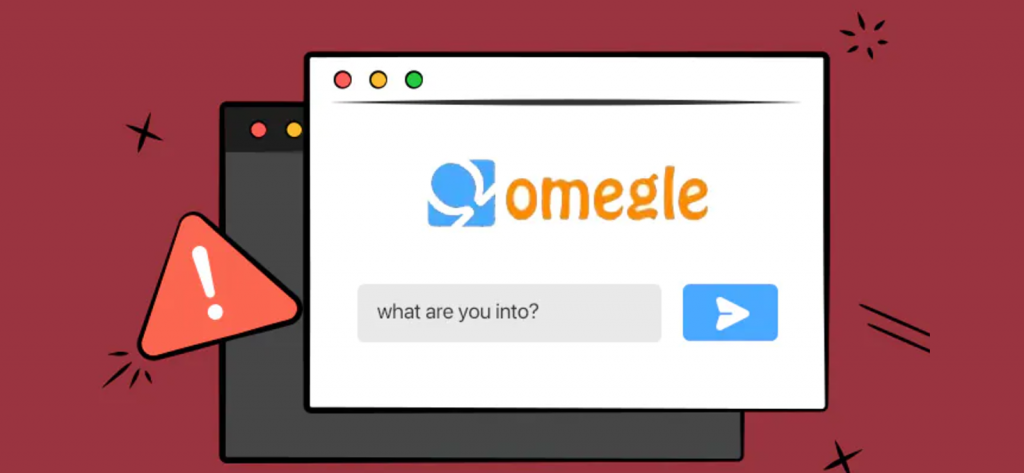
Omegle was a free online communication platform that randomly connected two strangers for private text and video conversations.
Leif K-Brooks launched the website for the first time in 2009 when he was 18 years old. The idea behind the app was simply to recreate the spontaneity of meeting someone new without requiring profiles, friend requests, followers, or an existing social network.
When using the app, users could enter a chat immediately and leave whenever they wanted. If one conversation ended, the platform would then connect them with another stranger within seconds.
Omegle eventually offered several ways to interact, which are listed below.
- Anonymous text conversations: Text-only chat that matched users randomly to communicate as “strangers.”
- Random video chats: Video mode connected strangers using webcams and microphones, with a built-in text window as well.
- Interest-based matching: “Interest” tags allowed users to be paired with a stranger who had something in common with them.
- College-focused matching: Omegle had a college student chat section where users with a verified .edu email address could be matched with others from their institution or other colleges.
- A “Spy Mode”: In the beta version of “Spy Mode,” users could either be the “spy” and pose a question to two strangers, or discuss a question with another stranger, with the spy observing as a third party without being able to participate further.
Additionally, the absence of registration was central to Omegle’s appeal. Users did not need to create a public profile before speaking to someone.
That simplicity helped Omegle become a recognizable part of internet culture.
Check Out These Blogs

⚡  Dangerous TikTok Challenges Every Parent Should Be Aware Of
🏅  How to Find Out if Someone is on Tinder: 5 Easy Ways
🛑  How to Block Inappropriate Content on YouTube: 5 Best Ways
What Was Omegle Used For?
People used to visit Omegle for many different reasons.
Some users wanted casual conversations with people from other countries, while others used it to practice a language, perform music, discuss personal experiences, or relieve loneliness.
Not only that, but content creators also regularly used random video encounters as material for reaction videos and online entertainment.
At its best, Omegle offered spontaneous conversations between strangers, but at its worst, its anonymous and unpredictable format exposed users to explicit material, harassment, manipulation, scams, grooming attempts, and other harmful behavior.
Omegle, therefore, developed two very different reputations over time. To some users, it represented an open and unscripted version of the internet. To parents, it increasingly represented the risks of anonymous interactions with strangers without age checks.
Why Did Omegle Shut Down?

Omegle did not close for one simple reason since its shutdown followed a combination of operational pressure, reported misuse, legal action, and sustained scrutiny of its safety systems.
1. Financially and Psychologically Unsustainable
In his farewell statement, Leif K-Brooks explained that the decision to shut down Omegle ultimately came down to sustainability.
He acknowledged that despite years of effort, the platform continued to be misused by some users. While the platform relied on a combination of automated systems and human moderators to address harmful behavior, moderation was still exhausting.
Therefore, the responsibility of constantly trying to reduce harm while operating a service built around anonymous interactions placed increasing pressure on both the platform and its founder.
2. A Major Lawsuit Settlement
The shutdown was also followed by the settlement of A.M. v. Omegle.
The lawsuit was filed in 2021 by a plaintiff identified as A.M, who alleged that Omegle connected her with an adult man when she was 11 years old and that he sexually exploited her over several years.
It was later mentioned by the plaintiff’s attorneys that permanent closure was a term negotiated as part of the settlement; however, K-Brooks did not address that specific settlement in his farewell message.

Are They Watching What You Think They Are?
Xnspy helps you catch risks before they happen.
3. Serious Moderation Challenges
While Omegle stated that it used artificial intelligence and human moderators, in reality, its safeguards were inadequate for the volume and nature of the activity taking place on the platform.
Australia’s eSafety Commissioner reported that Omegle disclosed having only three moderators assigned to video chat and one assigned to text chat, despite sometimes having as many as 40,000 users simultaneously.
Not only that, but random live video is particularly difficult to moderate because harmful material may appear immediately, before automated systems or human reviewers can intervene.
Unlike a public social media post that can be reviewed and removed, a live encounter may already have affected a user by the time it is detected.
4. Difficulty Enforcing Age Restrictions
For much of its operation, Omegle allowed users aged 13 to 17 to enter with parental permission, while users without such permission were expected to be at least 18.
However, the platform did not have an age-verification process capable of confirming that users were the age they claimed to be.
Therefore, while a warning screen could discourage some underage visitors, it could not reliably prevent a child from entering. As a result, minors and adults could be randomly placed in the same environment.
Was Omegle Safe for Children?

Omegle was not an appropriate platform for children, and several characteristics made the platform particularly risky.
- Weak age assurance: Omegle’s age rules depended heavily on users accurately stating their age and respecting the platform’s terms. That is why a child could enter without providing formal identification or completing a meaningful verification process.
- Unpredictable explicit content: The random nature of the service meant that users had limited control over what appeared after a new connection began. Therefore, children could be exposed to sexual or disturbing material without even searching for it.
- Contact with unknown adults: Omegle did not consistently separate minors from adults. A child could be connected with an adult who appeared friendly or attempted to move the conversation to another app. As a result, a harmful interaction may begin on a random chat platform but continue through private messaging and social media for longer-term contact.
- Grooming and manipulation: Online grooming does not always begin with an overtly threatening message. A person may first attempt to gain trust, and then, over time, ask increasingly personal questions.
- Recording and redistribution: Omegle conversations were not necessarily private simply because they were one-to-one. The other participant could easily capture screenshots, record video, copy text, or share material elsewhere.
- Limited parental controls: Omegle did not offer a comprehensive set of built-in parental controls. While parents could attempt to block the website through a browser, router, or device-level restriction, those measures did not necessarily address lookalike domains, alternative browsers, VPNs, or similar random-chat platforms.
Is Omegle Still Available?
No, the original Omegle chat service remains closed.
Now, the official website displays Leif K-Brooks’ farewell statement rather than offering text or video matching, and there is no official Omegle mobile application or confirmed replacement operated by the original service. Therefore, parents should be cautious when an application or website claims to be a new or unblocked version of Omegle.
Here is what some copycat services use to make the claim believable:
- Similar branding
- Deliberately misspelled names
- Different domain extensions
- References to “Omegle 2”
- Claims that Omegle has returned
- Familiar-looking interface elements
But remember that a familiar name or design does not establish that a service is official, regulated, or safe.
What Should Parents Do About Random Chat Apps?
Blocking one website is not a complete online safety strategy because children may encounter similar functionality on social media, gaming platforms, livestreams, or on websites under different names.
Effective supervision, therefore, requires a combination of communication, clear boundaries, device settings, and age-appropriate monitoring.
Start With a Calm Conversation
Ask your child whether they have encountered Omegle, random video chat, anonymous messaging, or “talk to strangers” websites, without an accusing tone.
Here are some useful questions you can ask:
- Have you seen videos about random-chat websites?
- Have friends encouraged you to try one?
- Has anyone online asked you to keep a conversation secret?
- Do you know what to do when someone makes you uncomfortable?
- Would you be able to tell me without getting into trouble?
The objective is to make disclosure easier instead of interrogating the child.
Establish Specific Digital Boundaries
General instructions such as “be careful online” are difficult to apply.
Create concrete rules instead:
- Tell a trusted adult when an online interaction feels uncomfortable.
- Do not use anonymous random-chat services.
- Do not move conversations with strangers to private applications.
- Do not share a full name, school, address, phone number, or live location.
- Do not send intimate photographs or videos.
Control Screens. Ensure Safety
Get Xnspy to know what your kids are watching.
Review Device-Level Controls
Parents can use built-in family settings to restrict websites, manage applications, limit account changes, and review screen-time patterns.
However, built-in controls may not give parents enough context to understand who a child is speaking with or whether risky communication is moving between platforms.
How Xnspy Can Help Parents Identify Online Risks
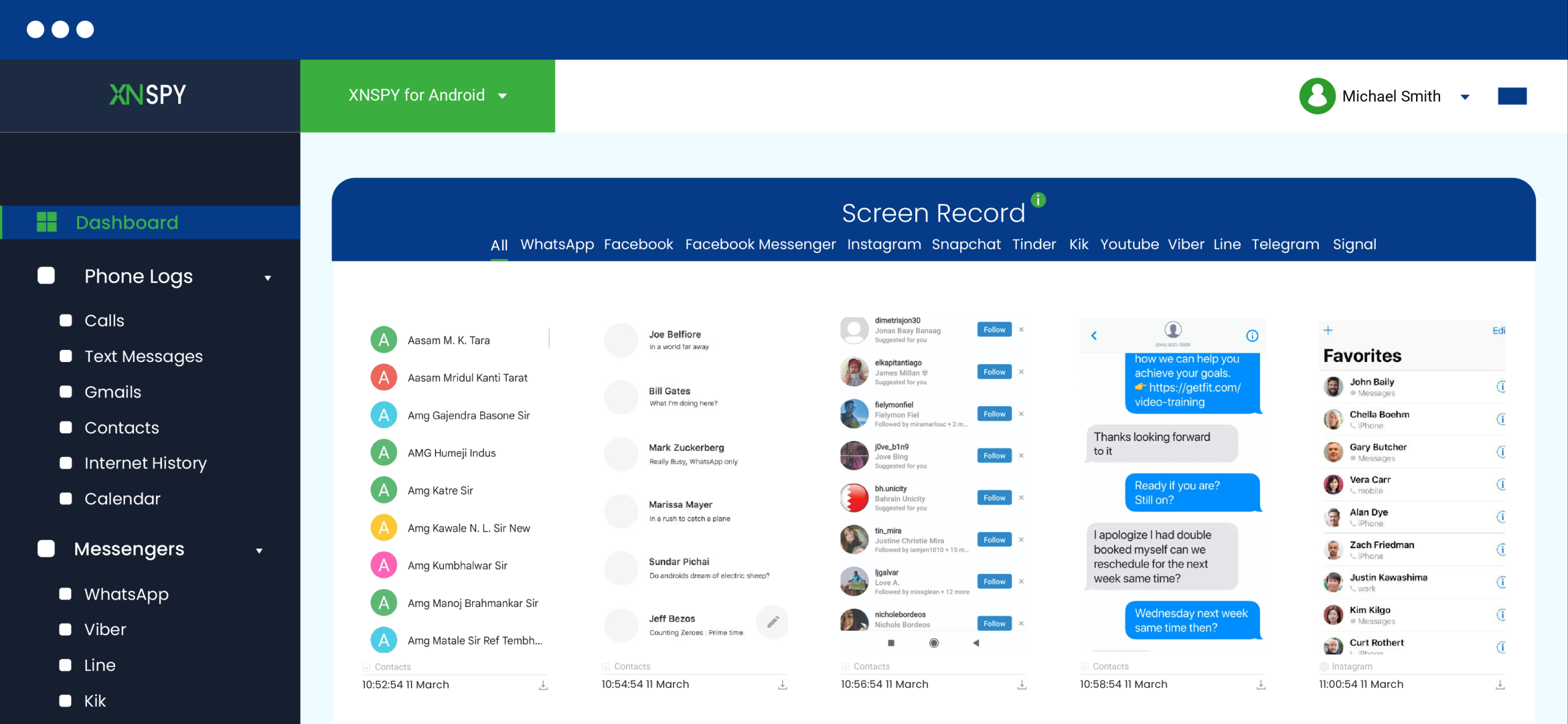
When looking to recognize patterns and better understand a child’s activity on random chat platforms, Xnspy might work for parents. It is a parental monitoring app that gives visibility into a child’s activities on their smartphone.
The following functionalities of Xnspy might prove helpful for concerned parents.
Review Browsing Activity
Monitoring browsing history can help parents identify visits to random chat websites, imitation Omegle domains, adult-oriented services, or unfamiliar links.
Since Xnspy provides access to full URLs, page titles, visit frequency, and the timestamp of the latest visit, it can offer better context to concerned parents.
But note that while a visit does not necessarily prove that a child participated in a conversation, it may indicate that a discussion about the website is needed.
Monitor Installed Apps
Another concern that Xnspy addresses is that children may access stranger chat services through applications rather than a conventional browser. Therefore, its installed apps list can help parents identify which apps are installed, when they were installed, and how much time is being spent on each app daily.
Monitoring installed applications and usage can help parents notice:
See Social Activity
Since a concerning conversation may move from a random chat app to other platforms like WhatsApp, Instagram, Snapchat, Facebook, text messaging, etc, parents should keep an eye on any new connections on these apps.
With the message and screen records provided by Xnspy, parents can identify any repeated interactions with an unknown person, requests for personal photos, sexual language, links to unknown websites, and other warning signs.
Check Call and SMS Activity
Call logging and SMS monitoring can help parents identify repeated contact with unknown numbers or sudden communication patterns that warrant a discussion.
Details like call type, duration, time, caller name, number, overall call analysis, and recordings on Xnspy can offer parents more context. Likewise, frequent SMS exchange logged in a chat and list view can help parents identify patterns.
But always remember that one message, website visit, new connection, or application cannot tell the entire story. Therefore, parents must recognize patterns in the child’s daily online activity and aim to have informed conversations.
As a parent, do not react before understanding the complete context of an activity. Not only that, but also make sure you use the app only for kids under 18, and that too after having a detailed discussion with them.
What We Learned from Omegle’s Shutdown
At its peak, Omegle demonstrated why anonymous online communication can feel compelling for giving users immediate access to unpredictable conversations without the social pressures associated with profiles.
However, it also demonstrated the limitations of building a large live communication service around anonymity, weak age assurance, and random matching. Today, even after Omegle’s closure, these risks persist due to websites and video chat applications with similar functionality.
Parents should therefore avoid treating the shutdown as the end of the issue and invest more time in regular conversations with their kids, rule enforcement, strong account settings, child awareness, and appropriate parental monitoring.
FAQs
Is Omegle still a thing?
No, the original Omegle chat platform shut down permanently on November 8, 2023, due to the stress and expense of operating the service and fighting its misuse. Therefore, websites and applications that currently use similar names are copycats, not the original Omegle.
Was Omegle safe for children?
No, Omegle was not considered appropriate for children because it randomly connected users with unidentified strangers and did not reliably verify their ages. Although Omegle used automated systems and human moderators, those safeguards could not consistently prevent exposure to explicit content, grooming, harassment, scams, and other harmful behavior.
Did Omegle verify users’ ages?
Omegle displayed age requirements but lacked a reliable system to verify that users were the ages they claimed to be. While users were required to be at least 13 and needed parental permission if under 18, there were no age checks. Therefore, children could still access the platform by inputting a fake date and potentially be matched with adults.
Did Omegle record chats?
Omegle did not necessarily preserve every complete conversation permanently, but it did collect and retain some chat-related information. Its privacy notice stated that visual snapshots of video chats could be taken for moderation, and users could also save text chatlogs to Omegle’s servers.
Are websites claiming to be Omegle legitimate?
The original Omegle service has not returned. Websites and applications that now use the Omegle name, similar branding, or phrases such as “Omegle 2” and “unblocked Omegle” are imitation or unrelated services. As a result, parents should not assume that these platforms are safe simply because they resemble the original website.

Leave a reply:
Your email address will not be published. Required fields are marked*

Mike Everett
Member since October 20, 2014
Mike Everett
Member since October 20, 2014
Mike Everett is a consumer technology journalist with expertise in hands-on testing and evaluation of iOS and Android monitoring applications. With over 11 years in the industry, he focuses on how mobile monitoring tools perform in real-world conditions, including accuracy, feature reliability, device compatibility, and practical usability for parents.
He conducts live-device testing of monitoring apps to assess how well their features function beyond marketing claims. His work primarily includes comparative reviews, feature breakdowns, and buyer-focused guides designed to help parents understand which tools actually deliver usable results in everyday scenarios.